Politics & Government
Study Finds Town Buildings Too Small, Schools OK
Police Department Five Times Too Small, Town Hall Needs Conference Rooms
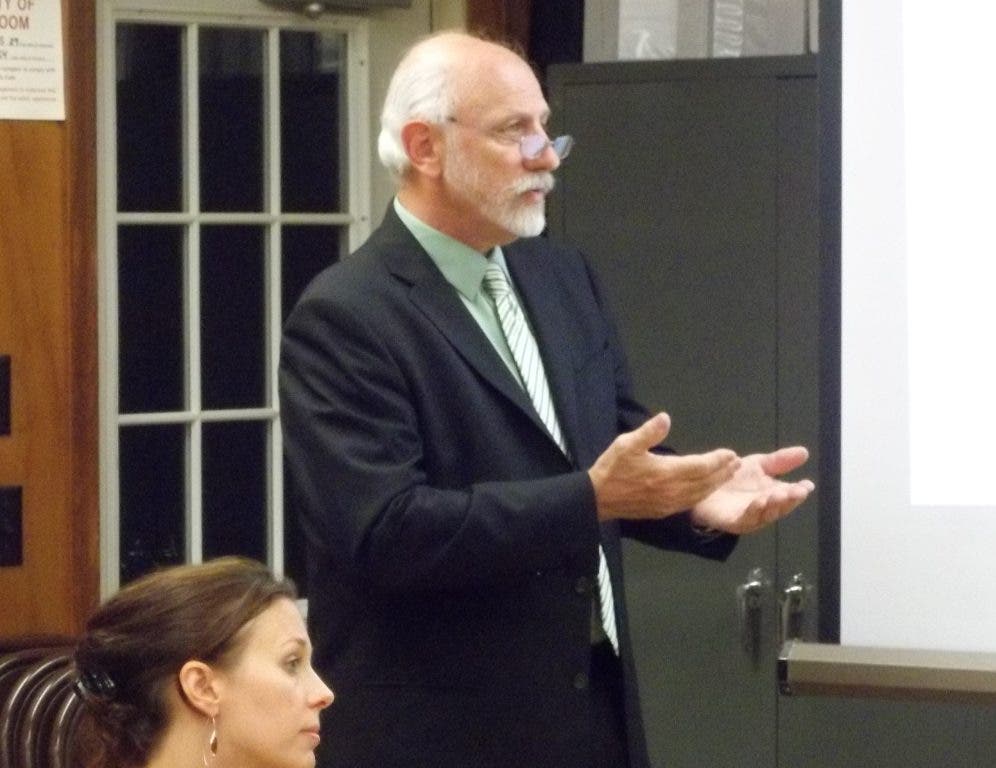
A town-wide facilities study presented to the Town Council Wednesday night revealed that the library and town hall could expand and operate more efficiently and that the police department needs to be five times bigger.
“The police can’t really function in the space they’re in right now,” said Mark Zarrillo of Symmes, Maini and McKee Associates, the consultants hired to examine the buildings. “They make do without certain facilities that are available to other police departments and other jails.”
He said the station, located in an older building, simply needs more space and it lacks jail cells, evidence rooms, and sally ports.
Find out what's happening in Ledyardfor free with the latest updates from Patch.
Zarrillo said a “guideline police station” for a town of Ledyard’s size would have 22,685 square feet. The police department currently occupies 4,808 square feet.
The study examined 10 public buildings, including all six of Ledyard’s schools: The Gales Ferry School, Gallup Hill School, Ledyard Center School, Juliet W. Long School, Ledyard Middle School, and Ledyard High School, and, the Bill Library, town hall, and police department.
Find out what's happening in Ledyardfor free with the latest updates from Patch.
The team started working in December and January with a walk-through of all 10 sites. “We had to fight the snowfall,” said Mark Zarrillo, of SMMA, “but we got through.” By March, the study of the structures was finished. Surveys and interviews were then used to determine how the spaces were being used.
Another building the team found lacking is the Bill Library. The town had already planned an addition to the library in 2006. The plan was made using guidelines from 2000, which have changed. Zarrillo suggested that the old plans be updated and used.
Town Hall, too, posed concerns. The offices are too small, said Keelia Kentor, another consultant of SMMA. Some departments would be able to work together more efficiently if their offices were grouped together. The building also needs more space for storage and for conferences and meetings.
Most of the schools were found acceptable. The only exception was Ledyard Center School, which is becoming crowded. There was also concern that Ledyard Middle School would need more space if the town chooses to move the sixth grade into that school.
The group compared their findings to state and industry standards. They took into account, too, information about Ledyard, such as its population. This allowed them to see which buildings were meeting their occupants’ needs.
The consultants presented possible solutions. Buildings could be renovated or added onto. They could also be demolished and rebuilt. SMMA also suggested alternatives that may solve more than on issue. For example, building a new Ledyard Center School might give the school more room and also allow Town Hall and the police to move into the old building.
However, the town will still have to decide on its best options. “These are not really suggestions of what you should do,” Zarrillo said. “These are suggestions of what you can do.” The team also provided possible building costs, but the figures are far from a full financial analysis.