Arts & Entertainment
Katharine Hepburn Museum to Unveil Hepburn’s 1928 Wedding Dress
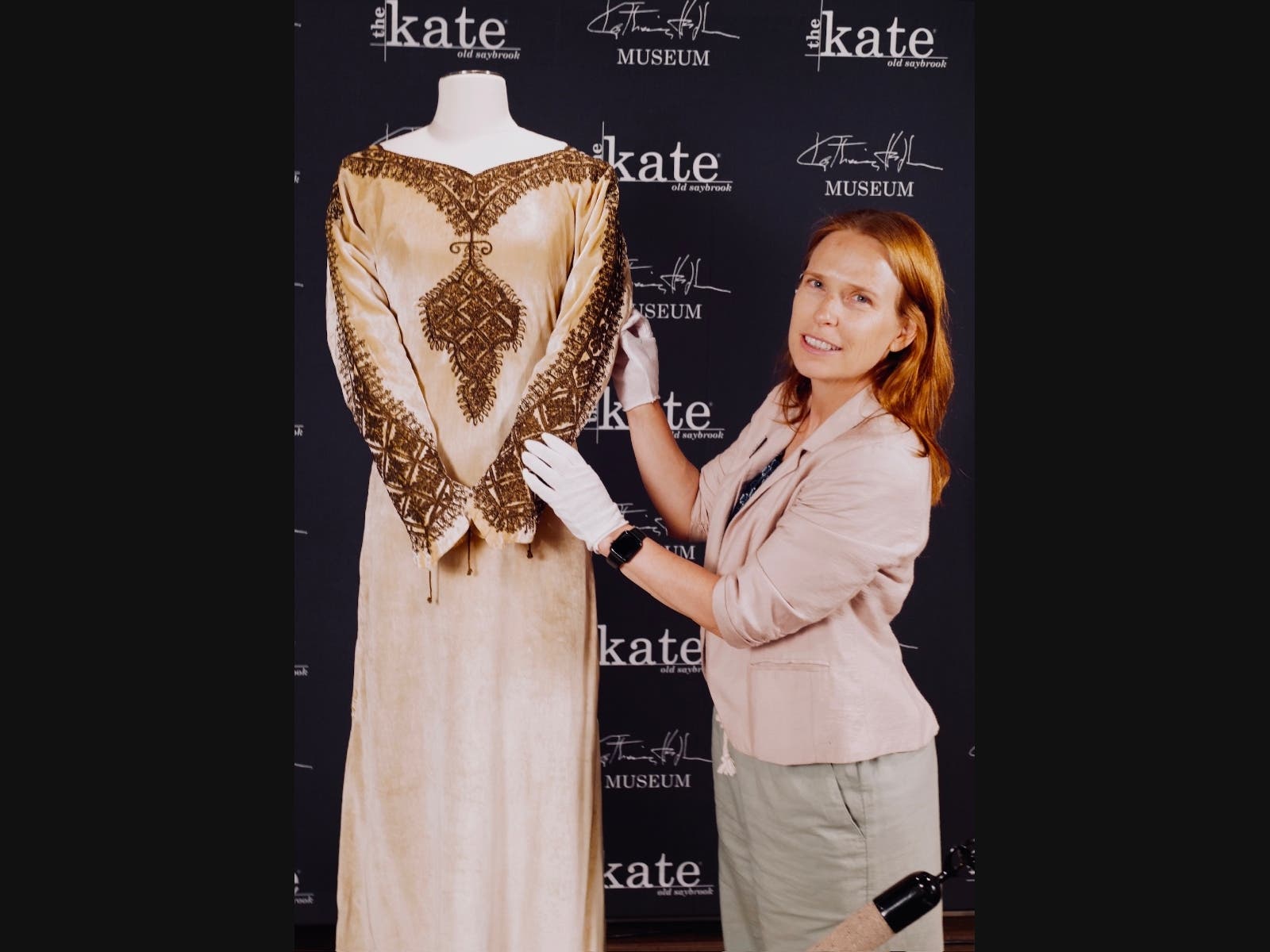
The museum is excited to announce the acquisition of Hepburn's Babani dress which she wore for her 1928 wedding to Ludlow Ogden Smith.


Press release
OLD SAYBROOK, CT - The Katharine Hepburn Museum, located at the Katharine Hepburn Cultural Arts Center “the Kate,” is excited to announce the acquisition of Hepburn’s Babani dress which she wore for her December 1928 wedding to Ludlow Ogden Smith.
Katharine Hepburn met Ludlow “Luddy” Ogden Smith in 1927 during her senior year at Bryn Mawr College. She found him to be kind, generous and intellectual. He was the son of Gertrude Clemson Smith and Lewis L. Smith, a socially prominent family from Strafford, Pennsylvania. Ludlow was president of Ogden Ludlow Inc. and the creator of the "Ludlow Formula", a precursor to computerized systems in financial institutions.
Find out what's happening in Madisonfor free with the latest updates from Patch.
They were married in her parents' living room at 201 Bloomfield Avenue, Hartford, by her grandfather, Reverend Sewell Hepburn. The Hepburns accepted Luddy into the family immediately and he sustained his relationship with them well after he and Kate parted ways. Though the marriage lasted only six years and Ludlow would marry again and raise a family, Kate and Luddy remained friends and she visited him often, especially when he became ill.
After her passing, the dress was purchased by David's Bridal Company via a Sotheby's auction and was stored in Pennsylvania for the past 20 years. The Katharine Hepburn Museum acquired the nearly 100 year old garment earlier this year and will undertake conservation work to repair parts of the fabric before it can go on exhibit.
Find out what's happening in Madisonfor free with the latest updates from Patch.

The dress came from a Parisian fashion house called Babani. Founded in 1890 by Vitaldi Babani, an immigrant to Paris from Istanbul, the house of Babani featured exotic imported decorative arts, interior décor, and fabrics from the near and far east. This dress is quintessential Kate - simple, comfortable, yet full of intricate little details. And above all, extremely unique. This was definitely not your typical wedding dress in 1928. The style of this dress was known as a tea gown which became popular fashion items in the 1910s and early 20s. The tea gown freed women from the restrictive corseting that early 20th century fashion required. The dress style itself was quite literally liberating.
Because of the materials the dress is made from—silk velvet and metallic embroidery—it would have shimmered and sparkled in the light as she moved. Miss Hepburn described the dress in her autobiography Me: Stories of My Life - "...I had a pretty dress - a Babani. It was crushed white velvet with antiqued gold embroidery sort of around the neck and a bit down the front and on the sleeves."
Dedicated to one of Connecticut and Old Saybrook’s most celebrated residents, the Katharine Hepburn Museum offers an authentic view of the cultural and historical impact of Miss Hepburn and her family. Located at the Kate at 300 Main Street, Old Saybrook, the museum is open Tuesday through Friday from 10 am to 4 pm and one hour before shows.