Politics & Government
Making The Case for the Academy School Site Becoming a Home for a New Library in Madison: LETTER
The former chairman of the Academy subcommittee on the original Facilities Review Committee makes the case in great detail.


Written by Emily Eisenlohr, of Madison
Once more, town officials are turning attention to the Academy building. It's time to consider making it our library. Not the building itself, but the location for a new library. The town has a window of opportunity to bring its complex facilities deliberations to a satisfying conclusion for multiple groups. Getting there is our own Olympics -- the hurdles event. The most pressing hurdle is time, but with help it is surmountable. Will everyone pitch in?
A Pivot Point Leading to a Proposal
Find out what's happening in Madisonfor free with the latest updates from Patch.
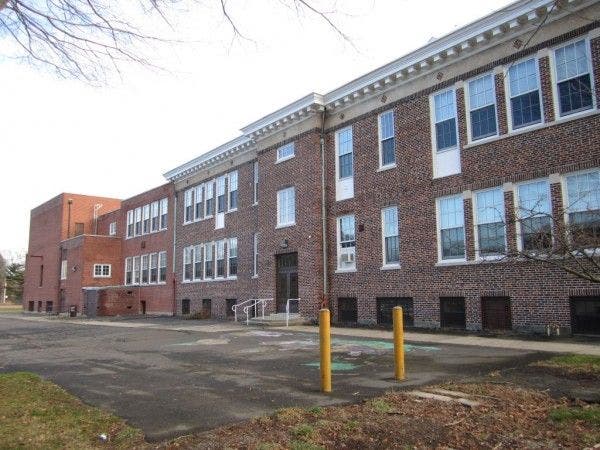
In all contemplated Academy uses to date, none has considered the removal of the building. The library wouldn't have worked in the old building due to the weight of the books. Sentiment played a role, too. Having had a son in first grade in Academy's final year and knowing the magic of its high ceilings and wide halls, I would have loved to have seen the building’s renovation. That child is now in college. Sentiment diminishes over time.
I served as chairman of the Academy subcommittee on the original Facilities Review Committee a decade ago and am not surprised to see that every subsequent facilities committee found that an Academy renovation entailed millions of dollars. The truth is that after spending a large sum it would still have been an old building in continuing need of more maintenance than a new one requires.
Find out what's happening in Madisonfor free with the latest updates from Patch.
Demolishing the Academy building makes the site available for a library.
Compromise: The Sum of the Parts Is Greater Than the Whole
Our town has several groups with legitimate facilities objectives. The library trustees would like to have a 21st century facility meeting the needs of a population fully engaged in a digital world. They have the plans and a big dent in the funding. Most of us would like to see town spending controlled. Several specific groups promote the addition of taxable property to the grand list without associated schooling costs. Many are heavily engaged in the arts and would like to see better exhibit and performance space. Others are actively involved in protecting and promoting Madison's unique history, particularly in our downtown. All these groups' objectives are important, and all will face headwinds as they promote them.
I urge my fellow Madisonites to think about what compromise creates. When only one of these groups "wins" at the expense of others' objectives, if they ever do, they realize 100% of their own objective. If several groups could achieve, say, 75% of their objective for these laudable goals, the town would gain much more than what any one of these single groups might pursue.
Winning on Multiple Fronts
The main drivers of this proposal are two. First is a better match of multiple goals. The Academy site is on the historical/community property side of town. The library is located on the more commercial side of town. The proposal merely swaps the two bookends of our downtown.
Further, the present library building is in much better shape than the Academy building and may involve greater value that could be used to defray the costs of building a new library at the Academy site. New construction is often less expensive than trying to rework an older structure for modern uses and code. The library director and trustees and their architect already know what is needed. Their challenge is shifting gears.
This approach minimizes zoning battles that would only prolong the facilities deliberations. Changing the zoning at the Academy site to allow private-sector development (senior housing and/or commercial uses) would change the character of the historic/community use side of our downtown.
Prior generations have fought to preserve the community side of town while developing the commercial side. Efforts like this have given Madison a conveniently located, but off-the-main-street Stop & Shop and also the Surf Club. Concerned citizens battled to attain those two valuable town assets. Think of the legacy this present effort would leave for future generations.
Execution Is Key
Great ideas are proposed all the time. Progress is attained only through the next part – execution. Here are the main hurdles in our town Olympics.
- Admitting the building needs to come down. So take lots of pictures and videos. Yes, demolition will cost money, but it is inevitable. The building is deteriorating. A new library could easily give a nod to the Academy façade.
- Preserving history at the present library site. The front of the present library, designed by an eminent architect, could be stipulated to be retained, with the Scranton name on the top for posterity, as part of any development. It could be developed into combined residential and commercial use, just as those who target the Academy site want. A developer is likely to make good use of either site.
- Remembering Academy and library history. History of both education at the Academy site and libraries in Madison could be displayed in the vestibule of a new library so that future generations can see how citizens built their community over time. As described on the Madison Historical Society website, libraries in Madison date back to 1737. Mary Eliza Scranton gave the present Scranton Library to Madison in 1900 in memory of her father.
- Having a double-barreled referendum. It’s the swap that would be on the ballot. The designated Academy site property would be sold to the library association for $1 in consideration plus the agreement that the town of Madison would assume responsibility for the sale and development of the current library site, with appropriate conditions, to close when the new library is in operation. This would set all the needed steps in motion. The library trustees would retain their management of the town library. All sides could be assured they will reach their primary objective.
A 21st Century Name?
Many feel the library is their community center. It’s a sibling to our education system. I would propose that a 21st century library needs a new name. It is no longer just a collection of printed books.
One attribute of a public library will remain. It is a shared collection. Now more than ever, any community needs its shared printed and digital intellectual resources – stories, books, periodicals and research site access. 21st century libraries also involve the sharing of ideas – book groups, presentations, exhibits and much more. Digital opens up the world to each individual in a way a single person has never experienced in earlier centuries. But it is expensive. The need to share that cost remains.
A Community Effort
The community needs to express its interest in this proposal. Speak up in person with town officials, through letters to the editor, to the library director and to your friends. Attend workshops and public hearings the Board of Selectmen plan in later September. On an important issue like this, we can't let others do all our heavy lifting.
Town officials can help by identifying the key hurdles and helping to remove them.
Our Senator and Representative can help with one of the toughest issues – the funding. The library already has commitments from the State of Connecticut for $2 million, one library grant and one construction grant. The latter was achieved through the hard work of Senator Kennedy and Representative Kokoruda. Why couldn’t they get an extension of these two grants and allow them to be transferred to a new library? It isn’t asking for more money. It is potentially shifting the grants from one budget season to another. I hope they can figure out how to have the current grants’ deadlines extended and to allow them to be attached to the proposal for a new library.
The history at the Academy site is remarkable not only for Madison, but also for the state of Connecticut. Daniel Hand, born in Madison in 1801, was a businessman and philanthropist who created the Daniel Hand Educational Fund for Colored People. He handed management of his fund over to the American Missionary Society, which was formed in 1846 by a network of abolitionists. This Madison native’s philanthropy in the realm of this still sensitive topic occurred more than a century ago.
Further, Daniel Hand erected the Hand Academy, which he deeded to the town as its first consolidated high school on November 22, 1884. My grandparents, who died in 1963, had only eighth-grade educations because there was no high school where they lived when they were young. Subsequent to Hand’s gift, Madison residents, responding to a new state education law, gathered at several town meetings to create a board of education and to declare that the instruction provided was to be free. The original Hand Academy was torn down to make way for a better consolidated high school, the present Academy School, built in 1921 and expanded during the Depression. The American Missionary Society subsequently entered into a quit claim deed on November 12, 1958, to release the town from any conditions attached to the original 1884 transfer of Hand Academy to the town, with one condition – that Madison’s new high school carry the name “the Daniel Hand High School”. And it has – twice!
A new library at this historic site preserves the significant community history and also creates 21st century intellectual infrastructure. These are important objectives to support an extension and transfer of the state’s construction grants.
Keep an eye out for ways you can help move this forward. Speak or write to your elected representatives. Thank them for their achievements to date and ask them to nail down the extension and to negotiate transfer of library funding to a new library. Attend meetings. Write letters to the editor. Let’s make this happen.
Patch file photo
Get more local news delivered straight to your inbox. Sign up for free Patch newsletters and alerts.