Schools
Feasting with the Dead on the Eve of Agriculture: Ancient Animal Remains from a Burial Cave in Israel
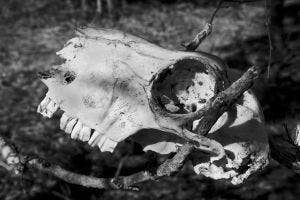
Zooarchaeological evidence from a small burial cave in Israel reveals evidence that prehistoric funerary feasts and shamanism were practiced as early as 12,000 years ago, at the very beginning of human transition from hunter-gatherer to agriculturalist. The site of Hilazon Tachtit in Israel, where Dr. Munro has conducted her research for several years, contains a variety of unusual animal deposits associated with funerary practices.
Some of the animal remains are directly interred with humans' graves while other animal remains were likely produced as part of the activities associated with human funeral practices. In particular, the butchered remains of parts of at least three Aurochs (ancient wild cattle) provide early evidence for feasting at the site, as do the butchered remains of more than 70 tortoises that were later interred in the grave of one woman. This woman's grave also contains unusual purposely-deposited animal parts; these remains attest to the unique position of this woman within her community. The animal remains from Hilazon Tachtit have important implications for social life and ritual practice during the Mesolithic Natufian culture of the Eastern Mediterranean, and the Neolithic period that followed. These remains provide strong early evidence for communal activities in the Natufian period, one of agricultural transition.
Presented by the Connecticut State Museum of Natural History and Connecticut Archaeology Center, part of the College of Liberal Arts and Sciences at UConn. 860-486-4460 - www.mnh.uconn.edu
Dr. Natalie Munro, Department of Anthropology, UConn
Biology/Physics Building, Storrs campus, Room 130
No registration required - Free
Adults and children ages 10 and above. Children must be accompanied by an adult.