Community Corner
Korean Church Acts as Angel to Temporary UConn Faculty, Grad Students
Meet the Rev. Hojun Chang of Storrs Korean Church.
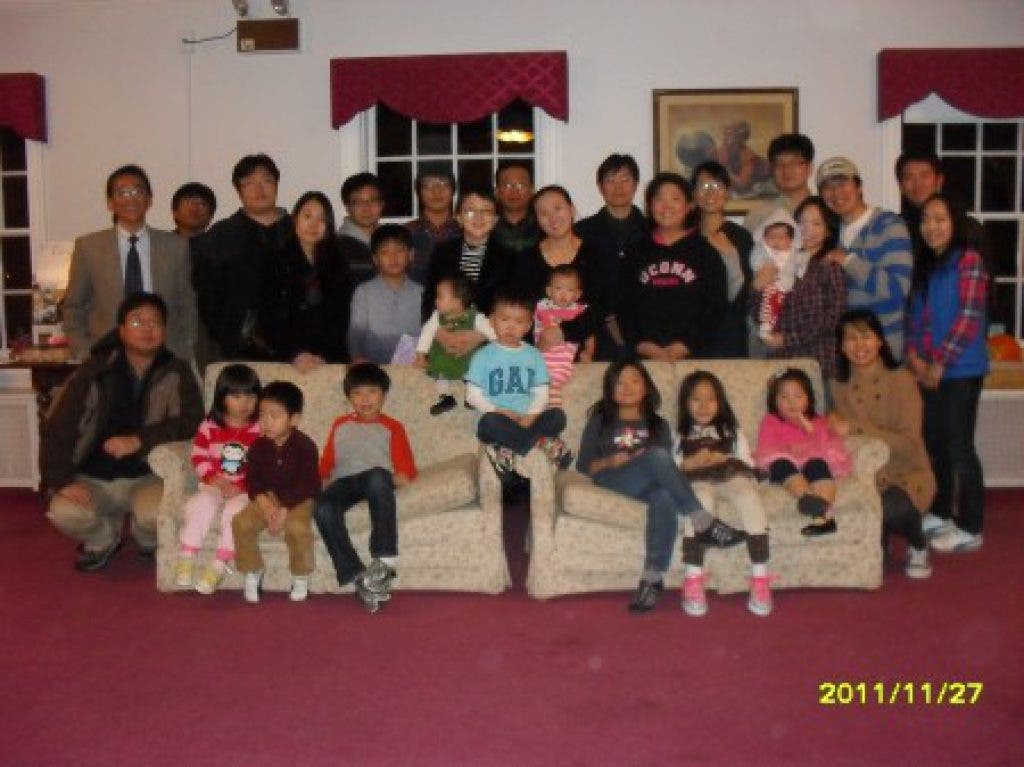


The Rev. Hojun Chang of the Korean Church at UConn is used to hellos and goodbyes. Most of his parishioners are graduate or post-doctoral students at the , and they fulfill their short-term teaching or research obligations on campus, earn their degrees or sometimes meet with failure.
“That's my ministry,” Change says. “I can say it's a station ministry – it's like the bus station or airport ministry.” Last week he had brunch – “not a last supper but a last brunch,” he laughs – with a church family, and next week he will say goodbye to another family. “This year I've had to let six families go back to Korea,” Chang says.
The Korean Church was formed in December 2005 and meets weekly for a Sunday evening service and dinner afterward in the Parish Hall at on North Eagleville Road. Chang's congregation is made up of young university families, many with small children.
Find out what's happening in Mansfield-Storrsfor free with the latest updates from Patch.
“We don't have any undergrad students at all,” he says. And the graduate students and faculty must succeed in their degree work, teaching or research projects. “Otherwise they cannot stay here,” he explains.
The young pastor, who came to the United States in 1999 to start a Christian ministry for Koreans, sports a ponytail and peppers his narrative with humorous asides. About the upside of having a transient congregation, he says, “I can recycle my sermons every five years. No one knows.”
Find out what's happening in Mansfield-Storrsfor free with the latest updates from Patch.
Chang started out by commuting from Bristol and meeting with Korean students and faculty for weekly Bible studies, as an option to a more formal class that involved memorization of verses. As the discussions grew beyond that, one member asked him to start a church. Storrs Congregational, whose United Church of Christ denomination was in partnership with the Korean Presbyterian Church that Chang knew, agreed to the idea.
Services, led fully in the Korean language, are held in the parish hall, Chang says, because the congregational church sanctuary is too large and he prefers a more informal service that accommodates families with small children who often feel the need to run around the room. “It looks like when Jesus came into the Jerusalem temple,” he says.
The church dinners have a biblical context as well. Chang says members sign up to bring one kind of soup and one side dish, and the church provides the rice. “Sometimes if the rice is not enough, we can share,” he says. As with loaves and fishes, there is always enough.
The family makeup of his congregation and a Korean language gap for many undergrad students does seem to keep them from joining, he says. He is hopeful that will change in the future but says, “I don't have enough time to look for these people.”
He does receive calls from parents of freshmen, looking to have Chang watch over their children at UConn. Chang tells them not to worry about their college-age kids. “If you are really confident that you raised your kids in the right way, do not bother them,” he advises them. “Tell them, 'If you need help, there is Pastor Chang.'”
Chang hesitates to put a number on his congregation, but then he estimates 20-30 came to the services last Sunday and stayed for the meal. Counting heads is not high on his list.
“I cannot preach just for a one-person portion. If you got to with five persons, you have to order a large pizza. If you go to Willington Pizza by yourself, you order small pizza and can't finish it. Whether I am preaching one-person-portion sermon or 100-person sermon, it's all the same,” Chang says.
Open and Affirming
Chang is perhaps proudest of leading a Korean church that practices the United Church of Christ's “open and affirming” acceptance of openly gay members. When he came to the United States a dozen years ago, he selected the East Coast and Connecticut as perhaps the most liberal area here. But he was brought up short in his first church-building experience.
“So what I thought is the Korean people who are living in Connecticut would also be liberal. But I was wrong. They are extremely conservative,” says Chang, who explains that homosexuality is a taboo subject in his homeland.
That first church he led in West Hartford had a healthy congregation of about 70, he says. “So I thought I'm a real good evangelist.” But after two years he found, instead, disappointment. The church wanted a Presbyterian structure, with elders and deacons, and they were not comfortable with sexual diversity.
“They have their own reason to come to church. Their needs are not the same as what I want to give,” he says.
When a church leader came to him and threatened to leave if the church continued to be inclusive of gay and lesbian members, Chang pointed out that virtually all of about 4,000 Korean churches in America excluded them. “I tell them, 'Just one Korean church out of 3,800 accept gays and lesbians as full standing members. Is that a problem for you?'”
When he started the church in Storrs, he made it clear that it would honor the “open and affirming” creed. “So, Storrs Korean Church is very different. Nobody care about that – whether they are gay or lesbian. We just say, 'Welcome, everyone.'”
Coming to America
Chang's church in Korea calls him a missionary. In fact, before he came here, he spent six years doing that work in Southeast Asia, which he misses a lot. He in particular loved the Golden Triangle part of the world and remembers bringing shoes, second-hand clothing, vitamins, candy, toothbrushes and other goods to families there. He was eagerly welcomed.
“Do you know where is the most difficult and terrible mission field in the world,” he asks. “The United States.” Here, no one smiles if you offer candy. In fact, it can be a negative. As a bus driver for Mansfield public schools, he was admonished for offering students candy after a parent complained. He has trouble understanding that.
And yet Chang shows stamina for his work here. The programs in his church change according to the makeup of the congregation at the moment. One year, some young women offered to cook and held a Korean food bazaar on campus. Another year, a group of young men applied their handyman skills to Habitat for Humanity work.
Now, several of his members who taught school in Korea or are involved in the Neag School of Education at UConn are active in Mansfield Advocates for Children, a town-sanctioned volunteer group focused on early childhood care and education.
Church members also augment the Storrs Congregational Christmas Bazaar that raises money for the national UCC.
In early December, the Korean Church and Storrs Congregational combined services. The Koreans assisted with ushering and Communion. Chang was invited to make announcements, and spoke in Korean for his members, to the delight of the English-speaking worshipers.
“I say, 'You don't understand what I'm saying,' and they laugh and laugh. That's the language barrier.”
Chang says he does not reflect the image of a typical Korean pastor. “They cannot find a Pastor Chang who has a ponytail,” he laughs. But, seriously, he says, “The time goes by and they realize the image of a Korean pastor they had is not really true. So they realize this is a real church and this is what God wants to tell us.”
Less than 10 percent of his members have a Christian background, some are dedicated Buddhists and some are even anti-church, he says. Why do they come to this church of his on the UConn campus? First, they need help, he says, describing the hardship of coming to a strange land, struggling until someone offers a hand and speaks the same language. “It's angel. That's the Korean Church.”
After that, they want to know more about the teachings. So they keep coming. But they also go.
“This is a come-and-go church. I call it a dandelion ministry,” Chang says. “Once it flower, then it fly away.”