Schools
Moth Update: UConn Educator Grades Effect of Lethal Fungus
A report on the fungus that kills moth caterpillars was released Monday.


STORRS, CT – The fungus lethal to gypsy moths seems to be doing its job when it comes to caterpillars, according to a report issued on Monday by a University of Connecticut agriculture educator.
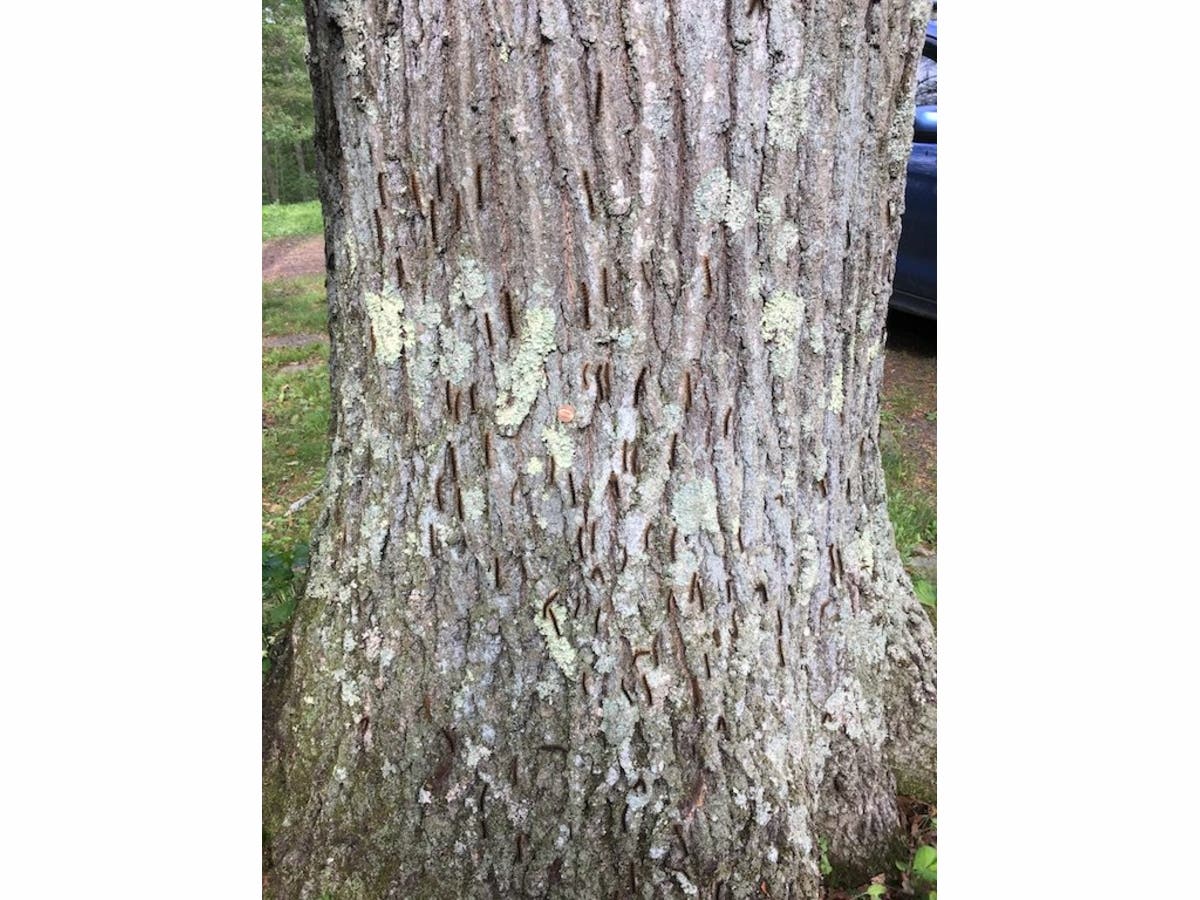
UConn Extension Educator Tom Worthley on Monday issued a photo of a 26-inch diameter oak tree that shows "lots of caterpillars on it."
And all were dead, he said.
Find out what's happening in Mansfield-Storrsfor free with the latest updates from Patch.
"They exhibit symptoms of the fungus that attacks gypsy moth caterpillars, particularly when populations are high," he said in a brief report posted on the UConn Extension website.
Worthley continued, "So while I cannot say it with absolute certainty, I am of the opinion that the Entomophaga maimaiga fungus is at work — finally."
Find out what's happening in Mansfield-Storrsfor free with the latest updates from Patch.
The wet weather has helped, he said.
"Dry spring seasons the last couple years had a depressing effect on the fungal activity, leading to the caterpillar outbreaks we are seeing this year ... We’ve had a wetter spring, and while the defoliation damage has been done in many areas — an almost total defoliation in my area, Higganum — we are now seeing increased fungal activity killing off the caterpillars," Worthley said.
Most trees will "re-foliate," he said.
"This requires some drawing upon stored reserves of carbohydrates by the individual tree, in order to send out new leaves and the evidence of gypsy moth activity will likely appear as reduced diameter growth," Worthley said. "Some trees that have been stressed by repeated defoliations in multiple years and perhaps by drought or other issues, might not survive. We’ll know in the next few weeks."
He said researches should know later this summer how many gypsy moth caterpillars have survived to maturity.
"Non-flying, mostly white females will take up positions in sheltered spots on the bark of trees, and males — more tan, or buff-colored — will be flying around seemingly at random,” he said.
Photo Credit: UConn Extension
Get more local news delivered straight to your inbox. Sign up for free Patch newsletters and alerts.