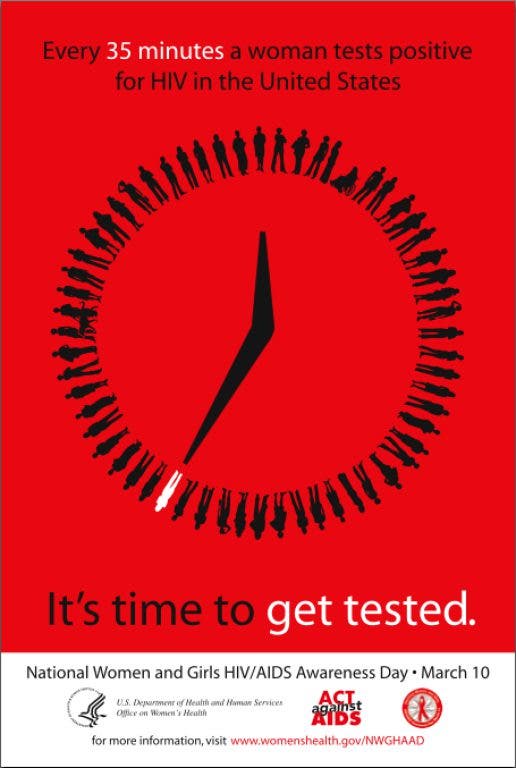

National Women and Girls HIV/Awareness Day is Thursday, March 10. On this day, women and girls are encouraged to get the facts about HIV—how the disease is spread, potential risk factors, and what prevention measures can be taken to protect themselves and their loved ones from becoming infected. While there have been great strides in the prevention of HIV transmission and care of persons infected with the disease since it was first recognized in 1981, there are still a lot of questions and myths surrounding this disease in communities across the nation.
HIV stands for human immunodeficiency virus. It is the virus that causes AIDS, or acquired immunodeficiency syndrome. HIV is a lot like other viruses, including those that cause the flu or the common cold. But there is an important difference – over time, your immune system can clear most viruses out of your body. That isn't the case with HIV – the human immune system can't seem to get rid of it. Scientists are still trying to figure out why.
HIV/AIDS continues to be a serious public health issue in the United States and around the world. Did you know that every 35 minutes a woman tests positive for HIV in the United States? The Centers for Disease Control and Prevention (CDC) estimates that 1 in five people living with HIV infection do not know they are infected. The only way to know if someone has HIV is if they get tested.
Find out what's happening in Meridenfor free with the latest updates from Patch.
The HIV virus is transmitted by:
- Having unprotected sex with someone who has HIV. As mentioned, the only way someone knows they have HIV is by getting tested.
- Sharing needles, syringes, rinse water, or other equipment used to prepare illicit drugs for injection.
- Being born to an infected mother—HIV can be passed from mother to child during pregnancy, birth, or breast-feeding.
You cannot get HIV from:
Find out what's happening in Meridenfor free with the latest updates from Patch.
- By working with or being around someone who has HIV.
- Air or water.
- From sweat, spit, tears, clothes, drinking fountains, phones, toilet seats, or through everyday things like sharing a meal.
- From insect bites or stings.
- From donating blood.
On March 10, or any day during the year, the Meriden Health Department encourages women and girls to stop by our office to meet our bilingual counselor and ask questions about HIV and related questions. Our counselor can provide confidential HIV counseling, testing, and education services at our offices located at 165 Miller Street. She is also available to speak at community organizations in Meriden. Call 203-630-4176 for more information or to make an appointment.