Politics & Government
If You're Gonna Have a Heart Attack, It Might As Well Be in Milford
Your chance of survival is greater here because the "Small City with the Big Heart" has been declared a SAFEHeart Community.



Milford has been declared a HEARTSafe community where heart-attack victims are more likely to survive, the state Department of Public Health announced yesterday.
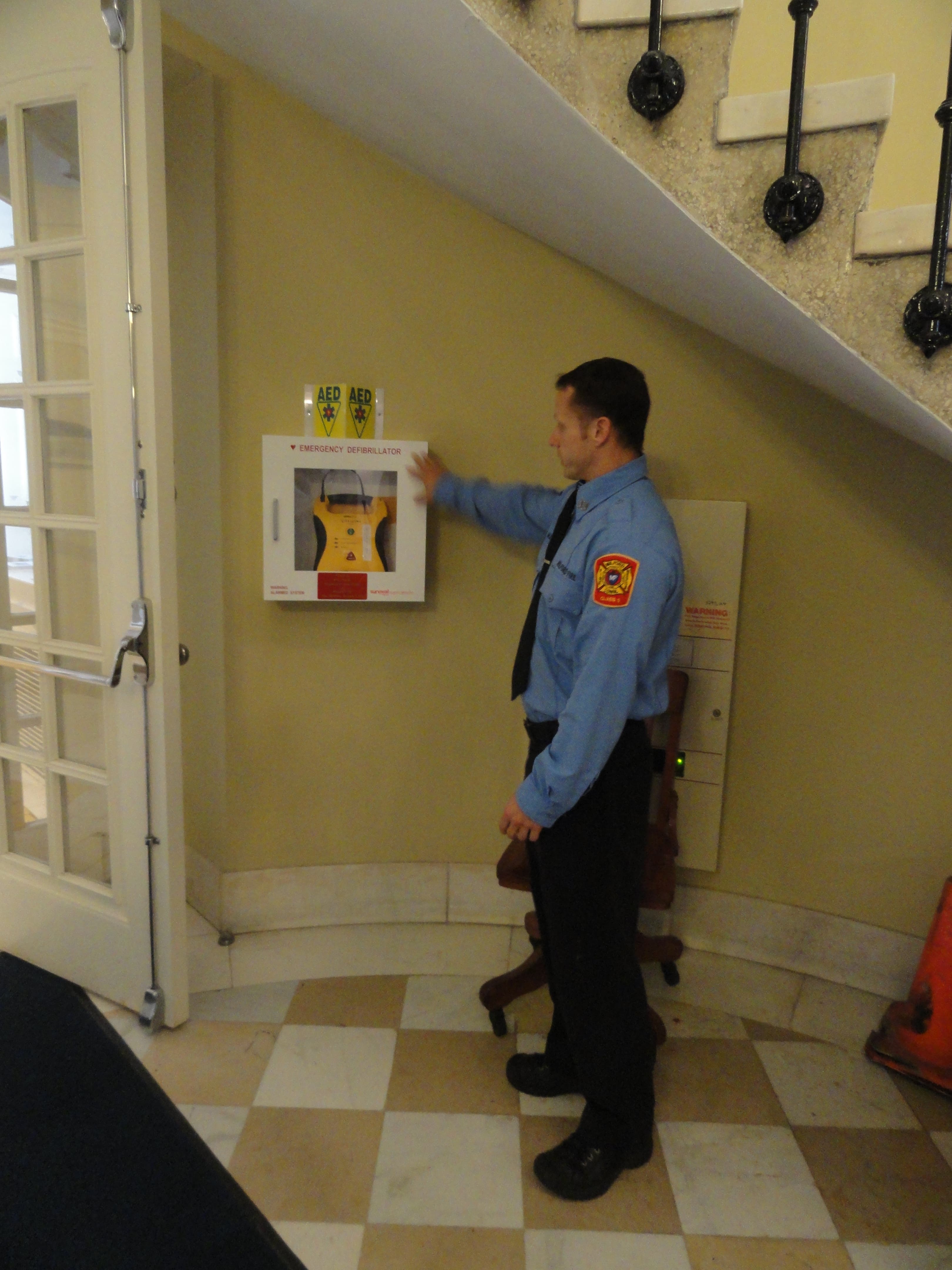
Milford was awarded the designation because more than 60 citizens, including public workers, are trained in cardiopulmonary resuscitation, and more than 20 automated external defibrillators are available in public places.
The devices, which correct irregular heartbeat rhythms, are located in City Hall, schools, the Parsons Government Center, and other strategic places.
Find out what's happening in Milfordfor free with the latest updates from Patch.
That means that in a cardiac emergency, meaningful treatment can occur before paramedics arrive by ambulance.
"It fills in what I call 'Those longest moments,' " Gary St. Armand, health program associate of the state DPH Heart Disease and Stroke Prevention Program, said during a City Hall ceremony.
Find out what's happening in Milfordfor free with the latest updates from Patch.
Milford is now one of 63 towns and cities in the Nutmeg State that have achieved the three-year HEARTSafe designation, state officials said.
That means a "Chain of Survival" has been implemented. Available are: cardiopulmonary resuscitation (CPR) training; public access to automated external defibrillators (AEDs) for use by trained community members; trained and equipped first responders; and early advanced care.
The state gave the city 10 street signs to post along roads to publicize the honor.
Mayor James Richetelli said, "I'm pleased and proud to be a HEARTSafe community."
Fire Chief Louis LaVecchia noted that the Rotary Club of Milford had provides 18 of the city's publicly available AEDs and that the American Red Cross' Milford Chapter provides CPR and AED training.
"It's one thing to wait those first few minutes. It's another thing to take action," he said.
Only 13 percent of Connecticut adults know the signs of a heart attack, according to state health officials. The signs include: chest discomfort or pain; pain in one or both arms, the back, the neck, the jaw or the stomach; shortness of breath; cold sweats; nausea; and light-headedness.
Get more local news delivered straight to your inbox. Sign up for free Patch newsletters and alerts.