This article is courtesy of the MPC intern, Bianca Jackson.
Kratom: Where it Comes from and How it’s Used
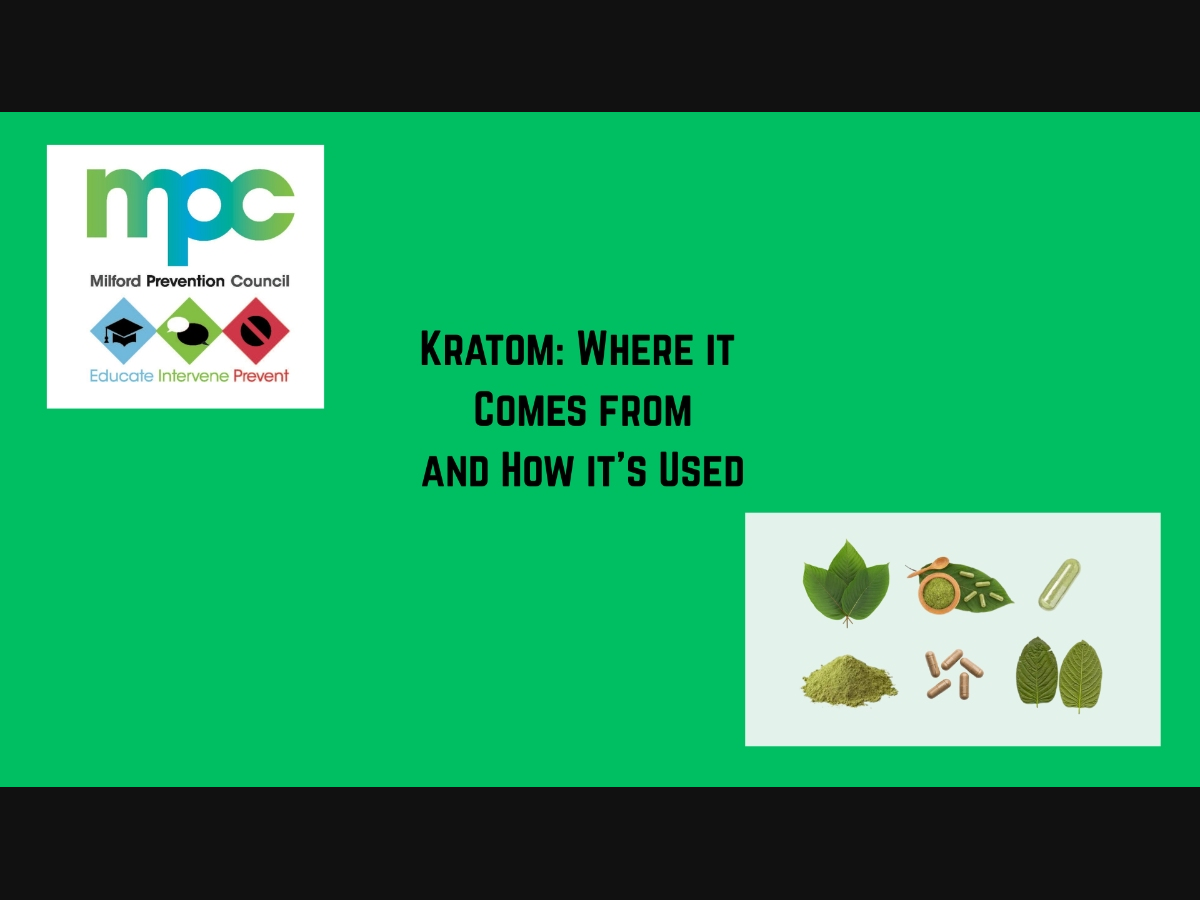
Kratom is a plant product that comes from a tree called Mitragyna speciosa, which is native to Southeast Asia. Typically, people in places such as Thailand and Indonesia would chew kratom leaves or would use it to make tea for energy, fatigue relief, as well as sociocultural purposes. In the United States, kratom products are presented in forms of:
Find out what's happening in Milfordfor free with the latest updates from Patch.
- Powder
- Capsules
- Gummies
- Drinks (like tea)
Some companies claim that it helps with pain, mood, or opioid withdrawal. However, the FDA says kratom is not an approved drug, supplement, or food ingredient, specifically because of safety concerns.
How Kratom Affects the Body
Find out what's happening in Milfordfor free with the latest updates from Patch.
Kratom has two main chemicals: mitragynine and 7–hydroxymitragynine (7-OH). These chemicals affect opioid receptors in our brain. These same receptors are targeted by drugs like morphine. According to the National Institute on Drug Abuse, kratom can:
- Act like a stimulant at low doses
- Act like a sedative at higher doses
- Cause nausea, sweating or dizziness
- Increase heart rate and blood pressure
- Lead to dependence or withdrawal symptoms
The National Center for Complementary and Integrative Health also highlights that some kratom products have been found to have heavy metals and even harmful bacteria.
Is Kratom Legal?
Kratom’s legal and regulated status is still unsettled. It’s not federally banned, but some states prohibit the use of kratom. Laws can vary widely. As of recent reports (ASTHO, 2026), about 1.6 million Americans have used a product containing kratom in 2023. Certain states have added the following as guidelines:
- Age limits (18-21 depending on state)
- Labelling rules
- Testing requirements
As of late February 2026, Connecticut has officially made kratom a Schedule I controlled substance. This means that it's designated by the Commissioner of Consumer Protection that has:
- A stimulant/depressant/hallucinogenic effect
- High risk for abuse/dependence
- No recognized medical benefit
Why Public Health Officials are Concerned
There are currently no FDA-approved uses for kratom. Research is ongoing, but health agencies highlight that:
- Products are not regulated for purity
- Long-term effects are not yet fully understood
- Dependence and withdrawal can occur
Please consult a healthcare provider if you have questions about or are struggling with the use of kratom.
References
Abuse, N. I. on D. (2022, March 25). Kratom. National Institute on Drug Abuse. https://nida.nih.gov/research-topics/kratom#affect-body
CT.gov. (2026). Department of Consumer Protection Applauds Passage of Controlled Substance Drug Schedule Updates. CT.gov. https://portal.ct.gov/dcp/news-releases-from-the-department-of-consumer-protection/2026-news-releases/department-of-consumer-protection-applauds-passage-of-controlled-substance-drug-schedule-updates?language=en_US
Jacob. (2025, December 23). Kratom Legal in the USA – Updated Map, State-by-State Laws, Restrictions & Buying Tips. Alt Law. https://altlaw.org/kratom-legal-in-usa-updated/
Kratom. (2022, April). NCCIH. https://www.nccih.nih.gov/health/kratom
Tomlinson, H. (2026, February 9). Kratom 101: What You Need to Know. Astho.org. https://www.astho.org/communications/blog/2026/kratom-101
U.S. Food and Drug Administration. (2019). FDA and Kratom. U.S. Food and Drug Administration. https://www.fda.gov/news-events/public-health-focus/fda-and-kratom