Health & Fitness
The Connecticut Indian Wars
The Indian war was sparked, Koch says, by the death of a respected Dutch trader named John Oldham. Oldham's ship, which was on a trading voyage headed to Block Island, was ambushed.
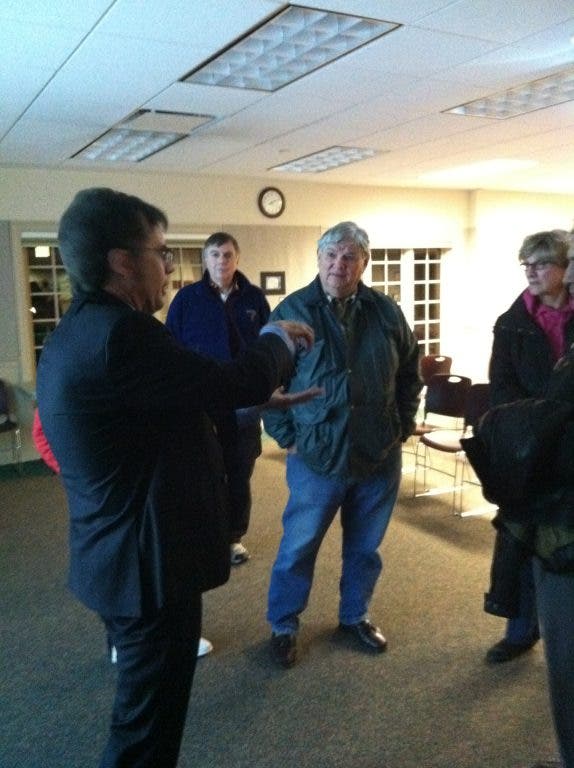
“Studying Native Americans is an extremely difficult affair” David Koch stated in his opening discussion Wed evening, at the Edith Wheeler Memorial Library, in Monroe. More than 50 people were in attendance of the program, which topics revolved around the Connecticut Indian wars of 1634.
Koch, who is the assistant professor of history at Housatonic Community College in Bridgeport, used a slide show presentation, as he spoke passionately about the Mohegan, Pequot, Niantic and Narragansett Indian tribes which occupied the state during that time.
The Indian war was sparked, Koch says, by the death of a respected Dutch trader named John Oldham. Oldham’s ship, which was on a trading voyage headed to Block Island, was ambushed. He and his crew were murdered and the ship was looted by Narragansett Indians. This was done he says, to discourage the English from trading with the Pequot Indians, enemies of the Narragansett tribe. The conflict between the Pequot, the English colonists and their Indian allies, lasted only four-years, ending in a swamp in Fairfield. It may have been one of the bloodiest wars in CT history.
Find out what's happening in Monroefor free with the latest updates from Patch.
As a result of their loss, the Pequot nation was wiped out, sold into slavery and shipped to Bermuda. The remaining Pequot’s were adopted into the Narragansett and Niantic tribes. “The Pequot war did two things, it wiped out the most powerful tribe in the area and it made all other native tribes easier targets for the English settlers” Koch explained.
It wasn’t until 1976 that the Pequot Indians regained a voice in the state, when congress passed a gambling legislation that allowed the Mashantucket Pequot reservation to open a bingo hall, where they gave out cash rewards. Then in 1986 the hall was converted into the world’s largest and most successful casino, Foxwoods.
Find out what's happening in Monroefor free with the latest updates from Patch.
Koch wrapped up his two- hour discussion, closing with the events leading up to the King Philip’s War of 1675. An armed conflict not fought in CT, but in Rhode Island. The battle affected many men of CT and Massachusetts colonies, requiring them to leave their states and fight against the Wampanoag Indian tribes of that region. Their leader Metacom, a fierce warrior was referred to the colonists, as King Philip. The battle moved to northern New England, eventually ending in 1678, with a treaty signing at Casco Bay, Maine.
Jay Morow, 37, of Monroe, is a regular at the historical programs offered by the library, just last week he attended a civil war discussion. He especially has an interest for CT history. “I thought the discussion was very well done, David is a dynamic speaker."
Vivianlea Solek, a Virginia transplant, who enjoys learning about Native American history commented by saying “This was a great learning experience.”
Like the many Native American tribes of CT, the crowd disbanded, putting on their jackets and exiting through the doors of the basement library, into the bitter cold temperatures of the New England evening. Only a small number of individuals stayed behind to ask questions, forming a small circle around Koch. When asked why it is so difficult to study Native American Tribes, Koch replied, “Difficult in general yes, the mixing of native peoples between tribes is a huge problem. It takes away the complete history of those tribes.”