Health & Fitness
Notable People from Montville’s Past: Dr. George M. Beard, Neurologist Extraordinaire
I'm fascinated with Montville's history. My favorite topics are the people who lived, worked, created new ideas, and enriched our community.

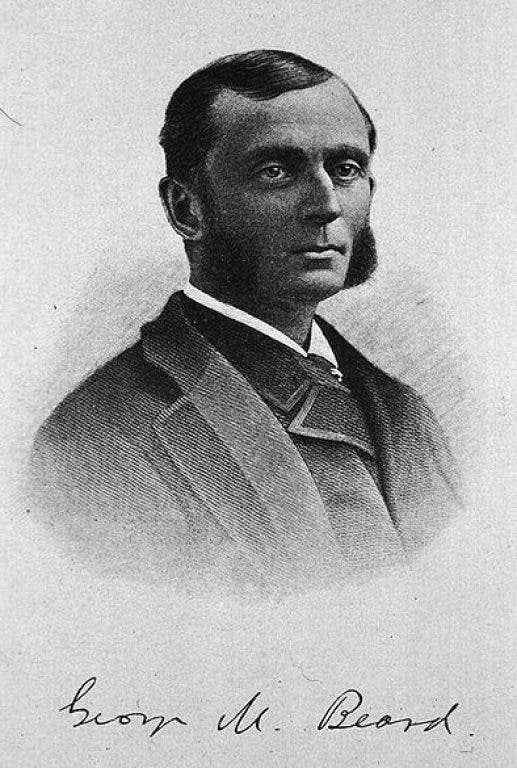
George Miller Beard was born in Montville on May 8, 1839 to Rev. Spencer Field Beard and Lucy Beard. Rev. Beard moved to Montville from Massachusetts to be the pastor of the Montville Congregational Church. Sadly, Lucy Beard died in 1842, just several days after George’s third birthday. While George had two older brothers and an older sister, he was probably too young to remember much of his birth mother.
It was very common, following the death of a spouse in the early 19th century, to remarry as soon as possible. This was especially true for males who were widowers with young children. Upon waiting a year for the proper mourning period to pass, Rev. Beard married Montville resident, Mary Ann Fellowes. Mary Ann was the daughter of prominent Montville physician, Dr. Ephraim Fellowes.
Dr. Fellows must have had an important presence in young George’s life, for unlike his brothers who became pastors, George followed his grandfather’s path. George studied to be a doctor and attended Yale College in 1862. By 1863, the Civil War started and he enlisted as an assistant surgeon on the gunboat New London.
Find out what's happening in Montvillefor free with the latest updates from Patch.
The New London was part of the West Gulf Blockading Squadron, located near the Texas coastline. George served on the gunboat for almost two years. According to Executive Document[s] of the House of Representatives, “George [Miller] Beard received a slight gunshot wound of the thigh during a skirmish with Confederate forces at Sabino Pass, Texas.” Following his enlistment, George began practicing medicine in New York City around 1866.
At this time, Dr. Beard began experimenting with electro-therapeutics. He specialized in nervous diseases, becoming one of the most prominent neurologists of his time. Between 1866 and 1883, Dr. Beard wrote over thirty-five papers, books, and treatises on a variety of conditions which he believed were related to nerves. His most famous work, "Nervous Exhaustion (Neurasthenia)," argued that due to the urbanization in the cities, men and women could not cope with the day-to-day turmoil. Neurasthenia was, and still is used as a diagnosis for a variety of symptoms, similar to Chronic Fatigue Syndrome.
Find out what's happening in Montvillefor free with the latest updates from Patch.
Another famous diagnosis of Dr. Beard’s was the “Jumping Frenchmen of Maine.” The National Organization for Rare Disorders describes this disease:
“Jumping Frenchmen of Maine is an extremely rare disorder characterized by an unusually extreme startle reaction. The startle reaction is a natural occurrence. It is the normal, rapid, involuntary response to a sudden or unexpected stimulus (e.g., a sudden noise or sight).”
Beard only found individuals suffering from this neurological disease in Maine, thus he wrongly assumed they were of French descent. Later, he realized that this was more of a cultural disorder than ethnic, but never altered the name.
Dr. George Beard and his wife, Elizabeth Ann Alden, both died of pneumonia in January 1883, eight days apart. Dr. Beard, the prominent neurologist, remained inquisitive although he laid dying. Prior to his last breath, he proclaimed, "Tell the doctors it is impossible for me to record the thoughts of a dying man. It would be interesting to do so, but I cannot. My time has come. I hope others will carry on my work."
Though dying at an early age, Dr. Beard left behind important research in the field of neurology. Because of his insightful studies, historian Stanley Finger states in, Minds Behind the Brain: A History of the Pioneers and their Discoveries,
“Georges Gilles de la Tourette read Beards paper on the Jumping Frenchmen when it was translated into French. Tourette then began searching for other people throughout Europe with similar symptoms. In 1885, Tourette wrote a scientific paper describing his findings and eventually Tourette Syndrome was named after him.”
As Dr. Beard had hoped, others did carry on his work.