Health & Fitness
Teaching Male National Identity in Early America: Introduction, Part 1
Following the Revolutionary War, how did early American males become "Americanized"? This eight-part blog explores this question using an average 19th century Montville resident as an example.

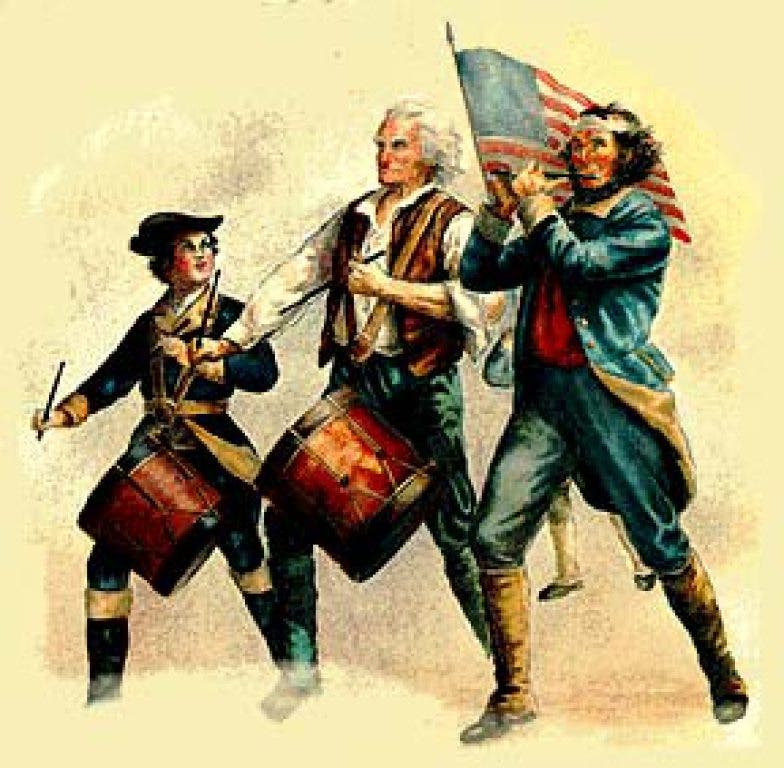

At the end of the American Revolution, new concepts developed from the war. One of these critical ideals was the creation of the American male versus the colonial British-American citizen. These features included such traits as being obedient, virtuous, industrious, individualistic, and epitomizing civic virtue.
This instruction of young men can be seen in an average schoolboy’s ciphering book owned by the Montville Historical Society. Students in Early American used ciphering books to reproduce lessons which the teacher quoted. The teacher was usually the only person who owned a printed version of the lessons.
Ezekiel Austin, age 17, wrote a simple line in his mathematical ciphering book in 1824, “May the girl thou loves be honest and the Land which thou lives in free.” While this is not the most sophisticated poetry, it does give an insight to the thought process of young men and boys of the early republic period.
Find out what's happening in Montvillefor free with the latest updates from Patch.
Accordingly, to obtain a true picture of the indoctrinating of young men into the aspects of American national ideals, one must study the core influences such as family life and all it entailed including school and other daily activities, as well as external influences such as political conflicts and popular culture surrounding the youth. Numerous sources including Austin’s mathematical copybook, parenting advice books, literature, music, and even holidays molded the boys into the conceived notion of a typical American male.
This uprising of national identity began upon the triumphant defeat of the British. With this defeat and re-organization of political structures, citizens of the early republic began to redesign their national identity. Political science author Hans Kohn wrote, “Nationalism is not a natural phenomenon, but an artificial product of historical and intellectual development.”
Find out what's happening in Montvillefor free with the latest updates from Patch.
The resulting nationalist authority is consequently calculated, “with common descent, language, territory, political entity, customs and tradition and religion.” Considering the early nineteenth century, this list of traits had just begun to come together, and it was the parents who began teaching their sons to become American versus British colonial citizens.
Next: Part 2: Teaching Male National Identity in Early America: The Parents Role