Health & Fitness
Teaching Male National Identity in Early America: Leisure Time, Part 6
Following the Revolutionary War, how did Early American males become "Americanized?" This eight part blog explores this question using an average 19th century Montville resident as an example.

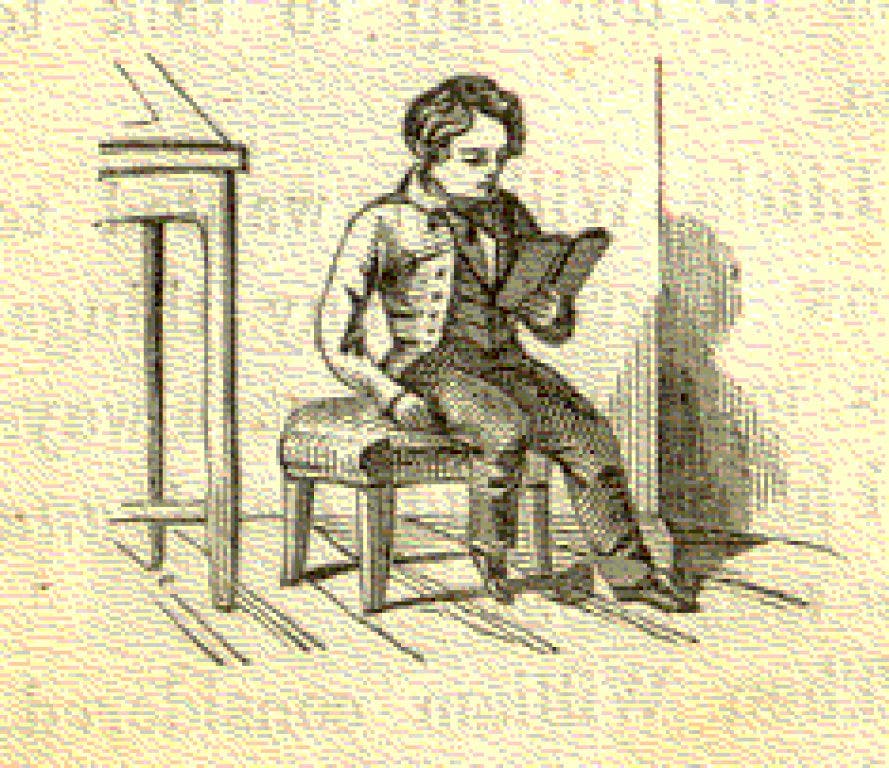


Games and entertainment became a latent method of teaching virtuous traits. Amusements for young men came in a variety of ways including athletic sports, games of skill, scientific experiments, and cultural enjoyments such as music and literature as well as the celebration of holidays. While some of these activities included the entire family, a proportionate amount of amusements catered specifically to boys. With these activities and recreations, they continued to be gender-oriented and reinforced masculine traits.
Adults had concerns regarding the frivolity of amusement, yet as historian Monica Kiefer discussed in her book American Children through their Books 1700 – 1835, “cautiously accepted juvenile recreation as a necessity – simply as a means of enabling children to perform best the grim business of life.” Even publishing companies took advantage of the changing attitudes toward play and began to compile books for young boys to read and emulate. The Boy’s Own Book: A Complete Encyclopedia of All The Diversions of Boyhood and Youth exemplified in a single volume the various amusements available to boys. The book listed a multitude of games with complete directions, including minor sports such as making a pop-gun, a pea-shooter, or a kite. “These toys emphasize[d] movement, and to some extent control, over the landscape.” Thus toys began to orient boys towards their dominance in the sphere of their environments.
Of importance was the mass marketing of reading materials which reemphasized the characteristics of “American manhood.” These periodicals began to flood the homes. Daniel Walker Howe discussed in his academic paper Church, State, and Education in the Young American Republic, “the first half of the nineteenth century was a time of rapidly expanding communications [including] the distribution of magazines, newspapers, and books.” Thus music and literature became more readily available for the masses, and following the War of 1812, the subject matter evolved into a more Americanized theme. However, there were those who forewarned about the content of some novels, especially relating to children and young adults. These novels were not part of the prescribed school curriculum but rather for pleasure.
Find out what's happening in Montvillefor free with the latest updates from Patch.
With ‘pleasure reading’ came the fear of not controlling the contents of the materials. Subsequently, author Lydia Child who wrote The Mother’s Book in 1831 raised concerns regarding literature outside of the school setting. She believed that while “many readers, and writers too, think any book is proper for young people, which has a good moral at the end; but the fact is, some books, with a long excellent moral, have the worst possible effect on a young mind. The morality should be in the book, not tacked upon the end of it.” Child did not voice her apprehensions alone about the type of book that the youth read, Newcomb concurred and went even farther with his admonishments. “The habit of reading merely for amusement is a dangerous habit. Reading for amusement furnishes a constant temptation for reading what is injurious.”
Furthermore, author Harvey Newcomb defined how and what the young man should read. He stated that, “[There is] nothing more injurious to the young than spending the hours in which they are released from study, bending over novels, or light literature of our trashy periodicals.” Newcomb added, “do not take up a book, paper or periodical that happens to fall in your way, because you have nothing else to read. By so doing, you will expose yourself to great evils.” Although Newcomb and Child’s warnings try to instill fear in the young readers and parents, a mass production of novels did occur.
Find out what's happening in Montvillefor free with the latest updates from Patch.
A new feature with early nineteenth century authors was some began incorporating a nationalistic theme and moralistic ending to their novels. James Fenimore Cooper was an example of an author who transcended European style and began creating novels specifically for the American reader. In the case of Cooper, when he published first novel Precaution, according to editor Nathaniel Waring Barnes, “Some of Cooper’s friends protested against his weak dependence on British models. Their arguments stirred his patriotism, and he determined to write another novel, using thoroughly American material.”
Cooper’s next work titled The Spy gained popularity after its publication in 1821. The backdrop of the novel was the Revolutionary War, and the protagonist was a British spy who in reality worked as a double agent for George Washington. The last paragraph of the tale sums up its patriotic theme, “It was the Spy of the Neutral Ground, who died as he had lived, devoted to his country and a martyr to her liberties.” Cooper set the groundwork for future authors. To truly emphasize Cooper’s impact on American culture, there is evidence that George Herbert Rodwell composed a song based on Cooper’s novel The Water Witch in 1830.
Music was yet another mode of reiterating American manhood. The incorporation of national pride into music has been a part of early American culture since the Revolutionary War. George Washington was the subject of plenty of songs such as “A Toast to Washington,” “Washington’s March,” and “God Save Great Washington.” As seen in the educational and history texts, Washington’s veneration as a hero became clearly established through music. The Handbook of Early American Sheet Music, 1768-1889 by Harry Dichter, and Elliott Shapiro, stated, “early Patriotic songs were in demand, including all editions of “Yankee Doodle”, “Hail Columbia” and “Adams and Liberty” particularly those with vignette portraits.”
With the subsequent conclusion of the War of 1812, composers became prolific in their patriotic scores with such composition as “Perry’s Victory” in 1813, “Hull’s Victory” in 1812, and most importantly “The Star Spangled Banner” published in 1814. The early nineteenth century composers lyrically became more patriotic and celebrated the individuality of American nationalism. It seemed that “Patriotism and politics continued to be of primary interest to our songwriters,” according to Sigmund Spaeth in his book A History of Popular Music in America. All the songs listed above about American patriotism were sung with great pride in the halls as well in the homes throughout the nation.
Part 7: Teaching Male National Identity in Early America: Holidays