Sports
Remembrances of Pioneering Baseball Hall of Famer Frank Robinson
The slugger for the Cincinnati Reds and Baltimore Orioles, who went on to become the first black manager in major league baseball, was 83.


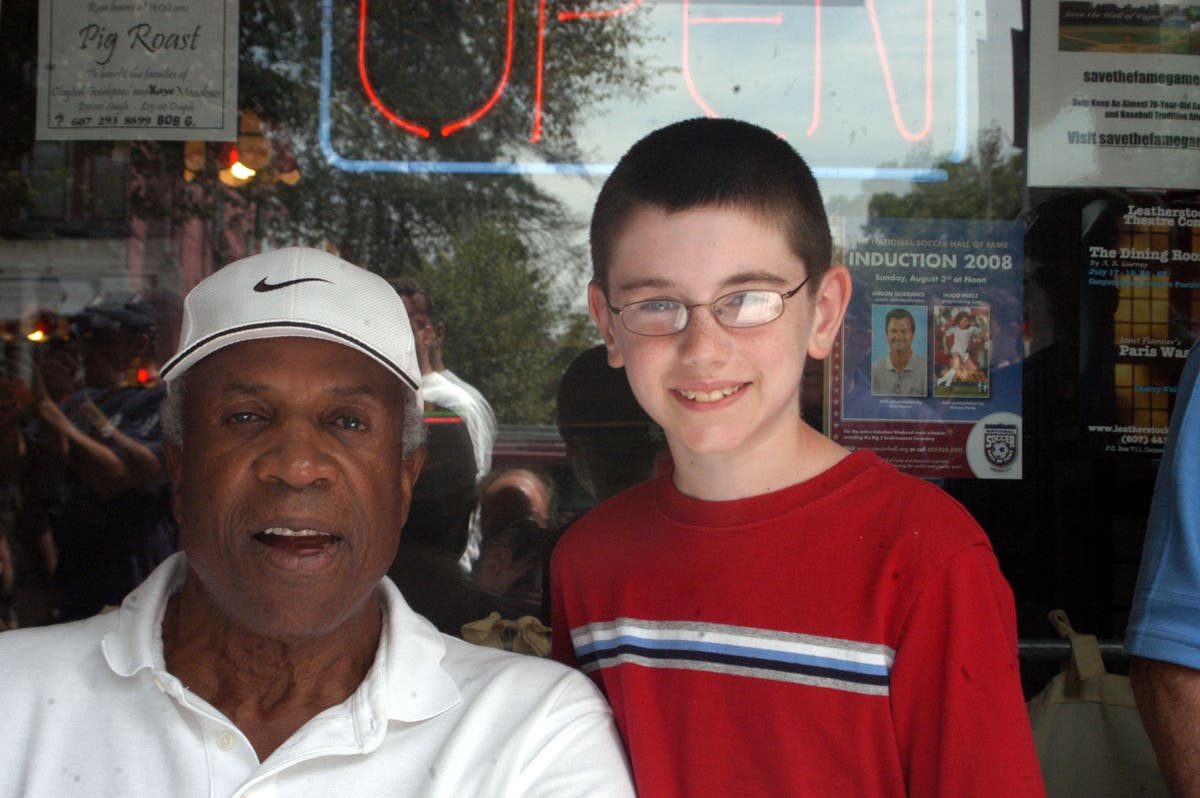
In the summer of 2008, my then-9 year old son Alex had his first real opportunity to meet some legendary athletes, in Cooperstown, N.Y. on the day following the induction ceremonies for the National Baseball Hall of Fame.
After making the 167-mile drive from Enfield, we walked down the sidewalk on Main Street in the village and caught sight of popular New York Yankee legend Yogi Berra, who had long had the reputation of being a fun-loving, humorous man. His humor must have been in bad form that day, however, when he refused to have his picture taken with Alex.
Moments later, the disappointment of a young boy turned to elation and awe, when we encountered prolific sluggers Harmon Killebrew and Frank Robinson sitting side-by-side. "The Killer" had always been regarded as a genuinely nice gentleman, but Robinson, one of the most hard-nosed players of all time, was also known to be rather surly.
Find out what's happening in Naugatuckfor free with the latest updates from Patch.
Were we ever surprised, because, while Killebrew was as gracious as expected, so was Robinson. He even asked Alex to come around the table at which he was sitting, in order to avoid the "leaning across until you're at a 45-degree angle" shot that seems to be preeminent in unexpected celebrity meetups.
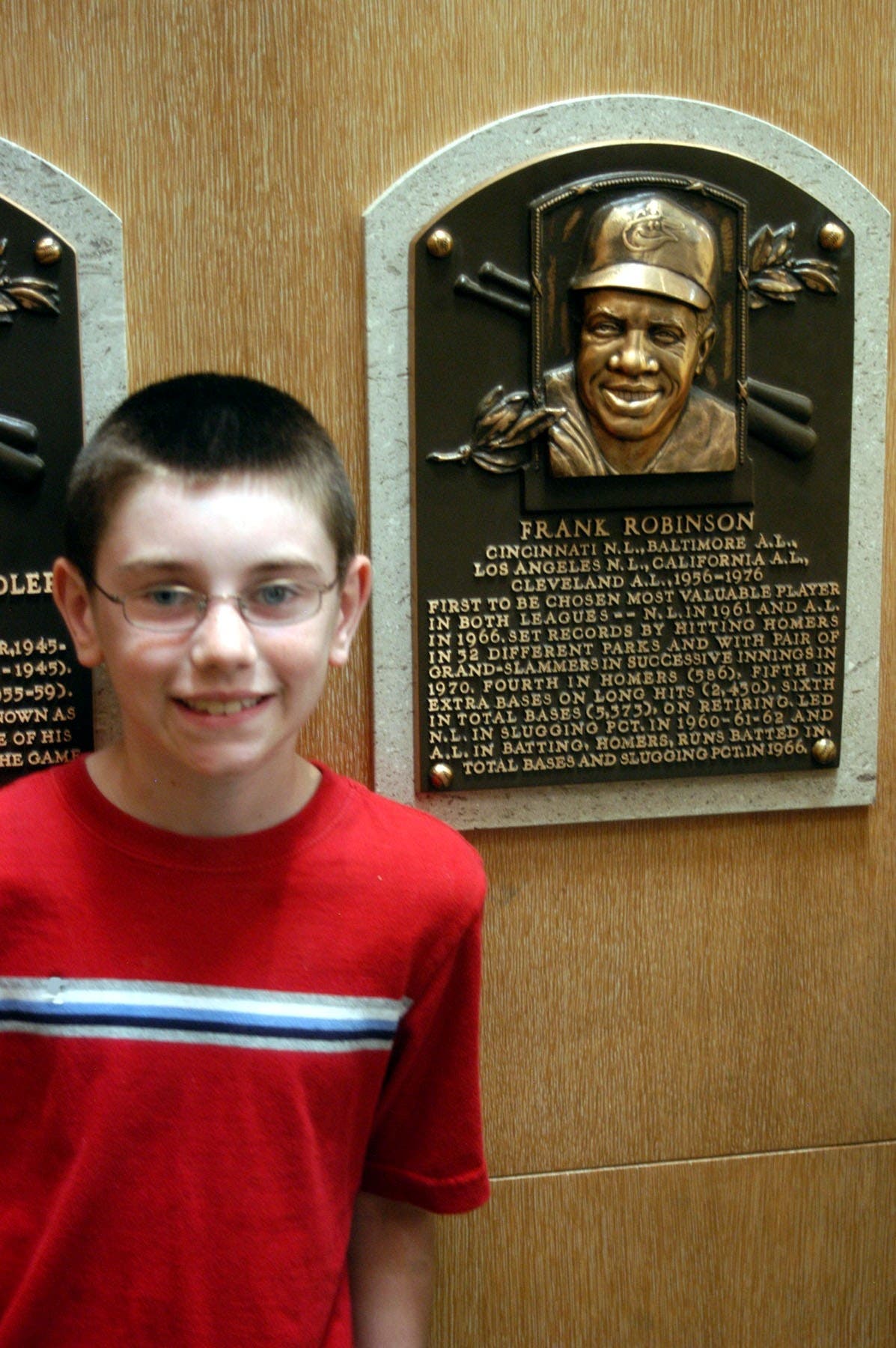
Robinson, who blasted 586 home runs in his 21-year major league career and was elected, along with Hank Aaron, into the Hall of Fame in 1982, spent a few minutes chatting with Alex - a memory that will never be forgotten. That conversation came back into my mind, and that of my son, Thursday afternoon, when word was received that Robinson had died of bone cancer in Los Angeles at age 83.
Find out what's happening in Naugatuckfor free with the latest updates from Patch.
"I didn't really know what was going on or who he was, but he was a nice man," Alex recalled Thursday in a text message from his dormitory at Castleton University in Vermont. "That's all that made sense to my young brain, and that he was a former ballplayer. Seeing his name on the all-time home runs list just hours later, however, allowed for the epiphany moment of "wow, he was a pretty big deal!""
In addition to being a top-notch slugger and excellent right fielder, mainly with the Cincinnati Reds and Baltimore Orioles, the only man to win Most Valuable Player awards in both the National and American leagues was also a baseball pioneer. In 1975, he took over as manager of the Cleveland Indians, becoming the first black man to hold such a position.
Asked about that experience on that village sidewalk more than three decades later, Robinson recalled, "I didn't look at it as being a black man becoming manager - I saw it as a good baseball man taking charge of a team."
He added he was surprised he was the first black to earn that honor, stating he felt Willie Mays would have been the first. Mays, in fact, never did get a major league managing job.
Robinson's career accolades are lengthy, but justify his position as one of the game's all-time greats and deserving member of the All-Century Team, chosen in 1999. He was National League Rookie of the Year in 1956, clubbing 38 home runs to tie a record for rookies which stood for more than three decades, until Mark McGwire blasted 49 in 1987.
On the strength of Robinson's 37 home runs, 124 runs batted in and .323 batting average, the Reds won the National League pennant in 1961; unfortunately, they fell to the Yankees in five games in the World Series. Robinson was voted the league's Most Valuable Player following that season.
Following the 1965 season, after 10 years in Cincinnati, Robinson was traded to the Baltimore Orioles, where he promptly became just the 12th player in history to win the Triple Crown. He batted .316, drilled 49 home runs and knocked in 122 runs, leading the Orioles to their first American League pennant, followed by a four-game sweep of the Los Angeles Dodgers in the World Series.
Robinson, the leader of the Orioles both on and off the field, helped power the team to three more American League pennants from 1969 to 1971, and a five-game World Series championship over his former club, the Reds, in 1970. Near the end of his playing career, he bounced around from the Dodgers to the California Angels to the Indians, with whom he made history by being named player-manager prior to the 1975 campaign.
He and Aaron were both elected to the Hall of Fame in their first year of eligibility in 1982, a feat accomplished just 16 times prior. While Aaron, like Mays, never did manage in the majors, Robinson enjoyed tenures with the San Francisco Giants, the Orioles and the Montreal Expos/Washington Nationals. He was named American League Manager of the Year with Baltimore in 1989, and compiled 1,065 victories as a big league skipper.
Robinson was awarded a Presidential Medal of Freedom by President George W. Bush in 2005. His uniform number, 20, was retired by the Reds, Orioles and Indians, and all three of those teams have statues of Robinson at their stadiums.
About two years after meeting Robinson, my son and I, along with my daughter Mia, had the chance to meet Hall of Fame manager Earl Weaver, one of the most colorful characters in the game's history. When asked who was the greatest player he had ever managed, the longtime Orioles pilot responded, without hesitation, "Frank Robinson."
We mourn the loss of Hall of Famer and Orioles Legend Frank Robinson. #Frank20 pic.twitter.com/4yy4lV2U4N
— Baltimore Orioles (@Orioles) February 7, 2019
Another sad day in Birdland with the passing of Frank Robinson. Played the game tough, hard but fair. Made all of us better players, and https://t.co/CZJL5aUcD7 condolences to his family. RIP#20 @masnOrioles
— Jim Palmer (@Jim22Palmer) February 7, 2019
A tribute to Frank, forever in our hearts, forever an Orioles Legend. #Frank20 pic.twitter.com/4oDMguNB7t
— Baltimore Orioles (@Orioles) February 7, 2019
The Cincinnati Reds mourn the loss of Hall of Famer Frank Robinson. pic.twitter.com/YoQLwfAYt6
— Cincinnati Reds (@Reds) February 7, 2019
Legend. Baseball pioneer. Hall of Famer. We are saddened to hear of the passing of Frank Robinson. Frank left a significant impact on the game of baseball when he became the first African-American manager in Major League history. pic.twitter.com/20D1ltQpzh
— Cleveland Indians (@Indians) February 7, 2019
Heartbreaking news in the passing of my Dear Friend & @McClymondsHS classmate Frank Robinson. It was my pleasure & great honor to have known him. We all know we lost one of the Greats, what we really lost was a Friend. #RIP @MLB @NBA @BleacherReport @MSNBC @CNN @SFGiants pic.twitter.com/KETXL9MhT8
— TheBillRussell (@RealBillRussell) February 7, 2019
We are saddened by the loss of Frank Robinson, a Hall of Famer, 2-time MVP and MLB’s first African-American manager. He was 83. pic.twitter.com/tYDZGMWAfd
— MLB (@MLB) February 7, 2019
Truly one of the reasons why I became a huge baseball fan; marveled at his accomplishments as a kid. May you RIP, Mr. Robinson.... https://t.co/UCezB9ajJx #MLB @Orioles @Reds @Indians @ctmascaro @RevFranklinBigM @27_OutsBaseball @TomJoyceSports @JJensenRF @JoeDeCrosta @LeeElci
— Bob Lazzari (@Bob_Lazzari) February 7, 2019
Photo credits: Tim Jensen
Get more local news delivered straight to your inbox. Sign up for free Patch newsletters and alerts.