Arts & Entertainment
Theater Review - 'Angels in America Part 2: Perestroika' by WCSU
Performances (at 1 p.m. or 7 p.m.) continue at the VPAC on the Westside campus through Sunday and tickets (at eventbrite.com) are limited.




Review by Nancy Sasso Janis
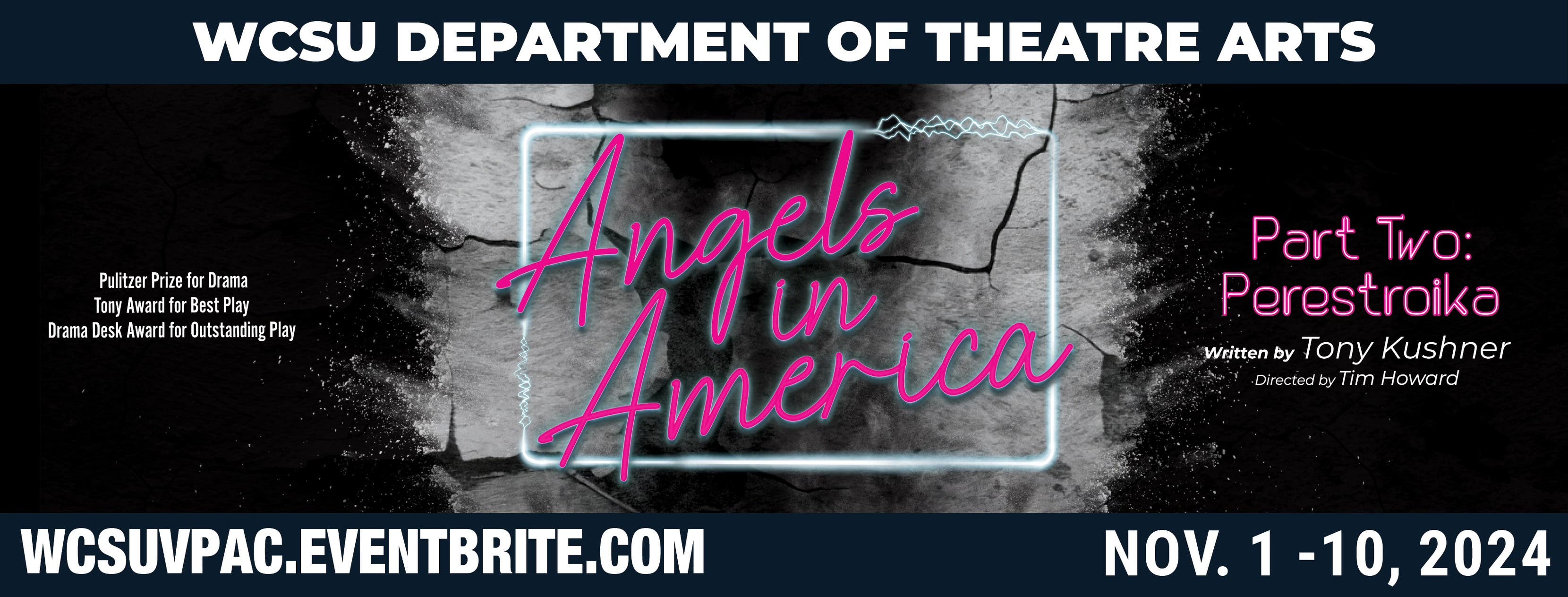
The Western Connecticut State University of Theatre Arts is presenting “Angels in America Part Two: Perestroika,” the extensive and complex 1993 work by Tony Kushner that deals with AIDS and homosexuality in New York in the 1980s.Performances continue at the VPAC on the Westside campus through Nov. 10.
The students are directed by Professor Tim Howard, who deems this play “the greatest piece of Queer literature written in the last century.” Professor Howard sees this two-part work as “not just a gay-themed epic. Kushner’s rage also explores politics in America, religion, morality, social injustice, and discrimination.” It is also often quite funny at times, despite all of these heavy themes.
Find out what's happening in Naugatuckfor free with the latest updates from Patch.
I was not able to catch a performance of “Part One: Millennium Approaches” that was presented last November, so I approached this play with almost no background information.
Howard wrote that the playwright “likes to walk into a theatre not knowing much about what he’s going to see” and the director used this philosophy as his cue. There are no spoilers in his Director’s Note, and only information about Roy Cohn in the Dramaturg’s Note, titled “The More Things Change…”
Find out what's happening in Naugatuckfor free with the latest updates from Patch.
Perhaps because the performance runs for three hours, I was able to piece together the relationships of the characters, both real and imagined, pretty accurately in my program. I was told that the student dramaturg Liv Lanteri had put together a separate aid to the characters that appear in both parts of the tale, but I was not able to get a copy during the performance. I recommend picking one up if you can.
The director points out that all of the characters in the play are “dancing as fast as they can under extraordinary circumstances.” He set out to explore the “inner psyche through physicality as well in our interpretation.” So it often seems as if the players are in constant motion, and the up and coming performers always manage to keep up. Patrons will be impressed with the amount of lines and movement that they must master for a three hour play.
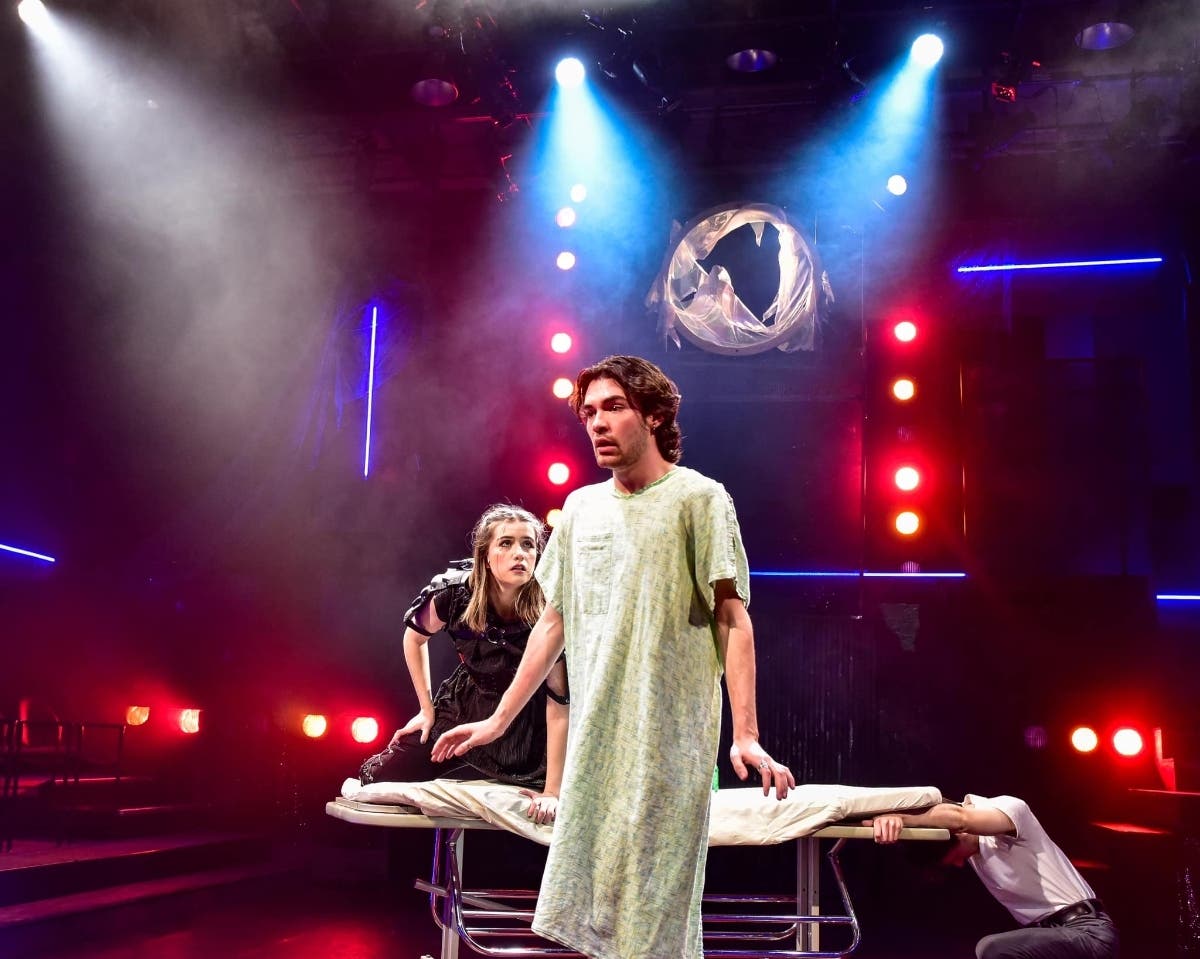
The eight student actors, all of whom play two or more roles and all give spectacular performances. Many portrayed not only their named role, but doubled as another character/ghost or choreographed set mover.

Sophomore Logan Perrault takes on the role of the real life McCarthyist lawyer and power broker Roy Cohn; Perrault understudied this role last year. Brian A. Cummings, a sophomore at WCSU, plays Louis, a gay man between two lovers. Senior Donovan Shaw is spot on as a nurse called Belize, the role he played in Part One. Senior Jacob Erdody portrays a Mormon lawyer named Joseph, who is Roy's protegee.
Junior Jack Canevari takes on the role of Prior, a gay man infected with AIDS who has heavenly visions. The actor played the same role in Part One last year. Junior Majella Maltempi plays Joseph’s wife Harper and Zola Kneeland, a junior from Orange, plays Hannah, the mother of Joseph. Audrey Loverro has two costume changes in the role of The Angel, one white and one black and both corseted.

I was impressed that each member of this cast had another student that understudied their role, not an easy undertaking. The understudies include Brett Foltz, Xela Roper, Zachary Spreng, Henry Grimm, Kiernan Urso, Emily Sullivan, Amy Mandelbaum and Julia Crowley.
Howard’s vision of Kushner’s term “Theatre of the Fabulous” began with presenting the scenes essentially in the round, leaving patrons not always sure where to look, and perhaps that was the point. We can watch the actors move the set pieces without a blackout and we walk past the prop shelves upon entering the black box. Every detail of the set and the costumes is carefully considered, as are the design of the often pulsing techno sound and lighting. I was glad that I had chosen a seat in the front row along the long ends of the rectangular floor space, as I felt completely immersed in the action at times.
At the matinee that I attended, technical difficulties required that the stage manager Summer Wilmot sit in the house next to the soundboard in order to call the show.
While this is not a play for everyone, and not for children, I appreciated all of the hard work that had gone into this gutsy choice and I am glad that I was able to experience it. The production included the use of strobe lights and haze and contains mature language and themes. The performance is approximately three hours with two ten-minute intermissions. It would be difficult to leave the space during any of the three acts without walking through the stage area. Performances (at 1 p.m. or 7 p.m.) continue at the VPAC on the Westside campus through Sunday and tickets (at eventbrite.com) are limited.
Next up at WCSU will be “The Mound Builders” on the Mainstage Theatre stage Nov. 22-24.
WCSU photos