Business & Tech
Connecticut Liquor Stores Look to Shake Up Laws Again
Two large chains have begun to sell alcohol below the minimum bottle price, which goes against a unique Connecticut state law.


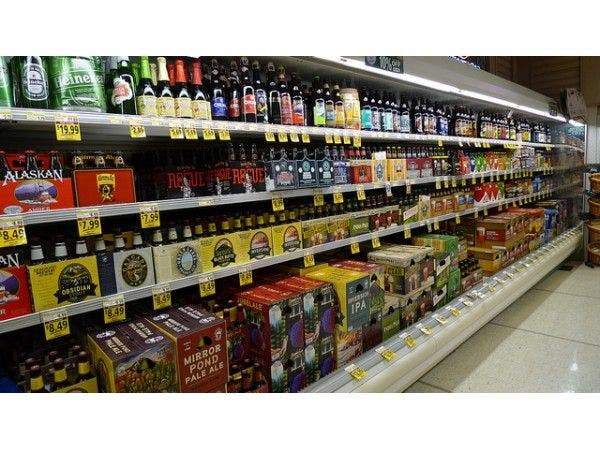
The past few years have seen a number of odd Connecticut alcohol laws changed or eliminated. Two large liquor stores are hoping to go one step further and eliminate the state's minimum pricing law.
Total Wine and More filed a lawsuit in U.S. District Court against the state over the law, claiming it violates the federal Sherman Antitrust Act.
Meanwhile, the chain began flouting the law by selling some wares at below the minimum price, according to Fox 61. It was joined by BevMax in selling below cost.
Find out what's happening in New Canaanfor free with the latest updates from Patch.
“Total Wine & More has been prevented from offering the best prices by an anti-competitive regime of statutes and regulations that intentionally promotes… price-fixing by Connecticut wholesalers of alcoholic beverages,” wrote attorneys for Total Wine & More in a civil complaint.
The minimum pricing rule is unique to Connecticut and results in up to 24 percent higher prices for identical products offered in different states, according to a study by the Distilled Spirits Council of the United States.
Find out what's happening in New Canaanfor free with the latest updates from Patch.
The state coalition of package stores contends the minimum pricing law allows small mom and pop stores to compete with large chains.
Gov. Dannel Malloy has pushed for a number of the adopted liquor law changes, including Sunday sales. A spokeswoman told the New Haven Register that Malloy supports an end to the minimum price law, which drives consumers to nearby states for cheaper prices.
The original minimum pricing law was adopted in 1981 after another law regarding a mandatory minimum markup on retail sale of alcoholic beverages was repealed, according to an Office of Legislative Research report.
A Connecticut Liquor Control Division spokeswoman told the Register that both retail chains are being investigated.
Carol Hughes, president of the state coalition of package stores, told the Connecticut Post that BevMax and Total Wine and More are clearly violating the law and the coalition is looking at various possible actions.
The minimum price law has since been amended four times, most recently in 2012 to allow one monthly item to be sold below cost (not less than 90 percent) and in 2005 when the calculation for cost of beer was changed.
For alcohol other than beer, the minimum price is the bottle price plus shipping and handling. Bottle price is the price of a bottle determined by dividing the case price by the number of bottles and adding two, four or eight cents, depending on bottle size.
The minimum pricing law has been debated since it was initially proposed. Representative Robert Carragher introduced the bill as a way to lower alcohol prices in state so residents wouldn’t flock to other nearby states for their alcohol purchases, according to the OLR report.
It was estimated the previous minimum pricing markup was costing the state between $1 and $4 million annually in lost taxing potential.
Image via Ewan Munro/Flickr Commons
Get more local news delivered straight to your inbox. Sign up for free Patch newsletters and alerts.