Health & Fitness
Connecticut’s Drinking Water Includes the Toxin Made Famous By Erin Brockovich: Study
All of Connecticut's levels fall within current safe regulatory limits, but an environmental group is pushing for new EPA regulations.


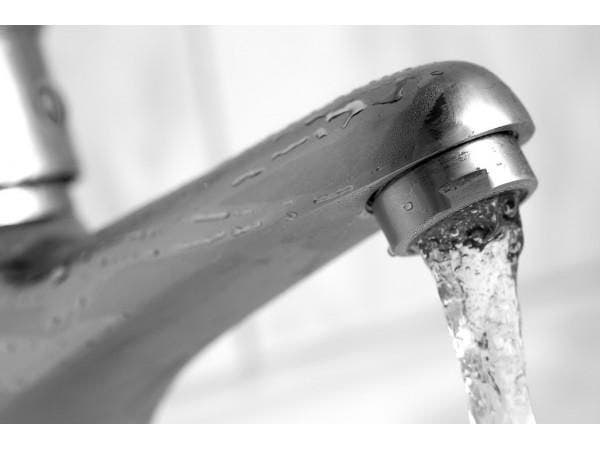
The chemical made famous by the “Erin Brockovich” movie has been found in the tap water supply of more than 200 million Americans, including some in Connecticut. There is debate however if levels pose a risk to humans.
The National Toxicology Program found in a 2008 study that mice and rats that drank chromium-6-laced water developed stomach and intestinal tumors.
The first nationwide tests for chromium-6 took place between 2013 and 2015 and it was found in more than 75 percent of samples, according to the Environmental Working Group, (EWG) an environmental safety advocacy organization.
Find out what's happening in New Canaanfor free with the latest updates from Patch.
Chromium-6 Standards
- EPA: 100 parts per billion (ppb) for total chromium. Assumes all chromium is the more toxic 6 variant.
- California limit: Maximum amount of chromium-6 at 10 ppb.
- California health goal (not a mandate): .02 ppb.
All of Connecticut’s testing for chromium-6 came well below the EPA standard of 100 parts per billion (ppb) for total chromium. The EPA standard assumes all chromium in water is the more toxic chromium-6 variant.
Find out what's happening in New Canaanfor free with the latest updates from Patch.
The highest level detected in Connecticut drinking water was 1.2 ppb in Hazardville, which is a portion of Enfield. Hartford County had the greatest average out of all counties at .312 ppb. (See below for a county-by-county breakdown).
However the EWG argues that the EPA’s standards are outdated and more research and regulation is needed to determine safe levels of chromium-6 in drinking water. It also alleges that the EPA’s risk assessment is being stalled by the chemical industry.
The EWG estimates that chromium-6 in drinking water will cause more than 12,000 excess cases of cancer by the end of the century.
Connecticut’s drinking water passes even among the most strict regulatory limits in the country.
The California State Water Board set a maximum contaminant level for for Chromium-6 at 10 parts per billion.
Even Hazardville’s level is just 12 percent of California’s current regulatory limit.
California’s public health goal is .02 parts per billion.That goal would pose no more than a one in a million chance of cancer for people who drink it daily for 70 years, according to the EWG.
The Connecticut Department of Public Health had already convened a working group to study the issue of chromium-6 in drinking water when the EWG released data in 2010. The department is also part of a small national workgroup that will discuss future actions.
The American Chemistry Council, an industry trade association released a statement about the EWG publication:
Because of the limited scientific data available to inform how low environmental levels of this naturally-occurring substance could impact human health, ACC supported a third party research organization to undertake a large, multiple-institution research study. Some of the papers received awards from the preeminent Society of Toxicology.
This is a positive example of industry supporting independent, peer-reviewed research to inform regulatory decisions about hexavalent chromium [chromium-6] and drinking water.
The ACC also believes the EPA and other government agencies should consider the entire scientific database on chromium-6 as it makes regulatory decisions.
Connecticut data
Fairfield County
Average: .06 ppb
Range: Not detected-.26 ppb
New Haven County
Average: .141 ppb
Range: Not detected-.86 ppb
Middlesex County
Average: .101 ppb
Range: Not detected-.49 ppb
New London County
Average: .0457 ppb
Range: Not detected-.26 ppb
Litchfield County
Average: .137 ppb
Range .03-.2 ppb
Hartford County
Average: .312 ppb
Range: Not detected-1.2 ppb
Tolland County
Average: .0518 ppb
Range: .0480-.0570 ppb
Windham County
Average: .0363 ppb
Range: Not detected-.07 ppb
(A full map with testing averages and further information can be found here.)
The most common forms of chromium found in drinking water are chromium-3 and chromium-6, according to the EPA. Chromium-3 is an essential human dietary element and is found in many types of food. Chromium-6 occurs naturally in the environment from erosion of chromium deposits and from man made industrial processes.
The EPA regulation applies to total chromium because chromium can convert back and forth between the 3 and 6 forms while in water and the human body.
“In order to ensure that the greatest potential risk is addressed, EPA's regulation assumes that a measurement of total chromium is 100 percent chromium-6, the more toxic form. If tap water from a public water system exceeds this federal standard, consumers will be notified.”
The EPA began a risk assessment and in 2010 completed a draft risk assessment that classifed oral exposure to chromium-6 as, ““likely to be carcinogenic to humans,” according to the EWG.
The EPA was contacted by The ACC, a lobbying arm of the chemical industry and asked that the EPA delay publication until studies financed by the Council and the Electric Power Research were completed.
The EPA has pushed back its risk assessment publication from 2015 to 2016 and then to early 2017.
EWG is pushing for the EPA to rely on studies not funded by industries that could be affected by new regulations.
Image via Shutterstock
Get more local news delivered straight to your inbox. Sign up for free Patch newsletters and alerts.