Neighbor News
Norwalk and Canaan Parish's Historical Connection
--Canaan Parish was formerly part of the larger port towns of Norwalk and Stamford, and now one of our area's c.1735 homes is threatened.--
Norwalk and Canaan Parish’s Historical Connection
--Canaan Parish (now New Canaan) was formerly part of the larger port towns of Norwalk and Stamford, and now one of our area’s c.1735 homes is threatened with demolition--
Many of us go through our modern days with barely a thought to our towns’ origins, or historical connection to each other.
Find out what's happening in New Canaanfor free with the latest updates from Patch.
But, we now have a situation whereby an integral part of that history may fall beneath the wrecking ball within a few weeks. A group of dedicated Norwalk and New Canaan residents are working to prevent that.
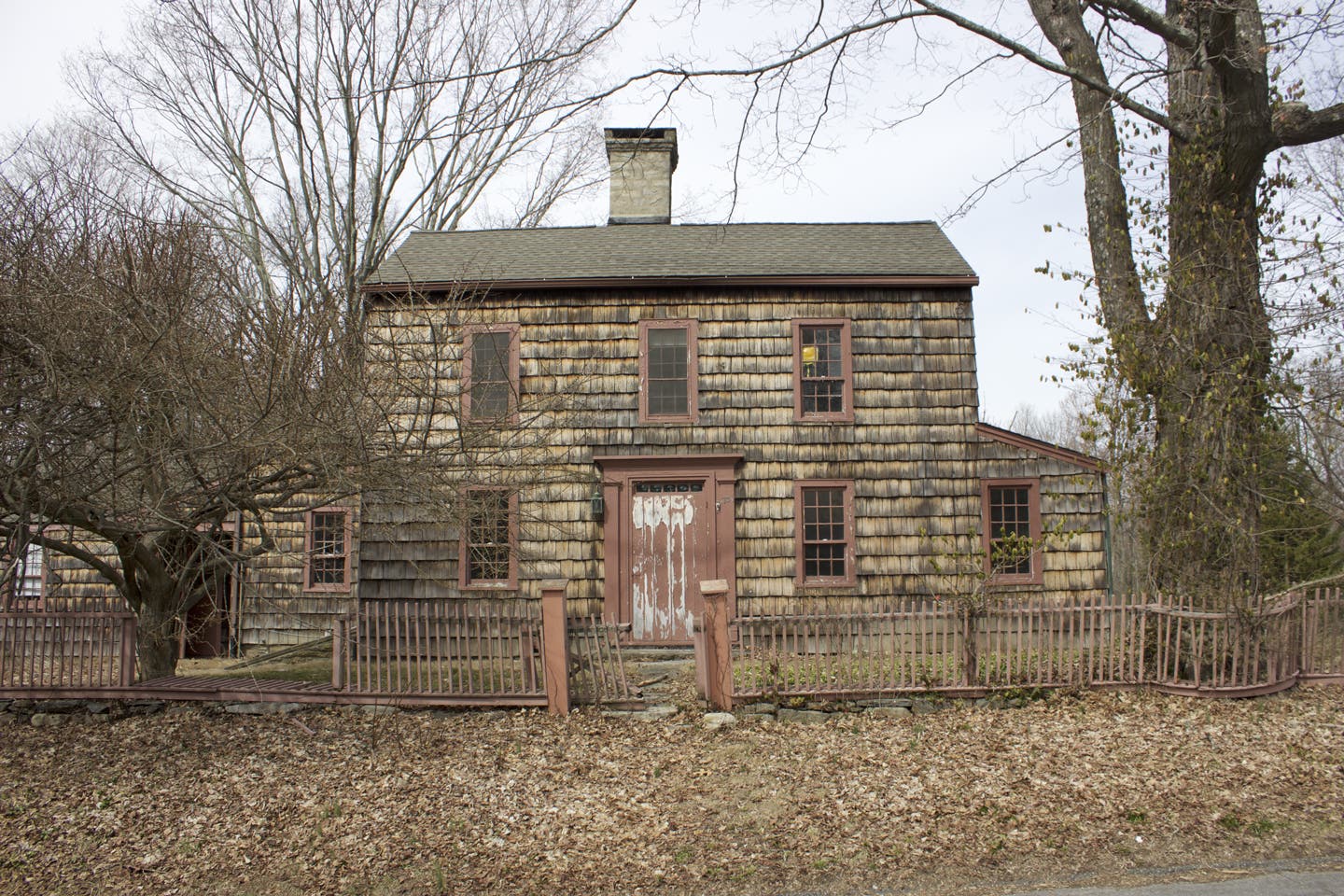
8 Ferris Hill Road is home to a c.1735 saltbox-style Colonial house. Its’ simple exterior, however, belies a treasure of historical significance. It is considered a “visitation house,” which is a home visited in 1772 by the Reverend William Drummond, third minister of the New Canaan Congregational Church.
Find out what's happening in New Canaanfor free with the latest updates from Patch.
Few people remember that Canaan Parish, now New Canaan, was formerly a part of Norwalk and Stamford, both economically and politically. In the early years of what later became the United States, churches played an important role in the British colonies, through local government and town rules. A portion of taxes collected were used to pay the salaries of ministers and to maintain church buildings.
At these visits to his parishioners, Reverend Drummond counted the number of residents in each house. The journal in which he recorded his visits is regarded as a fairly accurate census of that era. The endangered house on 8 Ferris Hill Road echoes with this past. Founders of New Canaan lived in this house. It was home to Hoyts, Burwells, Carters, Benedicts, and Boutons. In 1957, after purchase by Diana Tillson and her mother, it was lovingly restored.
The loss of an antique house is a loss of part of our history that will be gone forever.
Thanks in large part to Rev. Drummond’s detailed diary, and the adaption of this diary into a book by Lois B. Bayles, we have an intimate understanding of many aspects of the Norwalk / Stamford / Canaan Parish history during the crucial pre-Revolutionary War years.
Our roots connecting Norwalk, Stamford and Canaan Parish, run deep.
Those of us who remember our Early American history classes might recall that the British burned Norwalk in 1779, in retaliation for raids against Long Island by enthusiastic patriots. The records of Norwalk’s St. Paul’s Episcopal Church were destroyed in this raid, but Stamford’s St. John’s Episcopal Church records remain. They’re filled with references to Canaan Parish families.
One fascinating section of the Drummond book states,
“Little Phebe Comstock (daughter of Moses Comstock) climbed an apple tree on her father’s farm on Ferris Hill to watch the flames consume the homes of many of her family’s friends and relatives. Her cousin, Thomas Comstock, opened his house in Valley Road to refugees as they fled up the Silvermine Valley to escape the fighting. Throughout the whole period, Tory raiders constantly harassed the homesteads and ship-landings along the Sound, while marauding bands from Westchester County threatened the Northern part of the Parish.” (1)
Now a house on that same road, which was itself a witness to these historic events, is threatened with demolition.
According to preservationists, the house is in remarkably good condition. Its focal point is its 20’x20’ stone chimney slab, which the house was built around. This chimney ascends through the first and second floors of the house, providing heat, light, and warmth through its various fireplaces and cooking hearth.
The Connecticut Trust for Historic Preservation’s Wes Haynes, noted, “The building is a very well-preserved example of an early eighteenth century farmhouse…the evolution of the house over time is consistent with the way eighteenth century Connecticut farmhouses grew over time, and the preservation approach taken demonstrates a great deal of respect for the building’s antiquity by its previous owners. As a result, the building survives with a high degree of architectural integrity, and much of the site around the house is undisturbed and archaeologically sensitive.”
Norwalk residents Jenny and John Harrington, owners of a similar antique house in Norwalk, noted, “A lot of people don’t realize how closely intertwined the histories or Norwalk and New Canaan are. The family that built our house around 1784 owned significant property in Canaan Parish, and the early inhabitants of our house and of 8 Ferris Hill absolutely would have considered one another to be neighbors. Probably not coincidentally, the architecture of the two houses is strikingly similar, and despite being in different towns, the story of 8 Ferris Hill enriches the story of our own house and of Norwalk. To lose such a vital historic resource would be a real blow to both towns.” The story of their home’s restoration can be found at http://www.enoskellogghouse.blogspot.com
For more pictures and information on the 8 Ferris Hill Road property, please visit the current owner’s site, www.8FerrisHill.com.
To learn more about the two non-profit organizations working together to save this important property go to nchistory.org and www.newcanaanpreservationalliance.org . To get involved please email Save8FerrisHillRoad@gmail.com, info@nchistory.org, or ncpa_contact@newcanaanpreservationalliance.org .
For updates, please visit @Save8FerrisHill on on Facebook, Twitter, and Instagram.
(1) “The Visitation Journey of Rev. Wm. Drummond,” by Lois B. Bayles (1973), page 19
?zj