Community Corner
'CT Militia: The Defense of New Haven' At Pardee-Morris House
On Sunday, learn about the 1779 burning of New Haven as historian Robert A. Geake shares a "rarely heard story of Revolutionary War."


NEW HAVEN, CT — Calling all history buffs. And anyone looking for a unique, and historical, weekend event.
Sunday at the Pardee-Morris House, author and historian Robert A. Geake will don the uniform of a Revolutionary War continental soldier to present a rarely heard story of courage and tenacity during “Connecticut Militia: The Defense of New Haven," which was torched by Redcoats and later rebuilt by the Morris family. The free lecture will be held at 2 p.m. For virtual attendance register here.
Here's a little history lesson about the event:
Find out what's happening in New Havenfor free with the latest updates from Patch.
“Remember New London!” was General Lafayette’s battle cry to Connecticut troops at the siege of Yorktown in 1781, which led to the end of the Revolutionary War. The troops knew of the burning of New London earlier that year; perhaps some witnessed the attack on New Haven in 1779.
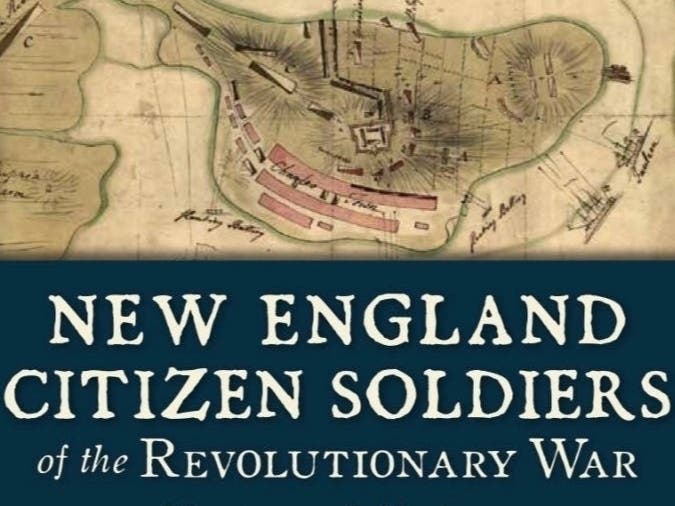
Geake’s presentation will be based on his book, “New England Citizen Soldiers of the Revolutionary War: Minutemen and Mariners.” He notes that while many leaders and heroes of the American Revolution are renowned, lesser known are the citizen soldiers who fought in regions far removed from their homes and families or became mariners in the fight for independence. Geake will tell how ordinary citizens united in the cause for freedom and struggled to balance their loyalty to their home state, their property, and families.
Find out what's happening in New Havenfor free with the latest updates from Patch.
From the occupation of Aquidneck Island in Rhode Island by the British in 1776, the citizens of Connecticut found their coastline in almost constant peril from British raiding parties, and their merchant and marine vessels forced to venture out onto the now tempestuous waters of Narragansett Bay and Long Island Sound, according to Geake.
Fathers and sons who had eagerly enlisted at the start of the American Revolution now found themselves facing the risk of the loss of property and their loved ones as the war took them from home to the "foreign soil" of other colonies. Despite this, the homegrown militias left in defense of the state rose to the occasion repeatedly against tremendous odds.
Geake notes the raid on New Haven in 1779 is one example of a successful call-to-arms from neighboring communities that stemmed a planned invasion. “From the New Haven minister who bravely rode past the militia toward the enemy landing, to the wives and sisters who took up arms in the absence of their husbands and brothers to protect the shore, the resilience of Connecticut's citizens in defending their homeland remains an under told story of courage and tenacity during the American Revolution,” he says.
Geake is a public historian who has written 14 books on Rhode Island and New England history, including “From Slaves to Soldiers: The 1st Rhode Island Regiment in the Revolutionary War” and “New England Citizen Soldiers of the Revolutionary War.” His most recent book “New England Plantations, Commerce, & Slavery” was published in 2020.
He serves as the president of the Cocumscussoc Association, which manages Smith’s Castle historic house museum in North Kingstown, Rhode Island. He is a member of the Friends and Associates of the John Carter Brown Library at Brown University, as well as the Rhode Island Historical Society. He manages his blog “RI Footprints” and is a contributing editor to the blog “Small State Big History,” the online review of Rhode Island history.
The Pardee-Morris House, whic dates to 1780, is located at 325 Lighthouse Road, in New Haven.
Built by Amos Morris around 1750, the house was burned by the British during their raid on New Haven in 1779, and rebuilt and expanded by the Morris family. In 1918, William S. Pardee, a descendant of the Morris family, willed the property to the New Haven Colony Historical Society, today the New Haven Museum.
Get more local news delivered straight to your inbox. Sign up for free Patch newsletters and alerts.