Community Corner
Exploring the Jagged Edges of History: Graphic Novel 'The Black Schooner' Launch at New Haven Museum
'The Black Schooner' examines the 1839 Amistad Rebellion, from Sierra Leone to the New Haven Trials, and an unexpected abolitionist victory.


From the New Haven Museum:
NEW HAVEN, CT—Rough history requires rough art, according to graphic artist/musician David Lester. Lester and historian Dr. Marcus Rediker will explore the jagged edges of history and parse the creative process behind their newest collaboration, “The Black Schooner: Rebellion on the Amistad, A Graphic Novel,” during a special book launch at the New Haven Museum on Wednesday, September 30, 2026. Reception at 5:00 pm, program at 6 pm.
The program is free and offered as a Connecticut Freedom Trail Month activity. Registration is required and available here.
Find out what's happening in New Havenfor free with the latest updates from Patch.
“The Black Schooner” transports readers from the rebellion by 53 people from Sierra Leone on the Amistad in 1839, to the resulting trials in New Haven and an unexpected international victory for the abolitionist movement. Rediker (onsite) and Lester (virtually) will offer insights on the interpretation and the behind-the-scenes decisions that guided the creative process for telling the story in graphic-novel format.
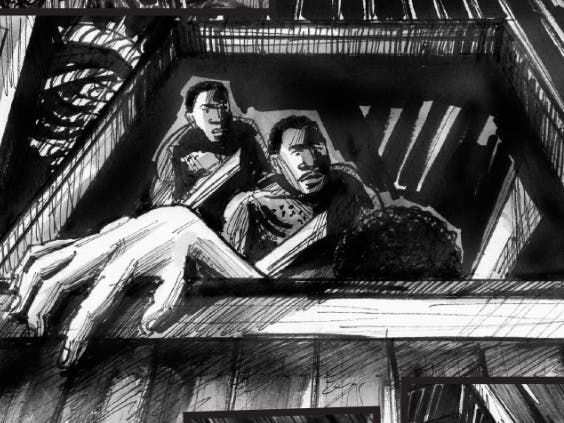
“I want readers of ‘The Black Schooner’ to have a visceral experience of history that spills forth in the splatter of ink on the pages,” Lester says. The book’s bold style pushes the limits of light and dark, with a raw texture in black and white with which Lester brings to life the essence of resistance. “For me, the artwork must match the emotional depth of the history being depicted,” he says. “This aesthetic approach goes back to my own origins as a punk rock guitarist where the splintering sound of a distorted chord rings out with a kind of raw beauty.”
Find out what's happening in New Havenfor free with the latest updates from Patch.
Rediker, Distinguished Professor of Atlantic History at the University of Pittsburgh. has made it his business to publicize the real history of the Amistad uprising. “The Amistad affair, as it has been called, is one of the most important historical events in the history of both the state of Connecticut and the American nation,” he says. Rediker authored “The Amistad Rebellion: An Atlantic Odyssey of Slavery and Freedom” in 2012 and teamed up with filmmaker Tony Buba to create the prize-winning documentary, “Ghosts of Amistad: In the Footsteps of the Rebel” in 2014. “Having made these two efforts to publicize the real history of the Amistad uprising, I wanted to reach a new portion of the public through the graphic novel, so I teamed up with the Lester to create ‘The Black Schooner.’” The powerful visual experience re-centers the West African rebels as the primary actors in their own freedom story while presenting their tale of liberation and social justice to new readers in a graphic style.
At 4 p.m., Rediker and Lester will hold a conversation with educators on how to use the graphic novel as an educational resource and teach “history from below.” All educators are invited and encouraged to register in advance.
“David and I foresaw an all-ages audience for the books, and we had a special concern for younger readers, who need to know that history has been made, and can still be made, by resistance from below,” Rediker says. He explains, “Since we in the United States have not achieved full freedom, democracy, and equality for all people, the Amistad rebellion remains a reminder that people have long fought for these ideals and that we still have work to do.”
During the workshop, Rediker will discuss with educators the process of making the book and how he and Lester emphasized themes of action, drama, and humanity in telling the story in visual and textual terms. He will share various ways to teach the book: how to use historical sources, how to identify the larger forces shaping the story, and how to role-play the action, which will help students grasp the deep human emotions embedded in the story.
“Young people are very sophisticated when it comes to text and visuals,” Lester says. He adds that graphic novels are a perfect medium to convey complex history in an engaging way, especially for students and the general public. “The graphic novel or comics form has the ability to communicate in ways that traditional history books do not by removing barriers for potential readers who find history boring or intimidating.” He notes that students are extremely receptive to graphic novels, and their use is now essential in the process of teaching.
New Haven Museum Director of Education Joanna Steinberg notes that the museum, in collaboration with the Anti-Racist Teaching & Learning Collective, launched a book club in August for educators who teach at local middle and high schools. “Ten committed educators, who teach social studies, ELA, and theater, held substantive discussions about “The Black Schooner,” how they would use the graphic novel in their classrooms, and the opportunity it presents for students.”
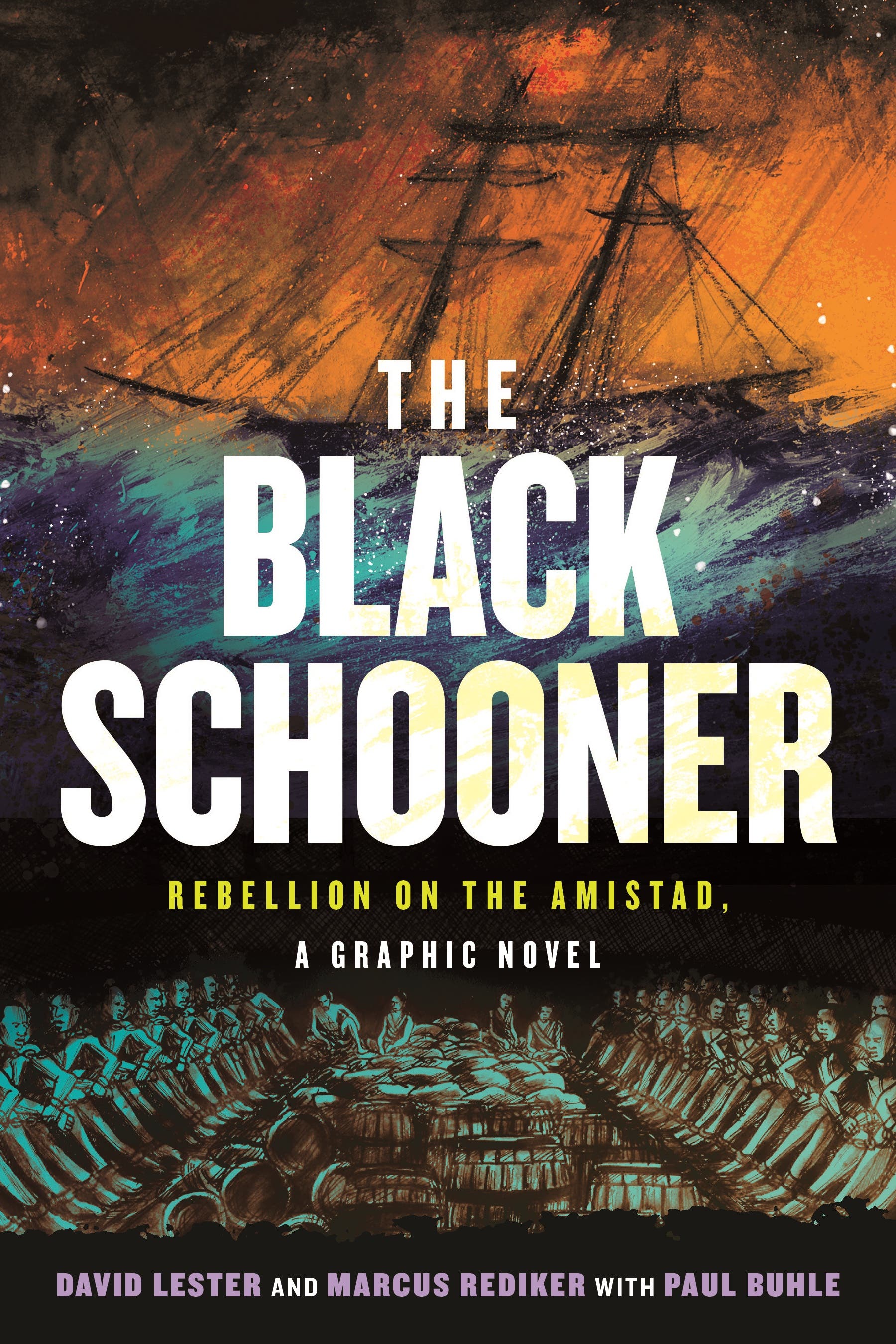
Signed copies of “The Black Schooner: Rebellion on the Amistad” by David Lester and Marcus Rediker, and edited by Paul Buhle, will be available for purchase.
This program is organized by New Haven Museum, the Amistad Committee, Inc. and the Gilder Lehrman Center for the Study of Slavery, Resistance, and Abolition.
New Haven Museum is a CT Freedom Trail Site. The Amistad story has united cities and towns across Connecticut around a shared history, which inspired the formation of the Connecticut Freedom Trail. This program is offered as a Connecticut Freedom Trail month activity.
The New Haven Museum exhibition, “Amistad: Retold,” centers the people from Sierra Leone who led the revolt and their collective actions to determine their own lives. The exhibition focuses on New Haven as the site of their incarceration and abolitionist organizing. The exhibition includes the iconic 1840 portrait of Sengbe Pieh by New Haven artist and abolitionist Nathaniel Jocelyn, Hale Woodruff’s 1939 mural studies, and a serigraph of Jacob Lawrence’s “Revolt on the Amistad” (1989).
About Marcus Rediker
Rediker is Distinguished Professor of Atlantic History at the University of Pittsburgh. He has written or edited 18 books, including “The Many-Headed Hydra” with Peter Linebaugh,“The Slave Ship,” “The Amistad Rebellion: An Atlantic Odyssey of Slavery and Freedom,” The Fearless Benjamin Lay” and “Freedom Ship.” His writings have won numerous awards and been published in twenty-two languages worldwide. He wrote the stage play, “The Return of Benjamin Lay,”with Naomi Wallace. He has also created four graphic novels with David Lester and Paul Buhle and a children’s book with Michelle Markel and Sarah Bachman. He has produced two documentary films with Tony Buba: “Ghosts of Amistad” and “Becoming Benjamin Lay.”
About David Lester
David Lester is the co-creator of the graphic novels “The Black Schooner: Rebellion on the Amistad,” “Revolution by Fire: New York's Afro-Irish Uprising of 1741,” “Under the Banner of King Death: Pirates of the Atlantic” and “Prophet Against Slavery: Benjamin Lay.” Translations of those volumes have been published in seven languages. He has a chapter in the anthology "Partisans: A Graphic History of Anti-fascist Resistance." His poster of anti-war protester Malachi Ritscher was exhibited at The Whitney Museum of American Art in New York. Lester is guitarist in the rock duo Mecca Normal, cited as an influence on the founders of the feminist social movement Riot Grrrl. In 2025, Rolling Stone's list of 100 Best Protest Songs of All Time included Mecca Normal's "I Walk Alone.” He lives in Vancouver, Canada.
About The Amistad Committee Inc.
Established in 1988, The Amistad Committee, Inc. is a not-for-profit, tax-exempt organization. The original Amistad Committee formed to raise funds for the legal defense and return voyage of the subsequently liberated Africans who were involved in the Amistad Incident of 1839. Today, The Amistad Committee, Inc. is dedicated to the preservation and honoring of African and American history in Connecticut. The preservation of this history and its lessons are imperative and shall not be forgotten, diminished, erased or go unrecognized. “The work to be done is not to be completed in a day or a year; it will require a long time to remove the evils which slavery and habit have so deeply engraved upon the very foundation of everything.” Reverend Amos G. Beeman, Middletown, Sept. 6, 1862, letter to the editor of The Weekly Anglo-African newspaper.
About Gilder Lehrman Center for the Study of Slavery, Resistance, and Abolition
The Gilder Lehrman Center for the Study of Slavery, Resistance, and Abolition at the Whitney and Betty MacMillan Center for International and Area Studies was founded in 1998 at Yale University. The Gilder Lehrman Center was the first institution in the world wholly devoted to scholarship, public education, and outreach about the global problem of slavery across all borders and all time. In a world that needs this work now more than ever, we invite you to join us in sustaining our mission to foster an improved academic and public understanding of the role of slavery, its destruction, and its legacies in the functioning of the modern world. For more information visit https://glc.yale.edu/
About the New Haven Museum
The New Haven Museum has been collecting, preserving and interpreting the history and heritage of Greater New Haven since its inception as the New Haven Colony Historical Society in 1862. Located in downtown New Haven at 114 Whitney Avenue, the Museum brings more than 375 years of New Haven history to life through its collections, exhibitions, programs and outreach. As a Blue Star Museum, the New Haven Museum offers the nation’s active-duty military personnel and their families, including National Guard and Reserve, free admission all year. For more information visit http://newhavenmuseum.org or @NewHavenMuseum or call 203-562-4183.
Get more local news delivered straight to your inbox. Sign up for free Patch newsletters and alerts.