Neighbor News
Updated Medical Information Sharing Starts February 16, 2026
New laws for Substance Use Disorder Treatment Takes Away Consent Rights of Many

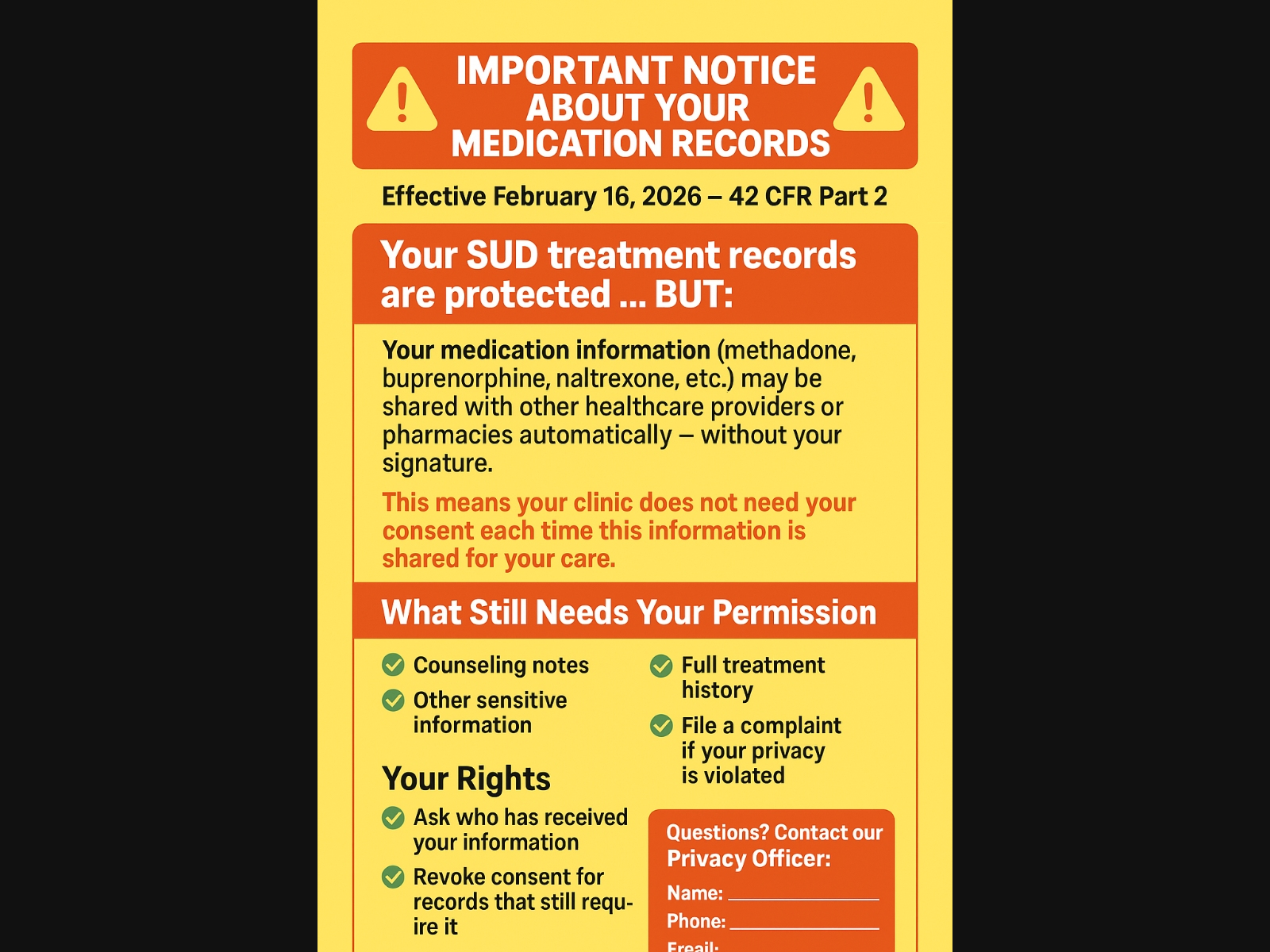
Prior to the updated CARES ACT Title 42 CFR patients engaged in substance use disorder treatment that fall under federal oversight such as methadone and buprenorphine must provide informed consent each and every time their records are shared. So when a patient authorizes a methadone program to share medication information with their primary care doctor, that provider can’t disclose the information to a specialist unless the patient signs a new, specific consent. Confidentiality protections while improving care coordination for patients and providers." And statements such as these, making it sound helpful while leaving out the facts of only signing one release. OCR Director Melanie Fontes Rainer said, “. Patients can seek needed treatment and care for substance use disorder knowing that greater protections are in place to keep their records private, and providers can now better share information to improve patient care.”
Since the passing of the updated HIPPA Title 42 CFR Part 2 ACT patients only have to provide consent once. After that, their records can be re-shared over and over again by any health care entity who receives them. When explaining this to people in treatment I often receive a response of shock and then saying there's no way that can be true, they can't share my records without my signature. Unfortunately, it is true. As if the passage of this law wasn't bad enough when you try to search for it online it's literally hidden under cover of titles such as these: "The Final BEFORE Prior to the updated CARES ACT patients engaged in substance use disorder treatment that fall under federal oversight such as methadone and buprenorphine must provide informed consent each and every time their records are shared. So when a patient authorizes a methadone program to share medication information with their primary care doctor, that provider can’t disclose the information to a specialist unless the patient signs a new, specific consent.
Title 42 CFR HIPPA Law changes effective compliance date February 16, 2026 enacts the first major statutory changes to SUD treatment record confidentiality since 1992 and is aimed at improving information sharing among SUD treatment providers and other health care providers. But increased information sharing also creates concerns about information misuse and discrimination, and the possibility of renewed treatment avoidance. To address the tension between the benefits of information sharing and the possible harms of discrimination after disclosure, strengthens the disclosure penalties to align with HIPAA. It also adds an entirely new non-discrimination provision which prohibits discriminatory use by recipients of disclosed SUD treatment information in areas including health care, employment and receipt of worker’s compensation, rental or sale of housing, access to courts, and social services and benefits funded by federal, state, or local governments. While the non-discrimination statutory changes look good on paper in reality how does a person in SUD treatment know that is why they are not getting a rental for instance? The person is not going to tell you that you are not getting it because of your SUD treatment. When you are treated by medical personnel with discrimination, stereotyping you because you are in treatment, what's your recourse? Who do you tell and what is going to be done? Most likely, nothing. So while it sounds good to people reading it, it's just words. What they really wanted to do was get these records with one signature.....and that is not just on paper, that's reality.