Sports
Coaches, Trainers More Aware of Concussion Danger
Coaches and trainers have taken steps to increase their awareness of concussions and have put in place procedures to help address the dangers.
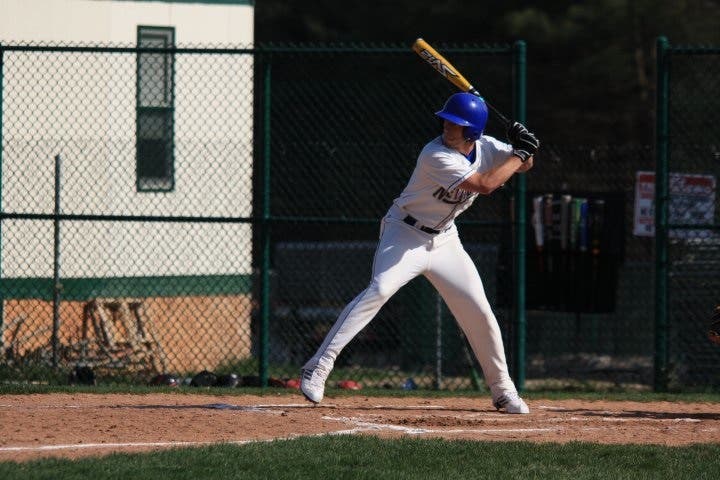

A Pomperaug player took the second pitch of a game and blasted it to center field where a hustling Kyle Kromberg of Newtown made a beautiful full body diving play to get the first inning out.
That was a catch from this past spring season, and it was nothing like the diving play from a year earlier in Bethel.
In April of 2009, a ball blooped into center field towards Kromberg who dove for the ball, but came up just short. His head smashed into the ground causing a broken nose, serious concussion and his teeth to go through his upper lip.
Find out what's happening in Newtownfor free with the latest updates from Patch.
Concussions have been a cause of concern within the high school sports scene as of late. Connecticut recently passed legislation to try and minimize concussions, and Newtown specifically is complying.
"It's the law and there is no way around it," athletic director Gregg Simon said as he introduced a Module 15 concussion lecture at Newtown High School recently.
Find out what's happening in Newtownfor free with the latest updates from Patch.
Module 15 is a new three-hour course for all high school coaches alerting them about the dangers of long-term concussion issues, the way to treat concussions, and to ensure that after a student has a head injury, proper steps are taken to ensure the safety of each athlete.
While concussions like the one Kromberg suffered are the ones coaches and trainers know about, there are other less obvious ones that may be just as dangerous.
Newtown High School Athletic Trainer Sabrina Byrne, who will see 20 to 30 concussions each school year, said most teenage athletes hide a concussion because they just want to play.
"They don't want to let their coach or their teammates down," she said. "However, what kids don't understand is that it is not the first initial blow to the head that leads to a minor concussion. It is the second blow to the head, which can lead to Second Impact Syndrome. That second hit in some cases can be deadly."
Football, the sport with the highest percentage of concussions for athletes, will be making the biggest strides when it comes to addressing the issue. The athletic department has purchased 20 Ridell helmets, "the ones professionals use" Simon said at a recently held lecture.
In addition to the helmets, Dr. Michael Brand of Danbury Orthopedics has donated money to the athletic department to purchase "ImPACT."
ImPACT is a computerized test that all athletes at Newtown will have to take before participating in any sport. It is a program that will set a baseline of an athletes brain activity, which will then be used for comparisons after the athlete suffers a blow to the head. The test, a series of questions, takes about 20 minutes to complete.
"What Newtown had been experiencing problems with and is learning how to deal with is the fact that after a player suffers a concussion their school work suffers," Byrne said.
School administrators will attempt to communicate better with coaches in keeping students out of classes and minimizing their schoolwork after a concussion. The physical and cognitive aspects of an athlete should be minimal for the concussion to heal.
"It is a tool that will help determine when an athlete is cleared to return to play," Byrne said. "However, ultimately I will still have say over when I feel an athlete can return by putting them through a series of functional testings."
Athletes want to get back in the game right away when they get a blow to the head, but it is important that they realize it is a second blow that could do the most damage.
According to Kromberg time helped him heal, and he thinks it is important concussions are treated correctly.
"As soon as I felt better I went to my trainer so that she could train me, getting me more used to running, sprinting, and just doing drills," Kromberg said.
Most student players would be hesitant to get back out on the diamond after an incident like that, but Kromberg was itching to get back out there.
"I put my mind to accept the fact that this is baseball and you can't play baseball, or any sport for that matter, with the fear that you're going to get hurt or something bad will happen," he said. "I had to make myself go full force because if I didn't, I couldn't get any better, or be a starting centerfielder."
Kromberg will play baseball in college at Division III Dasales University in Center Valley, PA next spring.
Public Act 10-62
Public Act 10-62 signed on May 10 by Gov. M. Jodi Rell requires "coaches of intramural and interscholastic sports complete a training course related to recognizing signs & symptoms of concussion, appropriate medical management of concussion, and medical risks associated with concussion. Coaches will have yearly refresher training in this subject matter."
Coaches will be required to remove from play any athlete who exhibits signs or symptoms of concussion. The athlete will not be permitted to return to play until he or she has received written medical clearance from a qualified medical provider.
The State Board of Education may revoke the coaching permit of any coach found to be in violation of this statute.