Schools
Legislative Council Restores $200,000 To School Budget
Following failed referendum, Legislative Council agrees to add money to school budget

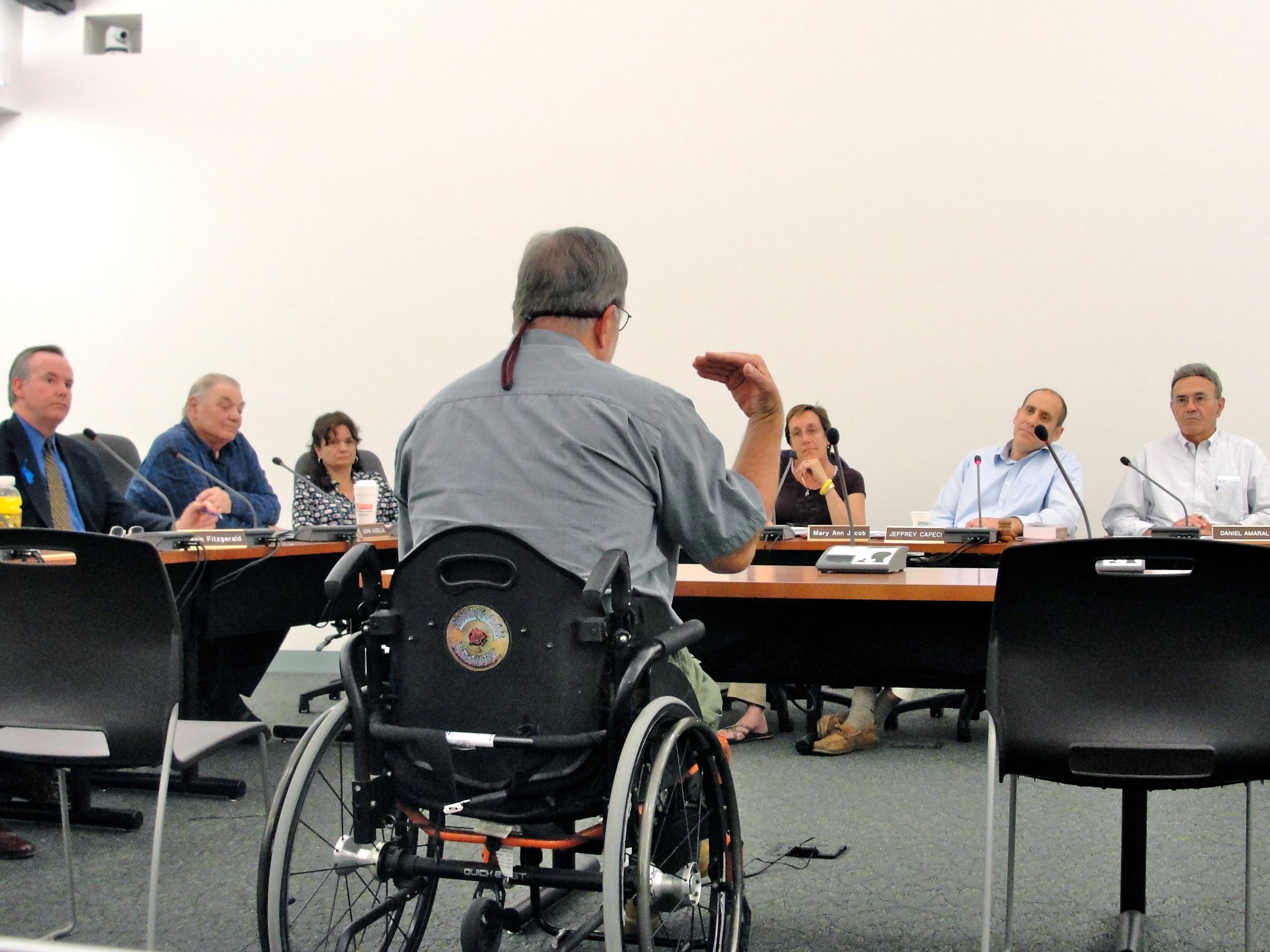


The Legislative Council added $200,000 to the Board of Education's budget during an emotional meeting on Wednesday that began with school supporters issuing their pleas for more education dollars and capped by a round of applause when the council approved the addition.
The vote, 10 to 1 with one abstention, appeared to have been the first time the council added money to a school budget following a failed referendum.
"This was monumental," said Superintendent of Schools Janet Robinson, who was all smiles after the tense meeting at the Municipal Center.
Find out what's happening in Newtownfor free with the latest updates from Patch.
A day earlier, Newtown voters rejected a proposed $104 million budget referendum, sending the measure, which included $67 million for schools and $37 million for town services, back to the council for another round of revisions. It was the second budget referendum defeat in a month.
Vocal education supporters who spearheaded a drive to vote "no" until more money is added to the schools budget, told the council they would continue to call for the referendum's defeat until some dollars were restored.
Find out what's happening in Newtownfor free with the latest updates from Patch.
Through an earlier process, the Board of Finance recommended that $2.5 million be removed from the schools' budget request, saying that shortfall would likely be bridged through savings, such as health insurance reductions and early teacher retirements.
Up until Thursday, the council resisted calls to add money to the budget request. The town's usual practice was to assume most people thought the budget was too high and shave money from the request before sending it to another vote.
But with two failed referendums, and a divided public, education supporters called on the council to reverse course.
"It's just going to get uglier and uglier for all of us," Steve Del Giudice said. "You're going to keep getting "no's" and it's going to get uglier and uglier."
At first, council member Richard Woycik proposed the education budget be reduced, and by about $375,000.
"There are out there other commodity savings that have been suggested, and not acted on," he said. "I believe there is a real possibility of totally closing the gap and it's going to take additional work."
But he subsequently withdrew his motion after a majority of council members said they did not support cuts to education.
Next, council member Mary Ann Jacob said in light of additional savings the Board of Education and town had recently identified, most significantly health insurance cost reductions of more than $800,000, rather than the nearly $570,000 district officials had initially estimated, the budget gap was even smaller than before.
Jacob said she would favor making no changes to the budget request and sending it back for a third vote if only Robinson would agree to support it.
But Robinson would not.
"Is it adequate, what we have here? No," she said. "I'm trying to let people know what the consequences are of this budget."
Council member Gary Davis, a member of the Independent Party of Newtown, a minority party that advocates for more money for schools, proposed his colleagues consider adding $300,000 to the education budget.
He said that by doing that, at least one group of "no" constituents might be convinced to change their votes. The other group who are looking for lower taxes would only be happy if a tax increase was limited to 1-percent, which would require a much bigger cut from the budget request.
"I would love to put forward something that will get people cheering today," he said.
Robinson backed the effort, saying that the issue has divided the community.
"You have an opportunity right now to keep this from becoming an extremely polarized community – I'm appalled at what's going on, it's a very polarizing community – and do something to bring people back to the fold," she said. "I'm sorry, but you missed that opportunity last time, and you have another opportunity."
Following a short meeting recess, council member Chris LaRocque returned with a motion to remove $100,000 from the Board of Selectman's contingency fund and increase property taxes by $100,000 so that $200,000 could be added to the education budget.
The tax increase would now be 2.5 percent more than this year and about a tenth of a percentage point more than what was proposed in the second referendum.
LaRocque's proposal won approval from nearly all the council members except John Aurelia, who said he could not trust school officials, and Jan Andras, who recused herself from the vote because her husband works as a bus driver, and the school district had been in negotiations with bus owners and operators.
Many in the audience, which numbered about 75 people at the start of the meeting, clapped, and some gave members a standing ovation when the vote was completed.
First Selectman Pat Llodra, who had offered the $100,000 in town-side reduction, said officials would have to further investigate how to make the cut but she had some ideas. She also said with this reduction, coupled with the $503,000 removed before the second referendum, the town is now operated with about $300,000 less than the budget adopted for this year.
Education supporters said they recognized how difficult it was for council members to agree to add money back into education.
"Going from polarizing to unity, that's a big place to come from," Robin Fitzgerald, who along with husband, Kevin, a council member, have been two of the main driving forces behind the vote "no" campaign said after the meeting. "I'm happy."
She said she would now turn her attention toward writing e-mails in support of the referendum.
It was only last week that Republicans, including Jacob and council chairman Jeff Capeci, said during a press conference that they couldn't envision a circumstance in which they would support adding money to the budget.
"I truly thought that last budget would pass," Capeci said in an interview after Wednesday's meeting. "Hindsight is 20/20…I really thought the budget we had was reasonable."
Capeci said he is bracing himself to hear from the other side, voters who had wanted to see money removed from the budget and taxes decreased, and who will be unhappy about more education dollars.
"We'll be hearing from them," he said.
The Numbers
The Legislative Council approved Wednesday night the following proposed budget for 2010-11:
Education: $67,194,734
Town: $37,089,881
Total: $104,284,615
Mill rate: 24.03
This is what the voters approved last year, and what went into determining your tax bill for this year:
Education: $66,314,928
Town: $37,401,766
Total: $103,716,694
Mill rate: 23.43
Tax Implications
If the proposed budget was to pass, a resident who owned a home with a market value of $500,000 would see a tax increase of $210 for the year. Had the second referendum passed, that annual tax increase would have been $199.50, a difference of $10.50.
To do this calculation on your own house, take the market value of your house, multiply it by .7 to get the assessed value. Divide the assessed value by 1,000 and then multiple it by .6 (because that is the difference in the mill rate between this year and the one just approved by the Legislative Council.)
To calculate the tax increase had the second referendum passed, divide the home's assessed value by 1,000 and then multiple it by .57 (the difference in the mill rate between this year and the one sought in the second referendum.)
Editor's note: This article has been updated to include the tax implication of the proposed budget.
Get more local news delivered straight to your inbox. Sign up for free Patch newsletters and alerts.