Schools
Patch Whiz Kid Experiments With Hydroponic Garden
Andrew Argraves undertakes a project to build a hydroponic garden in his driveway.

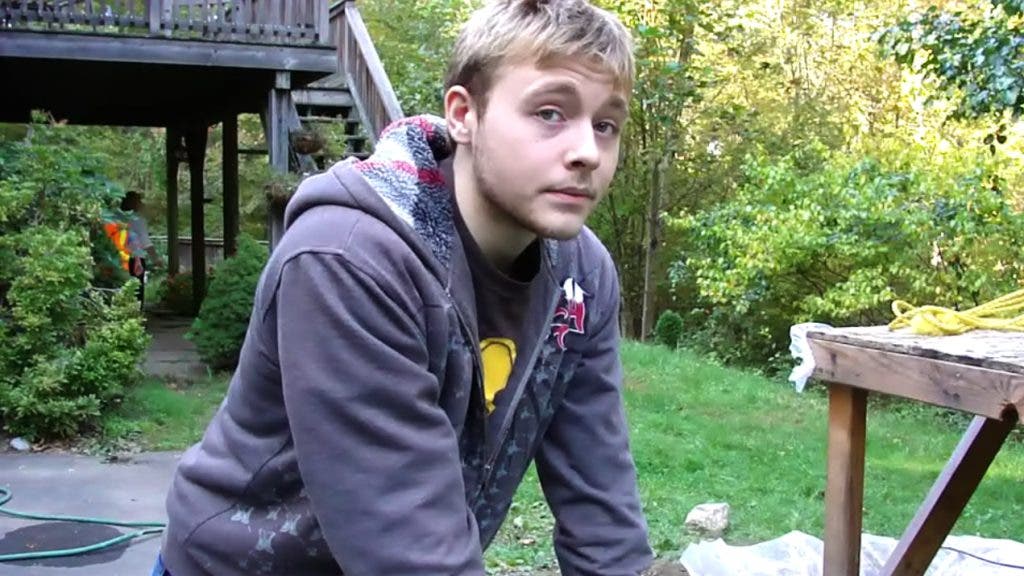
Patch Whiz Kid:
○ Andrew Argraves
○ Newtown High School senior
Find out what's happening in Newtownfor free with the latest updates from Patch.
○ Built from scratch a hydroponic garden fed by fish for no other reason than to learn more about local and sustainable agriculture
Andrew Argraves is one of those teenagers who spends his time pondering the great problems of the world and possible ways to solve them. But it was with more than just thought that he lent to the idea of hydroponic gardening.
Find out what's happening in Newtownfor free with the latest updates from Patch.
The Newtown High School senior poured months building a contraption and manmade fish pond from which he used to grow cabbage, lettuce, argula and herbs – a learning experience he hopes to one day parlay into a job or career in sustainable and environmentally friendly methods.
"I kind of like a challenge," Argraves said.
The idea of hydroponic gardening grew from a flicker of an idea that stuck in his mind during an Advanced Placement environment class in which the class learned about the role and importance of water supplies, according to Argraves, who has dual aspirations for political science and engineering.
"Water reserves are becoming so dry or so toxic," he said, adding the concern over the water supply coupled with the realization that much of the food consumed in the community is grown thousands of miles away, led him to think of eco-friendly ways of farming a little closer to home.
"This is kind of my attempt at it," Argraves said as he stood next to his hydroponic garden recently.
The concept was relatively straightforward, Argraves said. Plants don't necessarily need soil to grow – only water and nutrients. As long as he could provide those two key ingredients, the garden would be sustainable.
Water was simple enough. Nutrients would be tougher. While he could have opted to use chemical fertilizers, at his own choosing, Argraves decided the nutrients would come from the byproduct of keeping fish.
"If you feed fish, they will eat it and they will give off waste, usually ammonia," he said.
The ammonia would then be transformed by bacteria into nitrites and later nitrates, which would provide the necessary nutrients to plants.
"That's the basic theory behind it," Argraves said.
Armed with knowleged gleaned from the Internet and through trial-by-error, Argraves started building the contraption in March by the side of his driveway at home.
First, he obtained spare plywood and gutter pipes in which he drilled out 190 holes. Small plastic cups, which were filled with seeds, gravel and moss and had holes punctured in them to let the water in, were then nestled into the gutter openings.
Argraves then used the plywood to build a table on which to place the gutter pipes. He also dug out a ditch for the pond and used a pump to circulate the water from the pond through the gutter pipes.
The first couple of tries proved to be less than successful. Patience was part of the problem.
"I kind of didn't wait," he said, adding he began circulating the water immediately after placing the fish into the pond without realizing that the nitrates take some time to form. "It takes awhile for the bacteria to form in the water. It takes about a month."
His father also placed some seashells into the pond, which introduced salt into the water and eventually killed the fish, Argraves said.
"I lost like 20 fish my first try," he said.
So he had to get more fish, and then wait the requisite month before the growing could begin. It was his third attempt before he saw results start to appear.
"They started to grow and it was working really well until algae started growing in the pond," Argraves said. "It sucked out all of the nutrients from the water so these plants didn't get anything."
But by then, enough of the seeds had produced lettuce and herbs to prove his point, although requiring more work than he had initially intended.
"Nothing is so simple," he said. "I put a lot of work to get it even to this level."
While Argraves is a great thinker and researcher of ideas, he had never gardened before, he and his mother said.
"We had no idea what to expect," his mother, Stephanie Argraves said.
At the same time, she said she knew enough to not doubt her son's abilities.
"When he gets interested in something, he learns as much as he can and becomes a resident expert," Argraves said, citing astornomy as another subject on which her son devoted hours toward learning.
Andrew Argraves said that the project was unlike anything he has done in the past – particularly the hands-on element. His point in doing it was to experiment with what may be a critical area in the future, and in a way that would yield concrete results, he said.
"A lot of people in engineering are so impractical," Argraves said.
The high school senior said he isn't sure what his future will hold – he's in the process of applying to college. He has his eyes on California but cost may limit his choices, though he reasoned that if he does stay close to home, his hydroponic garden may come in handy next growing season and yield extra income, perhaps as a side job or even a career, Argraves said.
"Agriculture is going to be so important," he said.
Get more local news delivered straight to your inbox. Sign up for free Patch newsletters and alerts.