Politics & Government
State Sen. Christine Cohen Lauds Passage Of CT Clean Air Act
Cohen, who represents North Branford, Branford, Guilford, Madison, Durham and Killingworth, called it "an important step" for CT.


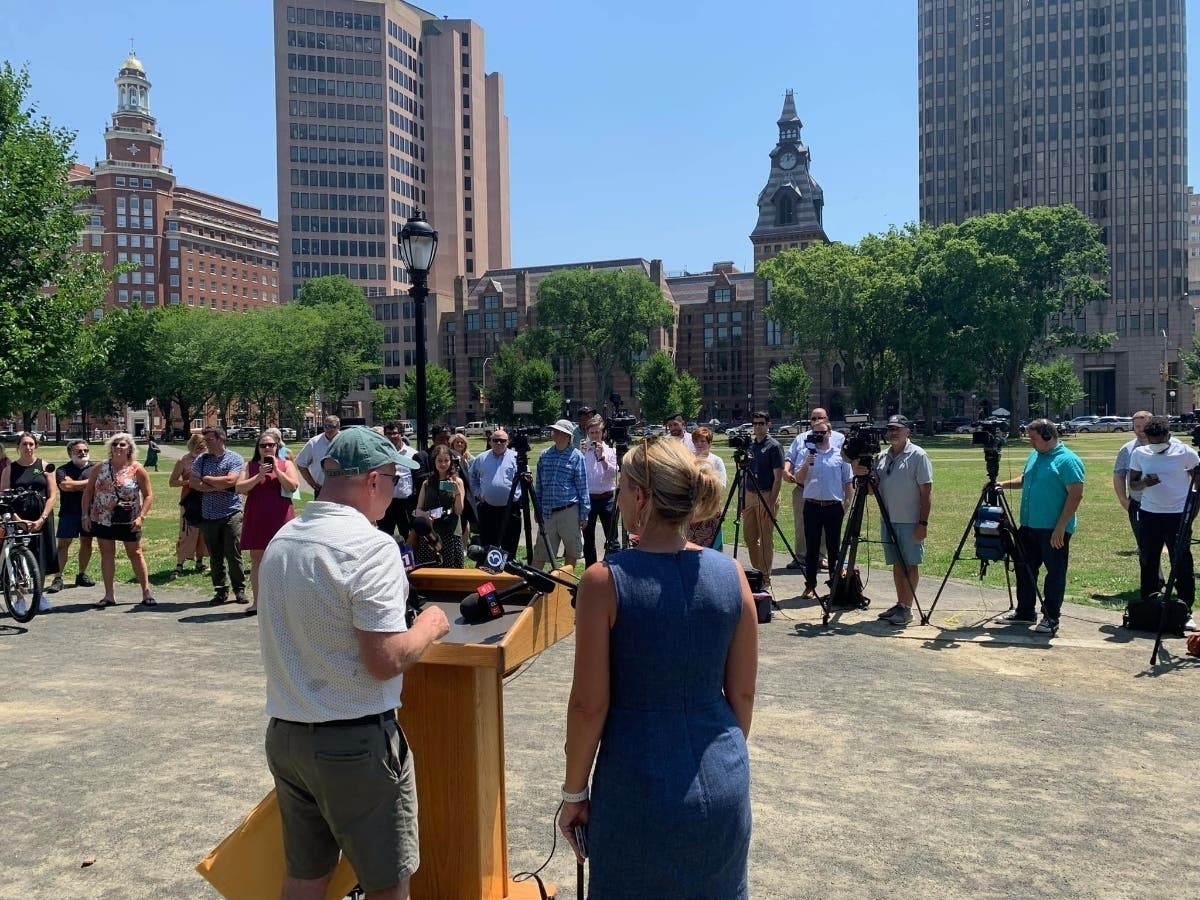
NEW HAVEN, CT — The governor, state officials, legislators, and environmental stakeholders gathered on the New Haven Green Friday in blistering heat to announce the enactment of Connecticut's Clean Air Act, a "landmark" law.
Public Act 22-25 includes a number of actions that will help reduce greenhouse gas emissions from the transportation sector, improve air quality and health outcomes for residents, and help to mitigate impacts from the climate crisis, according to Gov. Ned Lamont.
“This is a thoughtful and crucial piece of legislation that will move Connecticut forward to a place of better health, more sustainable transportation options, and cleaner air,” state Senator Christine Cohen, Senate chair of the Environment Committee, said. “We now have an opportunity to leverage federal funds, to mitigate climate change, to help our businesses electrify their truck fleets, and to improve the air quality and health outcomes for all Connecticut residents.”
Find out what's happening in North Branfordfor free with the latest updates from Patch.
The new law contains several measures aimed at reducing emissions from the transportation sector, which is the largest source of statewide GHG emissions (37%), as well as 67% of the emissions of nitrogen oxides, a key component of smog. Among the measures the law contains, it authorizes the Connecticut Department of Energy and Environmental Protection (DEEP) to adopt more stringent emissions standards for medium and heavy-duty vehicles, which account for as much as 53% of nitrogen oxide emissions, despite being only 6% of the on-road vehicle fleet. It also makes various statutory changes under the Connecticut Clean Air Act, expands existing programs, and establishes several new programs concerning electric vehicle use and improving air quality.
“This historic law does so many great things that will benefit the residents of Connecticut, improving air quality and health outcomes while also helping to mitigate the climate crisis,” Lamont said. “This is another great example of Connecticut leading on climate, particularly at a time when continued state leadership in this area is critical, given the U.S. Supreme Court’s recent decision in West Virginia v. EPA, and certain members of Congress stymying passage of substantial climate legislation."
Find out what's happening in North Branfordfor free with the latest updates from Patch.
The bill’s provisions include:
- Medium and Heavy-Duty Vehicle Standards: Authorizes the DEEP commissioner to adopt regulations implementing California’s medium- and heavy-duty motor vehicle standards. These standards will ensure that manufacturers are producing cleaner vehicles and offering them for sale in Connecticut, giving prospective consumers more options while reducing a major source of in-state air pollution and greenhouse gas emissions.
- State Fleet Electrification: Modifies the schedule for electrifying the state fleet, prohibits procurement of diesel-powered buses after January 1, 2024.
- Connecticut Hydrogen and Electric Automobile Purchase Rebate (CHEAPR) Program: Makes numerous changes to the CHEAPR program, including making the CHEAPR board advisory-only, modifying the board’s membership, giving priority to low-income individuals and residents of environmental justice communities, and extending eligibility to businesses, municipalities, nonprofits, and e-bikes; directs all of the greenhouse gas reduction fee and part of Regional Greenhouse Gas Initiative funds to the CHEAPR account.
- Zero Emission School Buses: Allows for ten-year school transportation contracts if the contract includes at least one zero-emission school bus; sets target of 100% zero-emission school buses in environmental justice communities by 2030, and for all school districts by 2040; establishes a matching grant program of up to $20 million for the EPA Clean School Bus program.
- Medium and Heavy-Duty Truck Vouchers: Allows DEEP to establish a voucher program to support the use of zero-emission medium and heavy-duty vehicles and funds the program from the CHEAPR account.
- Traffic Signal Grant Program: Requires CTDOT to establish a matching grant program to help municipalities modernize existing traffic signal equipment.
- Right to Charge: Establishes “right to charge” in condominiums and common interest communities, provides for “renter’s right to charge” with certain specifications.
- New Construction Electric Vehicle (EV) Charging Requirements: Requires a certain percentage of parking spaces in certain new construction to be equipped with either EV charging stations or charging station infrastructure.
Get more local news delivered straight to your inbox. Sign up for free Patch newsletters and alerts.