Health & Fitness
Talented Musicians are Made, not Born
Music is a life-long gift that demands commitment not only from your child, but from you, the parent, as well.
How familiar is this: your young daughter comes home from school with an odd looking object in tow. "Hi mom! Hi Dad!" she enthuses. "I play the flute now!"
Your first reaction is one of confusion, then a wave of pride washes over you as you think, "How wonderful, my child is a musician..." Immediately following this pleasantness, tsunamis of terror arrive. You can envision it even now--the arguing over practicing, tripping over music and instrument body parts that have not been put away despite the nagging, finally, the tears: "Please mom, everyone I know is outside playing. You cannot possibly expect me to stay in and practice right now."
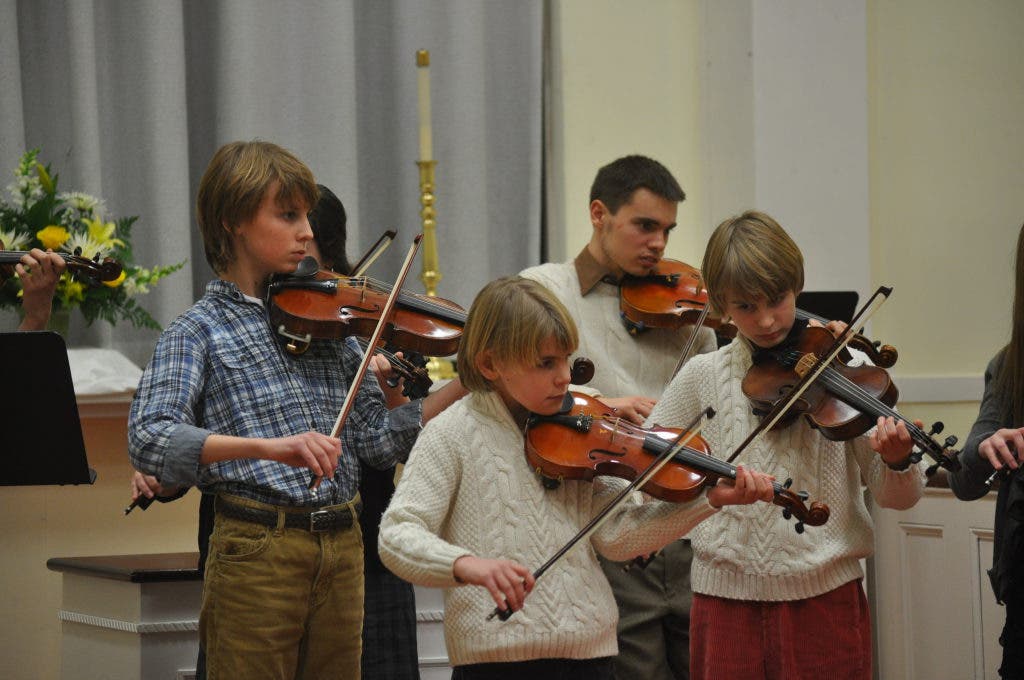
Admittedly, there will be an occasional tear, but the good news is we parents can, in fact, enhance musical skill without resorting to threats and punishment. Right now in my living room are: a small piano, three violins, two saxophones, an oboe, a trumpet and two flutes. (One flute doesn't work.)
Find out what's happening in North Havenfor free with the latest updates from Patch.
Among three boys, the instruments are divided somewhat equally, and while there are intermittent tears and long faces, the battles are surprisingly few. If you've always wanted to instill in your child a love of music while showing them the sweet fruits of their labors, here is a compilation of successful tips that are timeworn around our house.
First, and this is the key point, you must never believe that your child is "lucky" to be able to play an instrument. What seems a privilege to you is most assuredly viewed as a curse to them, no matter how much they claim to love music. The human spirit fights against discipline, adults are no exception. The minute I have a paper to write I find I must organize my children's socks. No paper? Find your own socks, and heaven help you.
Find out what's happening in North Havenfor free with the latest updates from Patch.
Second, and this is also a biggie, never send your child alone into the formal living room to practice the piano, or up into his or her room to play scales on the clarinet. All portable instruments should be just that: portable. A good time to practice is during the preparing of dinner every evening. Buy your child a music stand and set it up in the kitchen. While you are peeling potatoes, he or she is polishing preludes.
Yes, the piano is its own animal, you must go to it. Forego whatever you are doing at the chosen moment, and move your center of operation to the living room couch. While your darling is playing Fur Elise, you are folding. Ironing. You get the picture, anything that will keep your warm body next to your child's. Music is not meant to be solitary, and neither should practicing.
Third, break up sessions into small increments. For example, if you are on a 20-minute practice schedule, break this up into two distinct ten-minute sessions with a palpable break in between. In the best of world's, there is food during that break, preferably a well-loved snack. This is also a fine time for compliments, where they are warranted. "You're bow-hold is really improving!" "I can't believe how well you play that passage now, remember how you struggled with it just last week?"
Finally, with your youngest musicians, employ games that get them excited and playful as they tackle this difficult endeavor. Two of my favorites have never failed to please. I started using them when my son was four, and they were enjoyed for years by his two younger brothers as well.
Treasure Hunt: For this game, write down the names of all the pieces your child can play or needs to practice on brightly colored, fun-shaped pieces of paper. Include everything: scales and other exercises too. Choose a room in the house to practice in, and hide each piece of paper in the room. Additionally, hide a small "treasure." This could be a fun eraser, a small candy, a ticket for a family fun movie night, etc. Once your child plays all the pieces, he or she hunts for the treasure. For younger children, begin with rather obvious hiding spots until they get the gist of the game. Your child must play the song or exercise written on the paper three times before he or she can find another one.
Go Fish: Cut out various fish shapes on brightly colored paper. Write the name of each piece your child has mastered or is working on currently. Affix a paper clip to the "nose" of each fish. Tie a magnet to a string and then tie the string on to a long stick or dowel, to form a fishing pole. Arrange the fish in a "pool" on the floor, and have your child "fish for songs." Each one caught is played three times before he or she can cast again.
While this may seem like a lot of effort, I assure you it exacts results. And yes, music does require great effort, great commitment and great involvement of the entire family. When your child plays an instrument, you are involved, like it or not. Research into our country's most talented young musicians consistently unearths acts of selfless giving by parents. I know of a family from New Hampshire whose parents would wake the children up at 4 a.m. every Friday to drive to their lessons at Julliard. Most likely you will not do this. But you could end up driving them an hour away for youth orchestra rehearsal every week.
Relish their interest. Support their efforts. Music is a life-long gift. One professional musician I know (from the New York Philharmonic) says one of the most impressive orchestras he's ever heard is a group of surgeons that get together regularly and perform at impressive city venues. Music is good for the mind. It creates neural passageways that would otherwise not develop. And, studies have shown that the positive influences gained from years of formative practice last well into our eighties and nineties, slowing brain degeneration.
My final advice? (For now...) Take up an instrument yourself. You will never understand how difficult it is to play even the simplest song if you don't try it yourself. Your child will become your biggest fan. And you'll enjoy all the benefits of music, even if you aren't in fifth grade anymore.