Health & Fitness
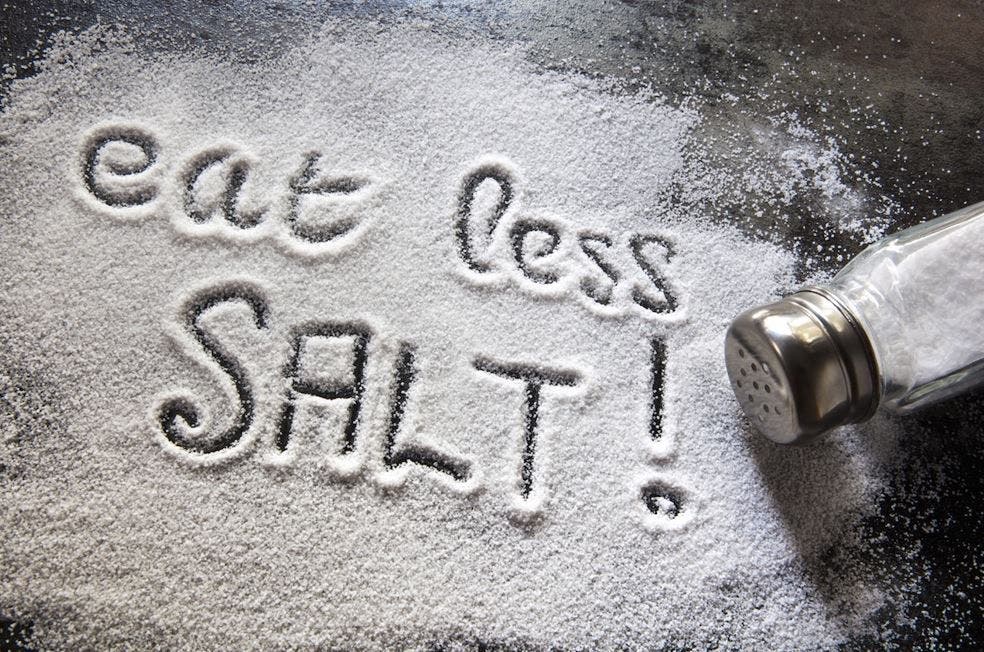
FDA Renews Call to Reduce Salt in Processed Foods
Enjoy life—and food—to the fullest, and feel confident about it! But reducing salt is a part of that strategy!

| SOURCE: U.S. Food and Drug Administration, news release, July 19, 2016 |
| 7/22/2016 |
 |
FRIDAY, July 22, 2016 -- Americans eat way too much salt, and one reason why is that processed and prepared foods have a lot of hidden salt, the U.S. Food and Drug Administration says. |
But proposed new guidelines for food manufacturers and restaurants -- first announced early in June -- may change that. The FDA is asking food makers and eating establishments to voluntarily reduce salt levels in their products to help reduce Americans' high salt intake.
The draft guidelines target these sources of salt with the goal of reducing Americans' average daily salt intake from 3,400 milligrams (mg) a day to 2,300 mg a day.
Find out what's happening in Norwalkfor free with the latest updates from Patch.
"It's no easy task for consumers to consume the recommended amount of sodium in their diets," Susan Mayne, director of FDA's Center for Food Safety and Applied Nutrition, said in an agency news release.
"We want to help reduce the amount of sodium across the entire food supply by setting reasonable goals," she said. "There are few interventions that could potentially have as great an overall benefit to public health."
Find out what's happening in Norwalkfor free with the latest updates from Patch.
Too much salt in the diet can lead to high blood pressure, a leading cause of heart disease and stroke. Reducing salt in foods could prevent hundreds of thousands of premature deaths and illnesses over a decade in the United States, according to the FDA.
Currently, 90 percent of American adults consume more salt than recommended, the FDA pointed out. The problem is widespread in children and teens, too.
Foods that are often high in sodium include pizza, sandwiches, deli meats, pasta dishes, snacks, salad dressings, soups and cheese.
The public has until the fall to comment on the FDA's voluntary salt guidelines for food manufacturers and restaurants.
"We know that many companies have already taken steps on their own to reduce sodium in certain foods, but our food supply is still too high in sodium," Mayne said. "There is important work to be done. People will always have the choice to add salt to their foods. What they don't have now is the choice to take it out."
More information
The U.S. Food and Drug Administration explains how to reduce salt in your diet.

Our goal at AHP is to bring you information you find interesting, relevant and thought-provoking. Our motto is the way we live...it’s “Feel Well. Live Well. Age Well.” And that’s what we want for you!
Our office in Norwalk offers Chiropractic, Physical Therapy, Acupuncture, Managed Weight-Loss and Massage. If you have a question about this article or want to learn more about us please visit http://www.AHP-Health.com and reach out to us! Mention this article when you call to set up your no-cost consultation. And look for more from AHP in the near future as we post more on The Patch.
If you liked this article, please give us a ”like” and share it with your friends! About AHP Since 1990, Advanced Health Professionals [AHP] has helped thousands of patients recover from pain and injury. AHP is Norwalk and Fairfield County’s leading provider of Physical Therapy, Chiropractic, Acupuncture and Massage services. We specialize in sports injuries, auto accident injuries, worker’s compensation, work injury, sport injury, auto accident injury, massage therapy, post-surgical, pre-surgical, back pain, hip pain, knee pain, joint pain, shoulder pain, elbow pain, wrist pain, rehab, neck pain, whiplash injury, rehabilitation - please call us for an immediate appointment. Our office is based in Norwalk and serves the surrounding areas of Fairfield County, Westchester County and other suburbs of New York City.