Neighbor News
Having a brain injury and being exploited by a system that is supposed to protect us
Exposing how a traumatic brain injury and systemic failures put me on trial—now I'm fighting for justice, reform, and disability rights.

By Craig Sears
Traumatic Brain Injury Survivor & Disability Rights Advocate | Using My Voice to Drive Change and Education
When asked what bothers me and why, I reflect on my experience living with a traumatic brain injury. I may not be the most skilled writer, but I share the facts clearly and trust that my message will resonate. Understanding brain injuries isn’t just theoretical; for me, it’s deeply personal and has had profound effects on my life. Breaking down the myths and stigma surrounding brain injuries isn’t just important—it’s essential.
After suffering a traumatic brain injury (TBI), I found myself in a world largely unaware of the complexities involved—both in the medical field and among the public. My physical symptoms were often mistaken for intoxication, leading to unfair judgments. Even worse, my TBI was frequently misdiagnosed as a mental illness, which only added to my struggles. These misunderstandings had harmful consequences: repeated institutionalizations that felt more like punishment than care, false arrests due to misconceptions, and the constant fear of being trapped in a system that saw me as a criminal instead of a victim.
Find out what's happening in Norwalkfor free with the latest updates from Patch.
The relentless cycle of injustice and misunderstanding felt like a never-ending fight, often landing me in mental health institutions or behind bars. I made a promise to myself: I wouldn’t let ignorance or false stories spread by law enforcement define my life or pull me into despair. I remain determined to face these challenges head-on and to advocate for respect and recognition for individuals with brain injuries.
That was then; this is now. I feel trapped in an endless cycle of frustration and hopelessness. Some days, it seems like all my efforts are in vain, and I can’t help but notice how society still clings to its prejudice against disability. I often wonder when our community will finally overcome the misunderstandings and stigma. When will we truly show empathy for those living with the invisible and often misunderstood effects of brain injuries?
Find out what's happening in Norwalkfor free with the latest updates from Patch.
My name is Craig Sears, and I’m a survivor of traumatic brain injury, standing up against police dishonesty. This fight has been a major part of my life. I’ve experienced discrimination in the medical field and misunderstandings from the public, leading to repeated institutionalizations and unjust arrests.
When Enough Becomes Enough
I am dedicated to raising awareness about traumatic brain injury (TBI) and holding the legal system accountable. I refuse to let stigma, ignorance, or dishonest law enforcement tactics victimize me again. I am standing firm and staying strong.
I want to share my experience of being falsely accused multiple times. I was manipulated and framed by the police—particularly Detective Jeffrey A. Holtz, badge 40462, of the Bridgeport Police Department. It began with a misrepresented vehicle and escalated into a fabricated story, leading to a stressful and unjust investigation.
I am speaking out because I feel trapped in a system that is supposed to protect us. The court concealed police misconduct from the public, and I am determined to bring the truth to light. I will name everyone involved, including Judge McShane, who participated in covering up this case.
If you are a caregiver, or if you have a friend or loved one with a disability or brain injury who is facing court troubles caused by police misconduct, my story may help shed light on corruption in both law enforcement and the judicial system. If the court requires additional evidence, I am prepared to provide further documentation or testimony.
If my criticism of law enforcement’s dishonesty sounds harsh, then the point has been missed—just as they missed it. They took advantage of my name and my life, and now I am determined to call them out. My statements are based on facts; I have proven in court three times that their claims were false, yet law enforcement and the judicial system covered it up. I will not let this injustice harm me or anyone else from now on.
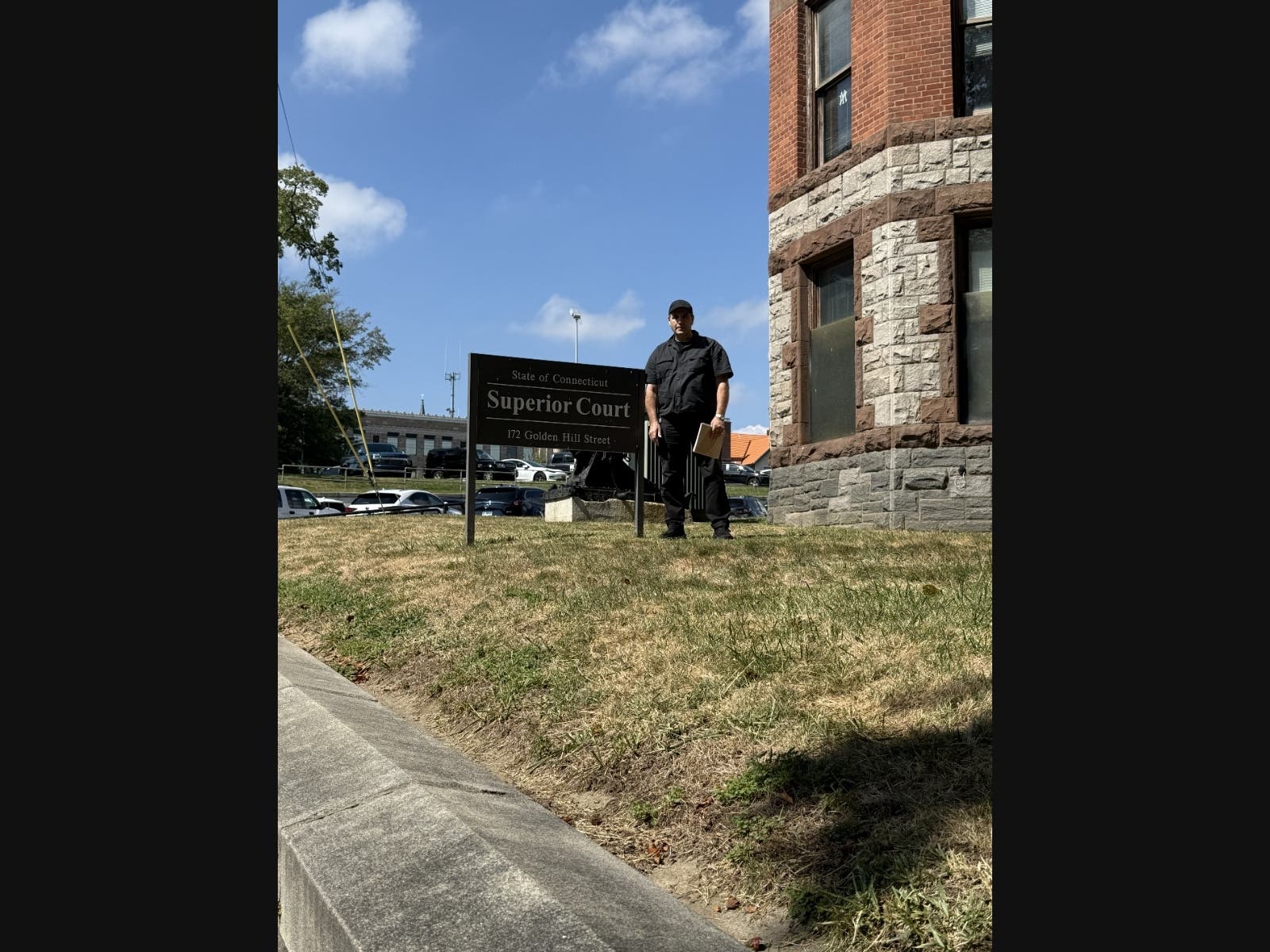
My goal is to expose the deceitful conduct of Holtz and the Bridgeport Police Department, shining a light on the corruption and cover-ups occurring at 172 Golden Hill Street, Bridgeport, Connecticut, Superior Court, GA 2. A fair society cannot exist when abuses of power go unchecked.
By sharing my story, I underscore the urgent need to recognize malicious intent—when individuals harm others while blatantly disregarding the very laws they are meant to uphold. The actions of the Bridgeport Police Department have eroded the integrity of our legal system, exposing the profound injustice faced by innocent people like me.
My situation serves as a clear example. It began with a fabricated traffic stop, supported by false evidence, such as a generic stock photo of a car without a visible license plate and a completely fictitious victim. The audio recordings presented as evidence were outdated, edited, and taken out of context. The whole scenario was completely fabricated, filled with false accusations and staged arrests aimed at framing me.
Officer Holtz not only approved false reports but also fabricated documents to damage my reputation, causing embarrassment and distress. These actions led to my wrongful arrest and prosecution. Even more troubling, Holtz’s initial investigation revealed my disability, which resulted in biased treatment against me.
When I learned about the arrest warrant against me, I turned myself in and only discovered the charges after receiving a copy from the court. I was stunned by the ridiculous accusations, especially since Detective Holtz’s fabricated story completely fell apart. I wasn’t even in Bridgeport when the incident occurred, demonstrating that Holtz had intentionally targeted me. With undeniable proof of my innocence, I became determined to clear my name and fight for justice for others who had been wronged by the organization. Despite having documents, therapy receipts, and witness statements backing my case, the authorities dismissed it without a second thought.
Navigating the judicial system can be incredibly draining, especially for individuals with non-visible disabilities like mine. The nonstop pressure from prosecutors to take plea deals instead of going to trial just makes things more difficult. Yet, despite the overwhelming pressure, I held firm and refused to take a plea deal for a crime I didn’t commit.
I’ve been involved in advocacy through the Connecticut acquired brain injury (ABI) class action case, which led to the creation of the ABI waiver to help people like me. By sharing my experiences with this well-documented program, I’ve been able to support other survivors and help them feel less isolated.
I’m committed to justice and recognize that some government officials can be biased or lack understanding, which only adds to the struggles of vulnerable people. It’s time to address these problems and create a justice system that genuinely serves and protects everyone.
A Personal Journey Through Police Misconduct
I went through a legal battle that made me question the integrity of the police and justice system. Through persistence and a commitment to transparency, I uncovered contradictions and falsehoods in my case.
I worked on accessing my case files, including state discovery evidence, and filed motions to address my case. While reviewing the evidence with my attorney, we noticed a few discrepancies. The photo presented as evidence wasn’t mine, and the audio recordings seemed to have been altered. Detective Holtz was creating a false narrative rather than presenting the facts.
I received a full copy of my case file, which included a photo of the car Holtz used to set me up. I also uncovered audio evidence showing clear signs of tampering. Despite the documented fabrication of evidence, the court seemed reluctant to address the blatant inconsistencies.
During our investigation, we identified the exact vehicle Holtz used in the setup, which was entirely different from mine. Despite clear evidence of forgery, the court ignored it and proceeded with the case. I continued filing motions, pushing for a thorough investigation into the questionable recordings.
The arrest order claims the incidents leading to my arrest happened on November 8, 9, and 10. I have clear evidence that on December 20, I was on the other side of town, nowhere near where these events are said to have happened. The order even describes a different suspect, making it clear the situation was completely fabricated.
A month after the alleged offenses, I turned myself in to the authorities and posted bond without ever speaking to Detective Holtz or discussing the case with other officers. The supposed witness interview recording with Ramos reveals blatant police misconduct and evidence tampering. Detective Holtz acted and issued an arrest warrant to conceal his true purpose.
The timeline and details in the recordings cast serious doubt on their authenticity. Holtz’s testimony conflicts with several reports, including the claim that my vehicle’s license plate was found miles from the alleged crime scene. These inconsistencies suggest a setup by Detective Holtz, built on a narrative lacking third-party verification.
Analyzing the recordings with different software revealed more anomalies, showing they might have been altered. The absence of any mention of criminal activity in the supposed December 21 interview is significant, implying the recording could be misleading.
The changes include instances where Holtz is the only voice discussing my supposed vehicle and its details, which conflict with several case reports. This undermines the credibility of the recording, making it appear to represent only Holtz’s perspective.
The audio statements highlight the inconsistencies even more. For example, one claim points out a father who couldn’t provide a photo of his car, despite owning a Mustang. The suspect’s car had a New York license plate, a detail that was missed.
This case highlights the troubling issue of police misconduct, extending beyond falsified reports and evidence. Both internal affairs and the Police Commissioners Board have neglected to address these significant allegations.
Falsifying reports and mishandling my license plate number aren’t just wrong; they completely undermine trust. It’s frustrating to witness such dishonesty in a system that’s meant to uphold justice. Even though investigations have proven my claims, the truth often gets overlooked.
Revealing Police Misconduct and Judicial Failures in Bridgeport
In an alarming development, I became entangled in a case that exposed major flaws within the Bridgeport Police Department and the wider judicial system.
The situation intensified after I requested a court hearing and started an investigation into the false claims against me. Those involved, including the alleged father, Mr. Ramos, were discovered to have no connection to the accusations. Living in a different area, Mr. Ramos is unaware of the supposed incident and does not recognize the woman Holtz identified as his wife or the young woman described as his daughter.
The evidence I gathered revealed that my case was completely fabricated—a setup that affected lives and raised serious concerns about police integrity and the legal system. The false information presented during the trial has had long-lasting effects on everyone involved. I took steps to protect the privacy of those affected.
It makes you wonder how often baseless accusations and claims are made against others. The Bridgeport Police Department and its Detective Bureau have a troubling history of targeting vulnerable individuals using questionable evidence, including fabricated witnesses and altered recordings.
I sent recordings and reports to the court, internal affairs, and the commissioner’s board to highlight these issues, but my requests for a proper investigation were ignored. It seems like the justice system is shielding misconduct rather than addressing it.
For instance, the entire case was fabricated. There was no connection between the people involved and the false details provided, such as the girl’s name, age, school, or the Catherine Street address. No records corresponded to her name, address, or school.
In the US, the federal statute addressing false submissions in hoaxes is 18 U.S. Statute Section 1038—False Information and Hoaxes.
After each court hearing, attorney Peter Stark would review what had been discussed. I would then gather evidence to challenge their claims, reveal the officer’s dishonesty, and file a motion. It became a routine process.
After over three years of police dishonesty and court bias, Judge McShane finally scheduled my trial. This followed three and a half years of discrimination and many pretrial hearings where the prosecution acted against me. At these hearings, the defense and the child advocate spoke first, but the child advocate was unable to find the alleged victim or any witnesses. The case had been dismissed as a nolle by a Superior Court judge, exposing the system’s deliberate cover-up of police misconduct.
For instance, I had access to the same paperwork they did and located the supposed witnesses.
Penal Code 118.1 PC makes it a crime for police officers to provide false statements when filing a report about a crime.
The Nolle legislation gives prosecutors the authority to drop charges when it serves the interest of justice. Unfortunately, some law enforcement agencies have exploited this provision as a loophole, using it to protect officers accused of perjury or dishonesty under oath, ultimately undermining accountability within the justice system.
The Bridgeport Police Department’s ongoing misconduct has surfaced once more, and now I’m entangled in another case from their Detective Bureau. It feels eerily similar to past allegations, making me doubt the credibility of the evidence against me.
All three cases show concerning parallels, with identical recordings from an alleged victim and witness used to create a false narrative. Knowing this tactic, I was once again represented by Thomas J. Paoletta, the public defender from my previous case. Sadly, history repeated itself as he pressured me into accepting a plea deal unrelated to the facts and questioned my competence through a 54-56 exam.
I brought a witness to the exam, just like before, but Paoletta got upset again. The judge denied me a program because I maintained my innocence, and he proposed another 54-56 exam, which I declined.
While seeking justice, I contacted Paoletta’s supervisor at the state public defender’s office to address his refusal to consider my witness’s statement, which backed up my alibi for the alleged incidents. I submitted recorded evidence to confirm my whereabouts. Paoletta withdrew from my case, and Peter R. Stark became my attorney. Stark encountered similar difficulties locating the alleged victim or witness, which eventually led to a nolle prosequi.
I am truly grateful for Stark’s unwavering dedication to my case. He thoroughly went over my witnesses’ statements and consistently provided the insights I needed to make confident, well-informed decisions. His steadfast support has been instrumental in my ongoing pursuit of truth and accountability after my injury.
Interestingly, this isn’t the first time the Bridgeport Police Department has made baseless claims against me. A few years back, I hired private attorney Kevin Black from Bayer & Black, P.C., and encountered a similar situation. Despite my insistence that I hadn’t been in Bridgeport during the alleged incidents, Black hesitated to bring my staff’s claims to court. After my initial court appearance, the judge elevated the charges from third to first degree, reflecting the falsehoods and malicious intent directed at me.
After paying Black $2,000 to handle my case, he later emailed me requesting an additional fee, claiming it was necessary to continue representation. This behavior mirrored my current situation. I voiced my concerns to his business partner and filed a complaint with the Board of Attorneys. Black attended my next court hearing, and the case was resolved.
In a concerning turn of events, Black stepped away from my case, citing my impairment as the reason. This is now the third instance I’ve faced similar accusations from the Bridgeport Police Department, pointing to a disturbing pattern of misconduct.
The Americans with Disabilities Act is meant to safeguard my rights, but I can’t help wondering how effective it really is in these tough times. Likewise, the Fifth Amendment’s protection against double jeopardy in criminal cases seems to be getting ignored.
How long will the Bridgeport Police Department keep relying on outdated evidence? Their ongoing pursuit of an innocent person is incredibly frustrating. We need accountability and reform now. As I stand up for myself, I can’t help but think about those who lack the resources or support to do the same. This is a call to action to amplify the voices of the accused and tackle systemic problems in law enforcement. How many more lives have to be affected before actual change comes?
Throughout it all, my feelings were sincere—I recognized the absurdity from the beginning. Law enforcement and state courts have been targeting me for years, and the class action lawsuit over acquired brain injury (ABI) waivers highlights this ongoing mistreatment.
Living with an invisible disability is tough. It’s clear how the system creates obstacles for people. I couldn’t figure out how the court justified its actions after repeatedly wronging me in the past. I knew I had to keep fighting and never give up, but I refused to accept a plea for something I didn’t do. I wouldn’t let their lies go unchallenged and stayed committed to exposing their true nature.
The acquired brain injury (ABI) waiver class action lawsuit deeply affected my life and the lives of many others facing similar struggles. It exposed systemic issues and highlighted the urgent need for reform and accountability. Together, we fight for justice, advocate for change, and work toward a fairer society for all.
Despite the challenges ahead, I remained determined. I took on the risks and dangers of exposing their deceitful actions, knowing full well that revealing their lies could lead to retaliation or mistreatment. Still, I took those chances. I stood strong in my beliefs and held them accountable for their dishonesty.
By speaking up, I wanted not just to find justice for myself but also to encourage others who had experienced similar injustices. I called on them to share their stories, aiming to ignite a dialogue about the system’s shortcomings and push for meaningful change for everyone affected.
Pursuing justice and uncovering the truth became my intrinsic motivation, even though it penetrated my well-being. The hope for a better future and having a sense of purpose outweighed the emotional and mental hurdles. Still, the ongoing stress, anxiety, and emotional challenges took a toll on my sleep, work, and overall mental health.
Understanding that people only speak when they comprehend something, I ensured I had the right individuals with me to assist throughout the process.
I brought together state program providers, healthcare professionals, social workers, and caseworkers to address the challenges faced by the brain injury community. Sadly, their responses were mostly dismissive and lacked genuine support. I had hoped they would push for change, but that didn’t happen, leaving me feeling like our struggles don’t matter to anyone.
I passionately reaffirmed my dedication to advocating for the rights of brain injury survivors, actively taking part in both local and national movements to raise awareness and fight for justice for vulnerable communities.
I expressed my concerns to key figures in Washington, D.C., including staff from the U.S. Senate, the White House, and the Department of Health and Human Services.
Throughout these discussions, I have emphasized the urgent need for systemic change, especially in my advocacy for the Sarah Jane Brain Foundation.
My argument was confirmed because I included everyone I had interacted with. It’s clear how these individuals exploit people with disabilities. Over the years, they were repeatedly involved in the case and were fully aware that it was built on lies. Yet, none of them spoke up or showed any concern. Instead of helping, they allowed the police and the state to take advantage of me.
This brings up concerns about wrongful convictions. How many innocent people have been sentenced? Were they implicated by local law enforcement, such as the Bridgeport Police Department and its Detective Bureau?
This was the third time the Bridgeport Police Department’s Detective Bureau had brought the same case against me, with circumstances mirroring the previous ones. All three cases were under concurrent jurisdiction in Area 2 of Bridgeport, involving the same detective bureau and legal team.
It’s simple. Detective Holtz used a random stock photo of a car from the internet, manipulated audio with two voiceovers, and concocted a fake story with imaginary witnesses and a nonexistent victim to frame me. This proves that Holtz fabricated evidence, falsely accused me, and dragged me into this situation.
I’ve been mapping out my process for filing a citizen complaint against the police and the court. The police station was my starting point, and I escalated through the jurisdictional system and internal affairs. I presented my case to the commissioner’s board and in court, while also notifying the town mayor’s office about the extent of police misconduct. I also got in touch with several state and government agencies. Despite all these efforts, every level has refused to investigate my concerns, ignoring serious issues like police brutality, civil rights violations, and breaches of the Americans with Disabilities Act (ADA).
After considering all options, I contacted Congressional Representative Jim Himes, who serves Connecticut’s 4th District. Unfortunately, he has decided not to support disabled individuals with traumatic brain injuries.
A simple example of how states exploit and discriminate against individuals can be seen in the case of Congressional Representative Jim Himes, who represents Connecticut’s 4th District. I had multiple conversations with him about the challenges of living with a traumatic brain injury in a flawed system. While advocating for the National Pediatric Acquired Brain Injury (PABI) Plan Act, I met with him in Connecticut and Washington, D.C., to shed light on these injustices and the emotional struggles faced by the brain injury community. Despite this, he dismissed my experiences and those of others in his district with traumatic brain injuries. This raises an important question: When will discrimination against people with disabilities finally end?
Understanding Misconduct in Law Enforcement and Judicial Corruption: A Personal Perspective
Addressing misconduct in law enforcement and corruption in the judicial system can be daunting, often making people feel helpless. Efforts to prevent police misconduct frequently seem inadequate.
Our backgrounds shape how we see and address these issues. Simple questions, like asking if someone is a veteran, can highlight the unique struggles faced by different communities. While I’m not a veteran, I empathize with those who have experienced trauma, especially former prisoners of war. This empathy highlights the need to address how society treats marginalized groups. History provides examples of dark times, such as the Holocaust and the Aktion T4 program, where the Nazi regime targeted individuals they considered unworthy. These events show the devastating effect of societal prejudice.
I’ve been caught in a cycle of institutionalization because of false arrests and discrimination. These experiences resemble the struggles faced by individuals in concentration camps, emphasizing the need to recognize and address such injustices.
Despite the ongoing cycle of injustice, I remain hopeful and committed to advocating for a society that prioritizes understanding, equality, and justice.
Recognizing systemic issues is something we all share responsibility for. Justice takes teamwork and collaboration. Working together, we can drive the changes needed to build a better future.