Politics & Government
Debate Over Power Plant's Taxes is Hotly Debated in Oxford
Top towns officials and protestors of the power plant have very different views on the whole tax issue.


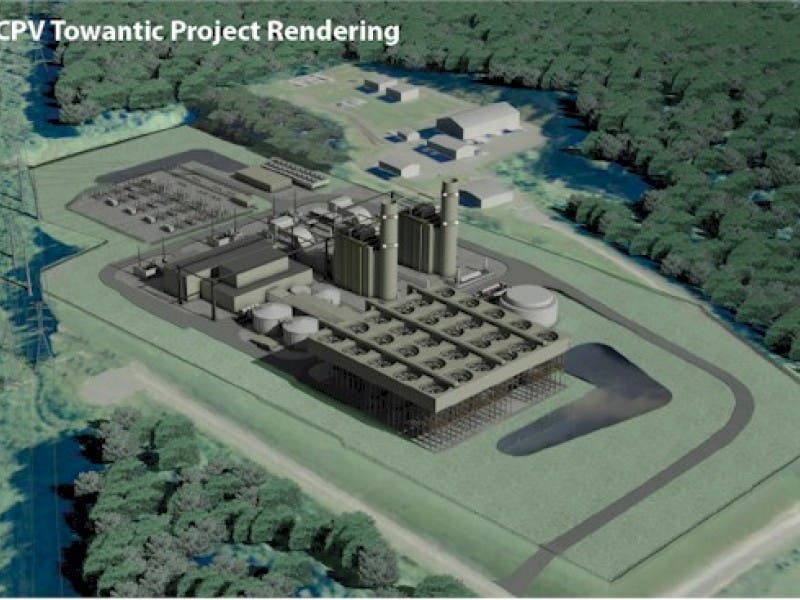
OXFORD, CT - It’s beginning to look like the issue of the Competitive Power Ventures Towantic Power Plant and how much taxes it should pay the town of Oxford may end up being decided by a judge.
Oxford residents have now twice voted against a deal that would pay $112 million to the town over the next 22 years, which would serve as payment in lieu of taxes.
This week about 50 residents protested the power plant at Town Hall and they continue to say it’s a money loser for the town, will ruin property values, and there are health and environmental concerns too.
Find out what's happening in Oxfordfor free with the latest updates from Patch.
So what’s next?
Oxford First Selectman George R. Temple told the Republican-American’s Paul Singley this week that both he and power plant management will once again huddle to see if they can negotiate a new proposed tax stabilization agreement.
Find out what's happening in Oxfordfor free with the latest updates from Patch.
Several residents say the town isn’t getting enough money as part of the deal, while several others likely wouldn’t be in support of the power plant even if the operators handed the town a blank check. Those residents simply just don’t want the power plant in Oxford.
But Temple said this week that if the two sides can’t come to an agreement on a revised tax stabilization agreement, then all Oxford would get is $56 million because that is what a 1999 agreement mandates.
Temple told the Rep-Am that both sides can renegotiate the 1999 agreement because the wattage is increasing, but if they can’t come to terms the 1999 contract remains in effect, which would only give the town $56 million instead of $112 million.
Temple has repeatedly stated that he struck the best financial deal he could for the town.
Opponents continue to state that CPV won’t construct the project unless they get a tax-stabilization agreement passed by the town because the investors want cost assurances.
During a press conference on Monday, opponents issued a full-statement explaining why they feel Oxford isn’t getting its fair share from the power plant.
The Oxford power plant protestors full statement can be read below:
We believe George Temple and Oxford Planning and Zoning’s premature endorsement of Competitive Power Ventures Towantic Power Plant without Oxford voter approval is based on False Economics.
George Temple and Oxford Planning and Zoning Commission should reevaluate the benefits CPV brings to Oxford residents.
The attached analysis, using hard data from the Oxford Greens development, will demonstrate that the economics of the current PILOT tax arrangement, twice presented and twice voted down by the residents, represents a net loss in revenue to the town.
We must remember that CPV wants this plant on Woodruff Hill for its own economic benefit, not Oxford’s. This data demonstrates that should this project go forward, residential development in Oxford will be thwarted.
There is evidence of this occurring already. Should further development cease because of the plant, it would represent a loss of $67 million in taxes from Oxford Greens alone.
We are urging George Temple to take the lead in seeing this arrangement is reexamined, and here’s why:
As an example of what’s currently occurring, the community of Regency at Prospect added 66 new homes to the Prospect Grand List last year.
Oxford Greens added 16 new homes to the Oxford Grand List. Why a 50 home difference? Both developments are run by top of the line builders, are 55 and over age restricted, and are similarly sized and priced. Is the power plant the issue?
We strongly believe it is. The loss of 50 homes not built in 2015 already represents a loss of approximately $350,000 in taxes. If the norm should be 66 homes per year, it would take approximately 8 years to build and sell the 520 remaining Oxford Greens homes and provide the $6.3 million tax per year potential.
We have been told by prospective buyers that the power plant was a strong factor in their decision not to buy a home in Oxford.
Homes have already been put up for sale in all of Oxford because of the threat of this plant being built. Builders may also go elsewhere knowing they will not be able to sell the homes they build. We know why some of the town leaders are in favor of the plant—money for the town’s coffers.
They foresee receiving all of the tax related payments from the power plant and all of the Oxford Greens homes being built with resultant taxes from the 900 approved homes.
The town of Oxford never should have endorsed a power plant so close to a still growing 55+ adult community. The health issues (the elderly are particularly vulnerable) that will be caused by the pollution spewed by the power plant and the visibility of the stacks due to the plant sitting on a high hill will serve as a deterrent to people who might have otherwise considered buying in Oxford. The town of Oxford cannot let this happen.
Lets look at the impact on the local economy:
We believe that each of the 380 households in Oxford Greens contribute upwards of $35,000 per year to the local economy.
This is a total of $13.3 million. CPV estimates that the power plant would provide 25 permanent jobs. If each of these job holders lived in Oxford and they contributed $35K to the local economy this would total only $875,000. If the plant were not built and the 520 additional homes are built at Oxford Greens, this would amount to $18.2 million added to the local economy.
The numbers tell the story in plain economic terms:
• The economic benefit from building the additional homes in Oxford Greens will yield almost three times the PILOT proposed by CPV.
• The comparative dip in home sales and lower home values show the threat of building the CPV plant is already having a negative effect.
• The local economy will benefit far more from 700-800 additional homeowners than it will from 25 CPV maintenance employees who may not even live in Oxford.
• Any payments proposed by CPV under a PILOT program are fixed. However, money from the additional homes will rise from inflation and increases to the mil rate over the next 22 years.
The money CPV is offering seems like a great boon for Oxford, until you look at the hard numbers. We need Oxford’s leaders to reevaluate the long term effects of building this power plant. The residents of Oxford got it right when they voted down the CPV proposal at the Town Meeting and at the Referendum.
The real economic benefit will come from residential and smart business development and maintaining Oxford’s rural character published in the Conservation and Development Agreement of 2007.
Get more local news delivered straight to your inbox. Sign up for free Patch newsletters and alerts.