Arts & Entertainment
Drop Cloths & Scaffolding
Take a look at what happens when The Aldrich staff installs seven new exhibitions at once.
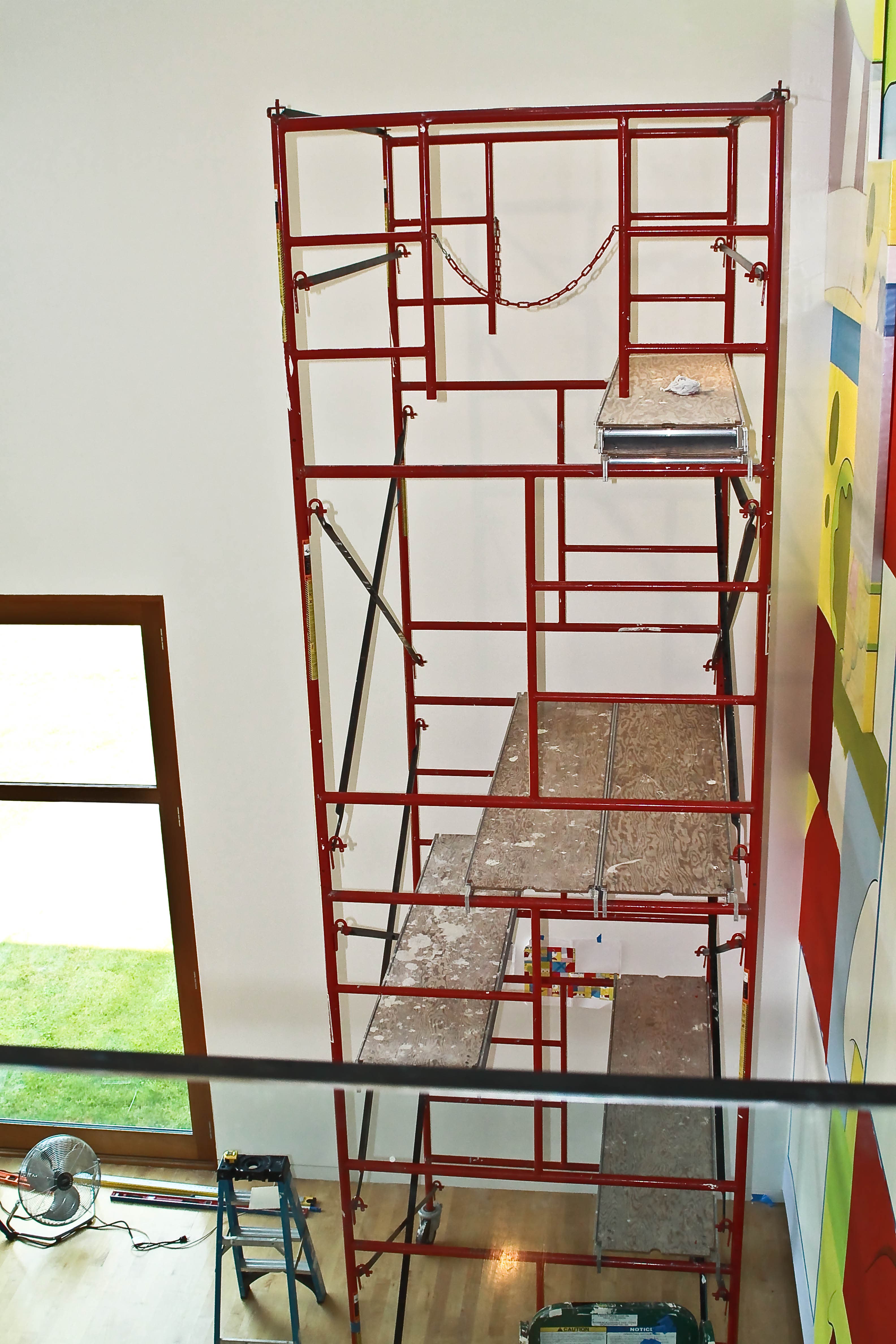


Visitors got a sneak a peek behind The Aldrich's otherwise closed doors on Sunday—Museum Curator Richard Klein led a free show-change tour, a walk through the galleries while the staff is midway through the job of changing the seven past exhibits into seven new ones before next week's re-opening.
Klein called the changeover period "incredibly crazy" and described how, in addition to the museum's staff working on the change, additional staff are brought in and sometimes building specialists, movers, delivery people and drivers as well. To accommodate the large-scale installations the museum prefers, walls often have to broken down or erected and painted.
The process is usually four weeks long, but it had to be cut down this time to only three weeks. The staff was just past the changeover's halfway point on Sunday.
This meant that unhung art was unpacked but near its boxes, walls had not been fully painted and fixtures were not yet installed.
It was fascinating to get this sneak look into a time that most patrons never witness. Drop cloths, ladders and scaffolding sat next to art and revealed just how much work goes into the shiny, finished shows.
Beryl Korot's video installations required a room with a wall built into the center, holes for televisions and a shelf behind to hold the sets. The other video installations required a gallery to be subdivided and both rooms to be painted deep gray to create a darker atmosphere without crafting fully-closing doors that would impede foot traffic.
Korot provided the museum with the floor plan she needed and they hired professional sheet rockers to meet the plans details, Klein explained.
Rackstraw Downes' photorealistic paintings from under New York City's BQE highway were bubble wrapped and leaned against the wall in the gallery where they will hang by next week.
Meanwhile, John Shearer's "America (Continued)" was "99 percent finished" according to the curator.
The outdoor installations were completely ready to show. Fritz Haeg's environmentally-themed works—which include a vegetable garden and habitats for flying squirrels, along with an outdoor performance area that has become a de-facto playground for the neighborhood kids—were complete and ready for viewing.
Haeg is a bit of a west coast art hero, famed for his ecological and environmentally-friendly installations. He sees lawns as a wasteful use of natural space.
Currently, the Aldrich staff is tending to the squash, herb, tomato and corn plants that Haeg installed outside their building where some lawn used to be. Later in the season, the staff will harvest the vegetables and create a meal, all of which is part of the art installation.
Ridgefielder Gary Lichtenstein's screen-printing installation was likewise almost done. The gallery is filled with his works and collaborations with other artists to give a sort-of retrospective of screen-printing in the last few decades.
Viewers will be happy to see Robert Indiana's "Hope Cross 2010" screen prints, similar to the large "Love" screen prints from which the famed Philadelphia sculpture was created. The "Hope" logo was used extensively during Barack Obama's presidential campaign and now hangs prominently in the museum.
Perhaps the exhibit people are most looking forward to is of work by former graffiti artist turned fine artist KAWS. The pop artist is best-known for manipulating famous advertisements and recreating beloved cartoon characters. The artist and a team of two assistants were busily painting one of the museum's largest walls into a milieu of riffs on SpngeBob SquarePants. The rest of his work had not yet been installed.