Arts & Entertainment
Hallelujah! It's Messiah Season!
Handel's masterpiece is starting to pop up in church basements throughout the area. Where will you be singing?


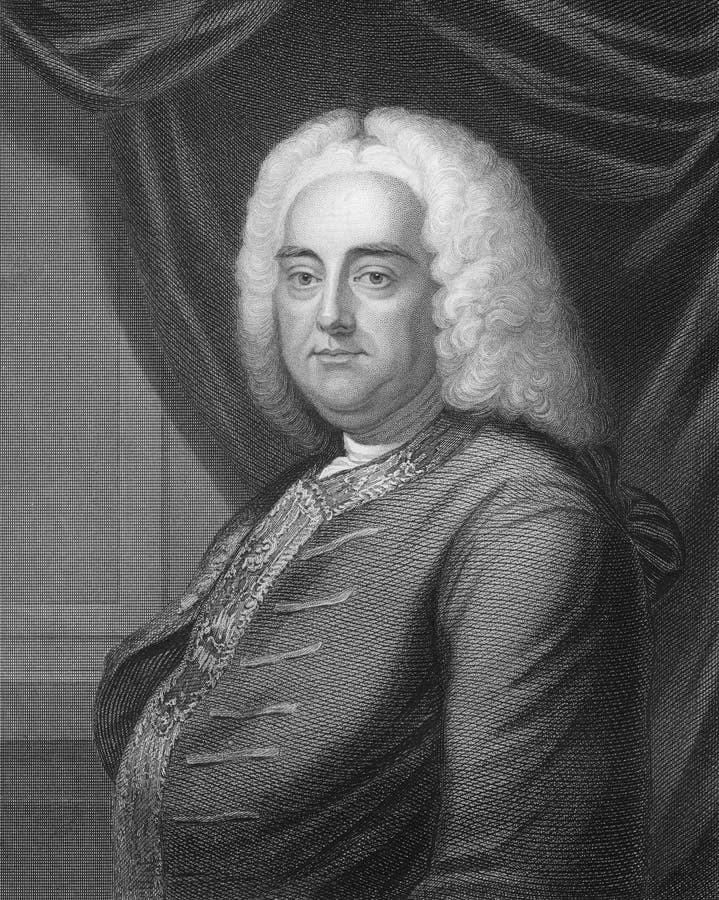
RIDGEFIELD, CT — A quick glance at the Ridgefield Patch Calendar confirmed what that twinge was trying to tell me: we're coming up on "Messiah" Season. Church basements, high school auditoriums, town gazebos and every other manner of meeting hall with notoriously poor acoustics are check-check-1-2-3'ing their microphones in preparation for public performances of George Fridrich's Handel's Christmas classic, "Messiah."
...except that it's not a "Christmas" piece at all. More on that later.
For many retailers, and those who take their Christmas cues from them, the season begins mere moments after Halloween, our pumpkin spice whatevers forcibly ripped from our fists and replaced with their peppermint counterparts. For many of a certain generation, the Christmas season is ushered in stop-motion style with an annual TV watching ritual. Seeing that coquette Clarice nose-nuzzling my boy Rudolph, or baby Jesus healing angry emo Aaron's lamb in "The Little Drummer Boy," means it's time to take a serious look at some hall-decking. Others aren't officially engaged until Thanksgiving's leftovers are finally cleared.
For some of us, the season begins when we find a local call-out for a "Messiah" sing-in and empty our lungs surrounded by strangers. And although we're hardly a movement, or even a hashtag, there's more of us than you might think,
In my case, the affectation can clearly be traced back to high school. "The Hallelujah Chorus" was the traditional grand finale of our choral group's Christmas Concert. As bad at singing as we teens were, we still found a way to make it worse by inviting alumni in the audience up on stage to participate. No chorus of untrained voices has any right to expect they'll reliably hit either the highs or the lows of Handel's double-octave Olympics, with or without the assistance of less-than-well-meaning recent alumni who spent the earlier part of the evening reminiscing over a keg behind the bleachers. Still, there was never anything they nor I could do to either ruin the performance or turn it into a transcendant musical performance, and knowing that the work is immune to anything an amateur can throw at it is my first bit of Christmas comfort and joy.
"Our rendition of 'The Hallelujah Chorus' would have been absolutely pitch-perfect and flawless this year had it not been for that tone-deaf alto from the third row," said no concertmaster, ever.
It was, however, by no means clear to Handel that he had such a bulletproof hit on his hands. "Messiah" was part of the musical and cultural backlash against over-the-top Italian opera, sort of like when punk buried disco. Less a Sid Vicious and more an Elton John, musical chameleon Handel saw the handwriting on the salon wall and began cranking out English oratorios in the early/mid-1700s.
"Messiah" debuted in Dublin in April of 1742. Eighteenth century Dublin was New Haven to London's Broadway, a city where composers might float some new ideas which could bomb quietly, if bomb they did. Handel had good reason to try and sneak his new baby in through pop culture's side door. His best-loved oratorios had been choral musical super hero movies, filled with rightly-plotted melodramatic conflicts and surprises. "Messiah" is a loose and reverential riff on the life of Christ. Everyone was familiar with"Messiah's" plot, sure, but was that a good or bad thing? Handel surely didn't know, and with his most recent oratorios tanking in London, he was trending downward.
"Messiah" did not die in Dublin, as its father feared it might, but instead went on to play London, and everywhere else, for pretty much forever. It's arguably the most famous and most popular piece of choral music ever composed.
If you want to get in on the act and make "Messiah" your cue to hang tinsel and slice fruitcake (and you really should; nothing stops you from popping in a DVD and getting misty-eyed over the Yukon Cornelius/Bumble bromance at home later on), first find yourself a singalong. There's one nearby at St. Luke's Episcopal Church on Sunday, Dec. 3.
If you haven't been doing this every year for decades, and even if you have, it's a good idea to brush up on your source material. There have been hundreds of recordings made, from the humble through the bombastic, of Handel's masterwork, but you can do no wrong by listening to the one released New Year's Eve 1958 by the Philadelphia Orchestra conducted by Eugene Ormandy featuring the Mormon Tabernacle Choir. The trend lately is to recreate the oratorio using instruments true to 1742: 2 trumpets, timpani, 2 oboes, 2 violins, viola, and basso continuo (cello, double bass, and harpsichord) , but Ormandy's is still the reference recording for most. The MTC is to the "Hallelujah Chorus" as Bing Crosby is to "White Christmas:" everybody's made a record of it, but theirs is the one that you remember.
Next, find out if your local group will be singing the whole three-part magilla, or just the first "Christmas" part that ends in "The Hallelujah Chorus."
...except that the first part isn't really supposed to end with "The Hallelujah Chorus." That most famous piece of Handel's most famous oratorio was actually meant to close the second act, which focuses on Christ's Passion. But it was just too magnificent and fun to ignore — especially since the original end of the Christmas part, "His yoke is easy," is much more difficult, for both the singers and the audience. Handel's "Messiah," as it turns out, is actually an Easter oratorio, and not meant as Christmas music at all.
The Westchester Oratorio Society will be presenting a "scratch" sing-along edition of Handel's "Messiah" on Sunday, Dec. 3 p.m. at nearby St. Luke's Episcopal Church on 331 Somerstown Turnpike, in Somers, N.Y.
Photo: George Frideric Handel, 1685, 1759
Credit: Heinz-Dieter Falkenstein / imageBROKER/Shutterstock