Crime & Safety
New Report Details Sandy Hook Shooting Response
The report was released more than five years after the shooting occurred.


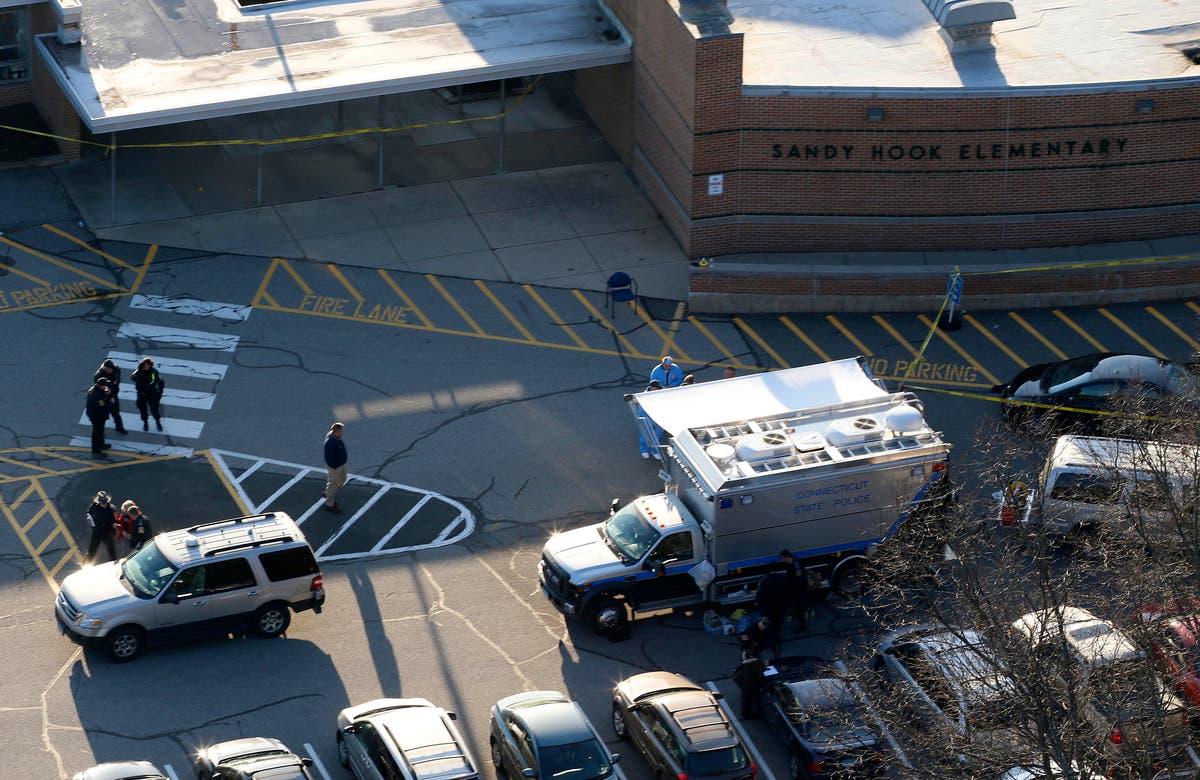
NEWTOWN, CT — Connecticut State Police released their after-action report on the response to the Sandy Hook Elementary School shooting that occurred more than five years ago.
The report analyzed police response to the shooting and made a number of recommendations on how response during and after a mass casualty incident could be improved. No statement was made about why it took more than five years to release the report.
Find out what's happening in Shelton-Derbyfor free with the latest updates from Patch.
The 74-page report concludes that the response to the shooting was effective and that actions taken by teachers, school staff and authorities reduced the number of people killed.
Initial Response
Perimeter
The narrow entry road to the school made for a log jam of vehicles and made it difficult or impossible for later responding personnel to access the school. One trooper reported that he alone was assigned traffic control at the direct entrance of the school, which made it difficult when a swarm of other agencies, media and families arrived.
Find out what's happening in Shelton-Derbyfor free with the latest updates from Patch.
Identification of Officers
The report suggests state police be given clearly marked armbands that indicate they are police officers for off-duty use when responding to a scene. The report noted that many personnel were seen walking around the school with long guns and handguns and weren’t sufficiently identifiable as police officers.
Search of Building
Search and clear procedures at the school were difficult because of the building’s size and the number of personnel who self-deployed from multiple agencies, the report states.
“After the initial rapid search for the gunman, most doors were locked. One of the challenges was getting access into the secured rooms. Teachers and students refused to open doors, even to law enforcement officers who attempted to show proof of identification, and LE was not aware of a “safe word” for the school system.”
Some rooms were unnecessarily searched twice, but the report found that overall the different law enforcement agencies worked well together. There were several reported incidents of officers “flagging” one another during search operations by inadvertently pointing weapons.
Some responders also had trouble transmitting radio messages from within the building.
The report recommends that law enforcement statewide be trained to utilize a uniform search and clear procedure, along with a method to mark a room as already searched.
Command Of Scene
There was some confusion at the beginning of the incident about which agency was in charge of the operation. The report recommends that state police and local police executives establish clearly-defined roles as soon as possible.
Tactical Teams
Tactical teams that responded to the school were unable to locate access keys and neither floor plans or schematics of the school were readily available. The report suggests that law enforcement agencies work with representatives of high profile locations to create a law enforcement resource box.
Investigation
Crime Scene Integrity
Several individuals from uninvolved State Police command staff to members of outside agencies and dignitaries were allowed into the school at one time or another in the days after the shooting, which disrupted the processing of the scene by detectives and potentially risked scene integrity.
Interagency Cooperation
Early in the response commanding leaders from State Police, Newtown Police, ATF, FBI and other agencies were kept together, but in the weeks after the shooting it sometimes took several meetings and phone calls to re-establish effective interagency communication.
Release of Information
Some investigative information was provided to families before the completion of the investigation and the information was then released to the media. The report notes that keeping parties informed must be weighed against potential harm to investigative efforts.
The report noted that the State Police Public Information Office worked with local police to set up a media staging area early, which helped keep released information accurate.
Then-PIO Lt. J. Paul Vance held question and answer sessions with members of the media after a briefing, which helped cut down on rumors. Advanced scheduling of press briefings encouraged media to remain in the staging area and information was released about every 90 minutes, which also helped keep information accurate.
Victim Families
The firehouse where Sandy Hook parents met was not configured to allow a separate area for the parents of unaccounted children apart from those reunited with their children.
“Although there were indications that the unaccounted for children were deceased, Troopers
were not at liberty to disclose that information,” the report states. “The process of positively identifying which children were deceased was very difficult to manage and should be considered when formulating future action plans.”
Families indicated that the scene at the firehouse where they were notified about their children was chaotic, but understood it would have been difficult to pre-plan for such an event.
Some families described it as “tortuous” to have to wait so long to get the final word about the victims. Some also regretted not being afforded the opportunity to be with lost loved ones prior to being sent home for the evening.
When it came to the release of information, families of victims were given the option of group or private meetings, which were both well-received. Mental health professionals were also on hand to provide families with information and support.
Each victim family was assigned a family liaison officer who provided transportation and security for families and passed on information. The officers also screened unexpected mail deliveries and shielded victim families from unwanted media attention. The majority of families noted the family liaison officer was very helpful in meeting their needs, and some even formed long lasting relationships with their liaison officer.
Mental Health For First Responders
To some degree, every detective assigned to the investigation was impacted emotionally with some experiencing post-traumatic stress. Some individual troopers were assigned to tasks that unnecessarily contributed to prolonged trauma.
It was recommended in the report that personnel be made aware that it is in their own best interest not to needlessly enter the most affected areas of a graphic crime scene.
The report suggested that State Police continue to use the Employee Assistance Program, which allows troopers to anonymously receive mental health help as there is still a stigma within law enforcement about seeking mental health help.
Image via Julio Cortez/AP
Get more local news delivered straight to your inbox. Sign up for free Patch newsletters and alerts.