Home & Garden
Kettletown State Park Beach Closed to Swimmers Due to Algae
The algae is toxic to humans and dogs.


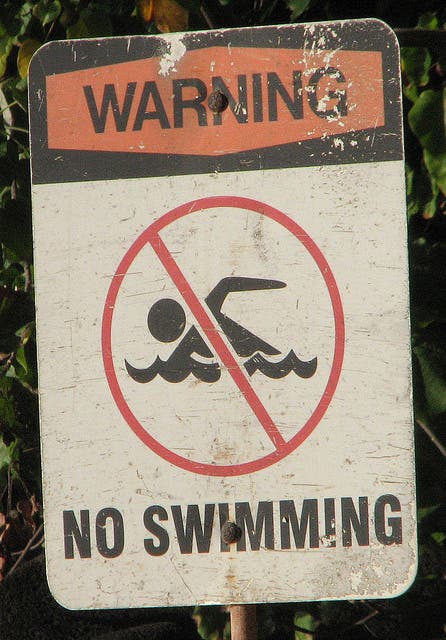
The beach at Kettletown State Park has been closed due to the presence of toxic blue-green algae.
The state Department of Energy and Environmental Protection is monitoring the waters to assess conditions and determine when swimming will be permitted.
More from DEEP:
Find out what's happening in Southburyfor free with the latest updates from Patch.
Blue-green algae, also known as cyanobacteria, occur naturally in lakes and ponds throughout Connecticut. These microscopic organisms often go unnoticed and cause no harm. However, when temperatures are high and high levels of phosphorus are carried into waters as a result of storm water runoff, a water body can experience nuisance blue-green algae blooms that may produce and release toxins. When blue-green algae blooms release toxins, people and pets using the water body for recreation can be affected.
People who recreate in waters when a blue-green algae bloom is present may be exposed to toxins by ingesting or inhaling water or skin contact. Potential health effects to such exposure could include:
- Irritation of the skin, nose, eyes and respiratory tract.
- Gastrointestinal upset such as vomiting or diarrhea upon ingestion.
- Liver or nervous system effects, if relatively large amounts of the algae are ingested.
Additional information on blue-green algae blooms can be found at www.ct.gov/deep/bluegreenalgae
Find out what's happening in Southburyfor free with the latest updates from Patch.
A complete list of water quality testing results at designated Connecticut State Park Beaches – which shows which beaches are open and which, if any are closed – can be found atwww.ct.gov/deep/beachstatus.
Image via Karyn Christner/Flickr Commons
Get more local news delivered straight to your inbox. Sign up for free Patch newsletters and alerts.