Let’s get something straight from the get-go: works of fantasy are literature. Some people insist on labeling fantasy as “genre fiction,” as if there was a form of fiction that didn’t belong to some genre. Generally, these people are book snobs who will refuse to read something unless it fits into at least two of the following three categories:
- It’s considered a “classic.”
- It’s over 100 years old.
- It’s incredibly dull.
Wizards and dragons have just as much right to call themselves literary creations as one-legged whalers with a taste for revenge, daring young picaros from the Midwest, and grumpy old penny-pinchers.
There is, of course, a distinction between quality fantasy and everything else. The former is a validation of the fantasy genre as a legitimate means of artistic expression; the latter is a sloppy, derivative mess that damages the credibility of an entire genre.
Find out what's happening in Southburyfor free with the latest updates from Patch.
As with all forms of entertainment, quality is in the eye of the beholder, and the merits of an individual work are often tied to directly to a reader’s personal feelings toward said work. However, the overall critical reception of a novel often gives a much better picture of its literary worth.
It’s also important to note, however, that the primary purpose of a novel is to entertain. Therefore, a great work must not only be well composed, but also engaging. Keeping that in mind, I’ve come up with four categories to judge the comparative merits of any work of fantasy:
Find out what's happening in Southburyfor free with the latest updates from Patch.
- It must be somewhat believable
- The characters must act realistically
- It must be well written
- The story must engage the reader
Fantasy is a word that comes with certain connotations; realism is not something commonly associated with the genre, and readers are willing to suspend their disbelief to enjoy a book. However, there is a point, even in fantasy, where readers will refuse to accept the sheer incredulity of the situations characters find themselves in.
Brandon Sanderson’s Mistborn series takes place in a feudal society where certain members of the population have the ability to internally “burn” metals that grant them special powers (e.g. enhanced speed, strength, or vision).
While readers understand the books are a work of fiction, the idea of ingesting a substance that enhances physical attributes is entirely plausible (I’m looking at you, Mark McGwire). The believability of this system is supported by consistent use of the system throughout the series.
Simon R. Green’s Secret History series goes the entire other way. His tales of Edwin Drood, the younger son of a clan of world guardians, feature a host of fantasy/sci-fi baddies including elves, aliens, cyborgs, and sentient goo. The protagonist finds himself in inescapable situations every few pages, but always manages to claw his way out with the help of his trusty armor (which seems to magically possess new abilities at every turn).
Books don’t have to be life-like, and in many cases shouldn’t be, but characters should act realistically based on their personalities and what most people would do in a given situation. Characters should be three-dimensional, experience highs and lows, and behave in a way that a reader can understand and believe.
Jim Butcher’s Dresden Files is not the best-written fantasy series ever created, but the author has a knack for crafting characters that are true to life. The protagonist, Harry Dresden, seems like a real person, even if he is an incredibly powerful wizard.
Harry deals with everyday problems that are familiar to readers: romantic difficulties, family squabbles, and the mental exhaustion of living paycheck to paycheck.
Contrast this with Stephanie Meyer’s Twilight series, and the differences are startling. Bella, the teenage protagonist, thinks and acts with the melodramatic finality of a teenager, but to such a startling degree that it’s difficult to imagine her as a real person.
Robert Holdstock’s Mythago Wood is one of the rare fantasy novels that place relatively little importance on the plot of the story. While this doesn’t make for the most entertaining read, the quality of Holdstock’s writing helps to make up for it. The novel occasionally gets bogged down as the main character relates his, “I went here, did that, then went there, and did this” accounts, but the descriptions of the physical world around the characters are near-poetic and of a quality that is rarely matched.
The Wheel of Time series, by Robert Jordan, is one of the most popular series of all time, but next to Holdstock, it is the work of a hack writer. The narrative meanders painfully while characters twist their braids and go through extensive inner monologues. Each of the books is at least 800 pages, but for such length there is little in the way of action or character development.
People read books because they want to be entertained, and it can be argued that this is the most important aspect of any book. The aforementioned Mythago Wood, along with the seminal Lord of the Rings series by J.R.R. Tolkien are regarded as some of the best writing of the fantasy genre; however, they move at a slow pace and downright drag in some spots.
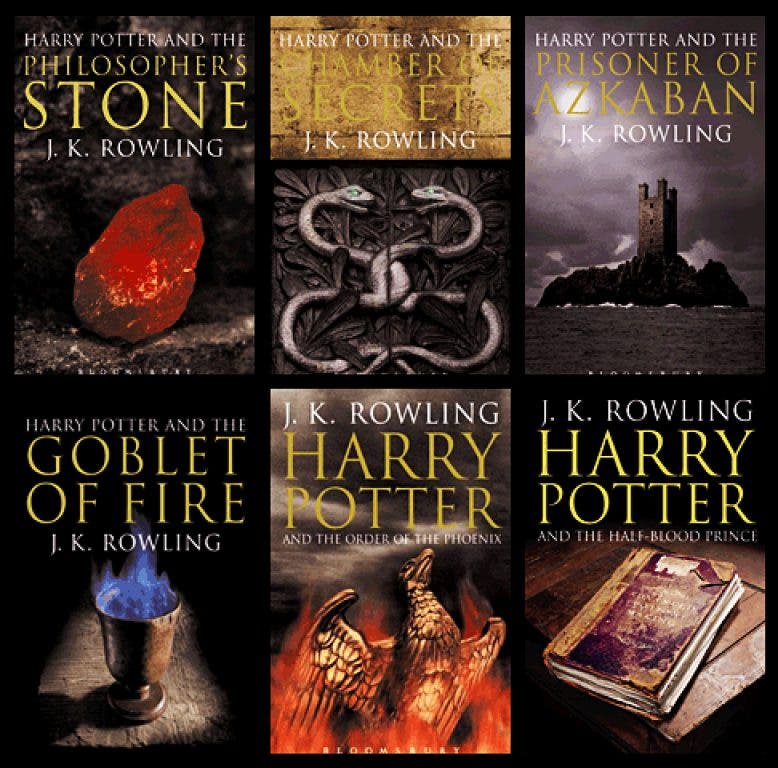
The Harry Potter and Twilight series have become some of the most popular book series’ of all time, but critics often judge them to be of little literary merit.
Quality is subjective, and ultimately up to individual readers, but the greatest works will nail those four criteria.