Politics & Government
Shutting Down a Town Within a Town
With impending state layoffs, the Southbury Training School and many of its programs' futures are in doubt.

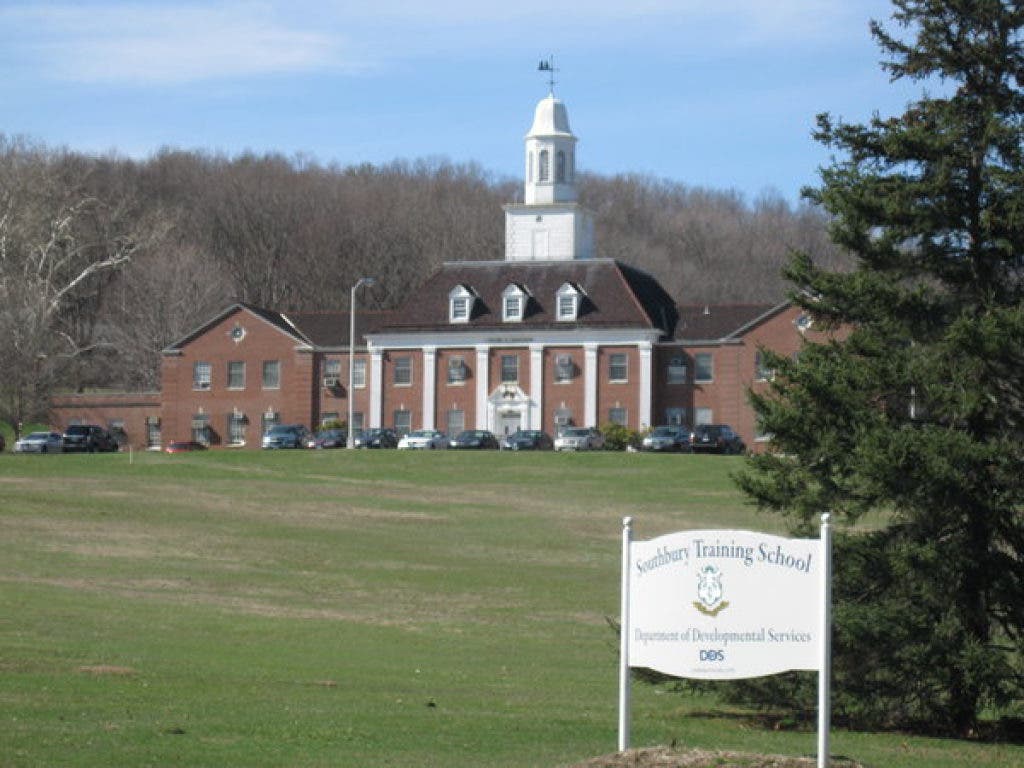
The number of residents at the Southbury Training School has been on the decline since the late 1980s. The needs of the school's residents have not.
The STS facility is situated on 1,600 acres in Southbury and was built in the 1930s as a home for individuals with mental retardation. Today it remains home to some 441 residents, 60 percent of whom have lived there for 30 years or more, and employs over 1,333 full-time, part-time and consulting staff, including its own fire and ambulance operations. The school also operates its own power, heat, sewage treatment and water plants and is listed on the National Register of Historic Places.
In essence, the Southbury Training School is a town within a town. And now , the union to which most STS employees belong, are threatening the small town's future.
Find out what's happening in Southburyfor free with the latest updates from Patch.
"It's really sad what they're doing," said Barbara Carlson, 45, a Waterbury resident and STS employee for the last 16 years. "They're closing cottages at breakneck speed. It's throwing everybody for a loop. It's like decisions are made...and then all of a sudden you're getting disbanded."
The number of residents at STS has been dropping since admissions were cut off to the facility in 1986, so a steadily decreasing staff to accomodate that is nothing new. Since that time the number of residents has decreased to around 441, with an average age of 62.
Find out what's happening in Southburyfor free with the latest updates from Patch.
"As the population decreases and we serve fewer and fewer people, we redeploy staff throughout the rest of our system," said Connecticut Department of Developmental Services (DDS) Communications Director Joan Barnish. "That's an ongoing process."
DDS employees received around the same number, 444, of pink slips as part of the governor's budget proposal this year, according to Barnish. She insisted those proposed layoffs would not affect the quality of care at STS.
"When we picked the way we're doing the consolidating, we made sure the quality of care won't change," Barnish said. "That's what we looked at when we figured out how we were going to prepare our budgets. We look at safety first."
Carlson, however, said any layoffs are bound to affect residents.
"The clients are so dependent on staff, it's like they're family," Carlson said. "There will potentially be problems. They've laid off [many of] the behavior modification people and their important role is to help manage the behavior of the clients...as far as the staffing ratios, [staffing declines] kind of make sense. You're losing clients, the staffing numbers should drop also. But no one wants to see these layoffs."
Even if the quality of care won't suffer, the same cannot be said for the STS workers facing layoffs. Barnish could not say how many STS employees were slated to lose their jobs when most of the layoffs are scheduled to go into effect on Aug. 22. Carlson, however, estimated about 150 STS employees, herself included, received layoff notices.
The layoffs were plentiful enough that some 60 to 70 employees reportedly showed up to a media event held at the school on Tuesday. Many of the employees expressed their concern and displeasure with the pending layoffs to the local NBC affiliate.
The layoffs are by no means a certainty. The Hartford Courant has reported that Governor Malloy is hopeful a revised concessions deal will be passed soon, though union leaders have yet to vote on it. The would reportedly avert layoffs for most of the 6,500 state employees slated to receive them, including those at STS.
As for how likely further concessions might be?
"That wouldn't be for me to talk about," Barnish said.
While the size and population of STS may already be on the decline, the demand for similar facilities in Connecticut continues to rise.
A total of 2,426 state residents are or will soon be in need of residential services from the DDS, 863 of whom are on an emergency and priority waiting list, according to DDS stats. In 2005, that number stood at 689, a 25 percent increase in four years.
Carlson and Barnish acknowledged that one of the biggest blows to STS will be losing the respite care program, with which Carlson works. The program provides relief for those that administer homecare to a special needs family member, allowing special needs children and relatives to be dropped off and well cared for in the family member's absence.
Carlson not only works in the respite care program, she uses it herself. She said she has two special needs children and the program makes an enormous difference for her family and many others.
"It's a lifesaver for myself and my husband," Carlson said. "It's quite challenging and exhausting to deal with [special needs children] day in and day out and the only time we truly get a break is when our children go to respite for a weekend."
"Our biggest concern is our respite centers," Burnish said. "There are 1,800 people who use them. In some cases, it's their only relief from being a caregiver."
Carlson and Burnish said the respite care program was one of the hardest hit by the proposed layoffs.
So an already strained system is feeling added pressure. But a union deal that saves DDS jobs, and thereby STS positions, is a goal Barnish hopes will be reached.
"The department is hopeful that the concession deal is passed and that we can move forward in providing services and support to the individuals that we've been entrusted to serve by the state of Connecticut," she said.
"I think people at this point are kind of cautiously optimistic," Carlson said. "I'm hopeful that it goes through. I'm also hopeful that they're going to keep [most of] the programs open, the respite program specifically. I think everybody's caught in such a whirlwind. But we never thought [the effects] would be this drastic because it's such a necessary thing. How do you put a value on the things that we do, on the care that we give, the services we provide? A lot of these services people depend on as almost a lifeline...I live it and I depend on it."
Get more local news delivered straight to your inbox. Sign up for free Patch newsletters and alerts.