Politics & Government
Southbuy Modifies 'Pay as You Go' Policy, Believes Bonding Will Save Taxpayers Money
Southbury officials believe that bonding will result in about $63 in annual savings for residents in the first year.


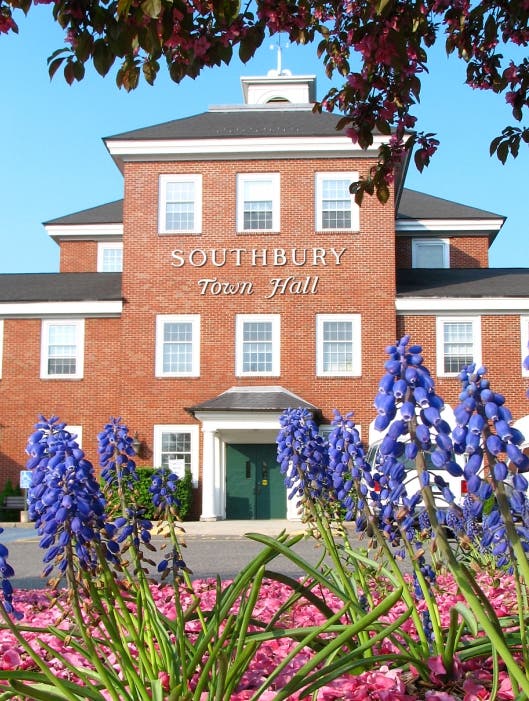
Information via the town of Southbury’s website
For several decades, with the exception of investment in land and buildings, Southbury has funded its capital needs on a “pay as you go” basis. This has resulted in significant annual budgetary savings to taxpayers, as we have not had to pay interest on a significant debt package, as is the case in neighboring towns as well as our state and federal government.
As the Board of Finance looks forward in its continuing goal to provide mill rate stability and keep Southbury in the lower 20% of Connecticut municipalities in total cost of local government, we recognize that the projected cost of “pay as you go” may not be the best way to keep a balance between taxpayer equity and generational fairness. More on that below.
Find out what's happening in Southburyfor free with the latest updates from Patch.
Accordingly, the Board of Finance has recently reviewed this multifaceted issue and has adopted a revised approach to financing capital needs (aside from the cost for land and buildings). What follows is the board’s white paper on the issue. We hope you will find it instructive.
John Michaels and John Reilly
Find out what's happening in Southburyfor free with the latest updates from Patch.
Taxpayer “Equity”: Classic Governmental financing provides that users pay for the use of Capital assets, Bridges, Roads, Buildings, and Vehicles. This is accomplished thru the bonding of acquisition costs
Generational “Fairness”: Southbury’s history of Pay as Go (PYG) results in today’s taxpayer paying nothing for the acquisition of most all of currently in-place Capital Assets while they continue to fund the purchase of future Capital Assets thru accumulation of Reserve funds. These funds, provided by yesterday’s taxpayers at mill rates significantly less than what would be needed for payment of interest bearing debt, provide today’s taxpayers with a significant benefit.
Vehicle replacement: This has been a PYG program for 4 decades. Fire vehicle replacement in the intermediate future financed on a PYG basis will require significant annual increases in the reserve fund annual appropriations (increasing over $150,000 per year from $725,000 now to $1,500,000 in the next 7 years).
Leasing: GE Capital, arguably, the world’s leading capital asset leasing company, has said, regarding leasing Southbury vehicles, that it would not be financially viable, but they would loan us the money to purchase vehicles, though at a cost probably greater than available thru traditional sources.
Pool: In March 2013 while addressing the reserve fund annual additions needed to PYG the town pool replacement, the Board of Finance members determined that taxpayers would not tolerate building a reserve for that 1 item for a total of approximately up to $1,500,000, and endorsed a guideline that individual items over between $1,000,000 or $1,500,000 would not be reserved but bonded, with the determination of the exact figure in the future.
A spread sheet study of a 20 year 5% bonding plan of $1,000,000 per year forever (needed if bonding is the financing tool under “Equity”) shows that the total long term cost of Capital acquisitions is increased by 50% (a 10 year similar plan increases costs by 25%).
Roads: The annual plan to invest in road maintenance and rebuilding should continue as PYG with New roads or new road increments costing over $1,000,000 funded by bonding
Interest rates: Currently interest rates are at historic long term lows for Municipal financing. Borrowing for Capital Assets can legally only be used when the cost of the project is known, and imminent, making it inappropriate to borrow now for future purchases. Borrowing arbitrage for pension funding is done but rarely and only for governments far behind the curve, i.e. Hamden $125MM to get the funding ratio from 10% to 35%. Southbury is currently funded @ 80%. Pension bond borrowing is done on a Taxable basis.
Mill Rate Impact: Based on bonding plan in 6 above, the first year’s saving due to the conversion from PYG would be $1,000,000 less the first year’s debt service of $100,000. This would be approximately 3.5 tenths of a mill or .35/25.0=1.4% mill rate reduction. On the average house value of $300,000 assessed at 70%= $210,000 at 25 mills, annual tax of $5250 would result in annual savings of 1.4% = $63.50. As debt service increases every year because of annual borrowing, each year the mill rate would increase until savings would become extra costs in perpetuity due to the annual cost of borrowing of interests and fees.
Inflation: It is assumed that the long-term annual increase in real estate values with a resulting annual increase in the tax base would offset the inflationary increase in the cost of capital assets and pensions. Based on this, the effect of normal inflation would have a minimal effect on this analysis and conclusion.
Based on the above, the working group recommends that the Board of Finance adopt the following
“Modified Pay as you Go” policy: “New and Replacement Capital Assets with individual project cost of over $1,000,000 (Annually adjusted for inflation) shall be bonded rather than funded thru reserves. Debt service shall be funded with an eye toward gradual mill rate change so mill rates do not ‘jump around’”.
Get more local news delivered straight to your inbox. Sign up for free Patch newsletters and alerts.