Community Corner
State Seeking Proposals to Lease Farmland at Southbury Training School
About 370 acres are available, the state said.


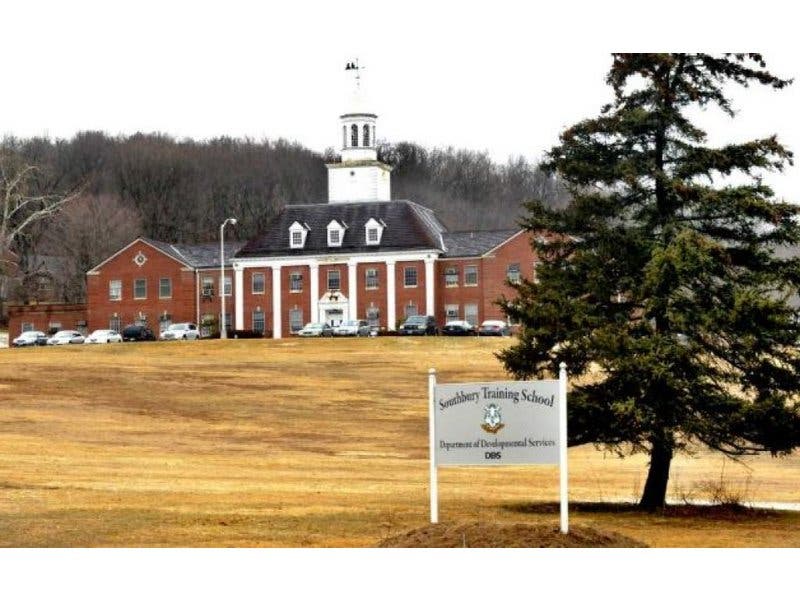
The Department of Agriculture is accepting proposals from interested farmers for the long-term agricultural use of state-owned farmland at the Southbury Training School properties in Southbury and Roxbury.
About 370 acres of the 921-acre property are available for farming permits that would take effect March 1, 2016.
The 12 farmland parcels – between 3 and 71 acres in size - are located along Cassidy Road and Purchase Brook Road, northwest of the training school campus.
Find out what's happening in Southburyfor free with the latest updates from Patch.
Most of the land is currently planted in corn, grass hay and pasture to support an active dairy operation, while other acreage requires restoration.
Initial proposals must be submitted to the agriculture department in writing and postmarked or hand-delivered by Friday, October 2.
Find out what's happening in Southburyfor free with the latest updates from Patch.
Two public tours of the property will be held on Saturday, Sept. 12 – the first from 10 a.m. to noon and a second from 2 p.m. to 4 p.m.
Agriculture Commissioner Steven K. Reviczky said food and fiber-producing agricultural uses will be a priority in awarding proposals. The department will consider the overall impact on the productivity and condition of the farmland based on the submitted proposals.
The permits will be for a term of up to ten years, with the option to extend, at the discretion of the Commissioner, for up to an additional 15 years.
“This property is a valuable resource located in an area of the state where demand for quality farmland is high,” Reviczky said. “I believe this program represents a unique opportunity for farmers to compete to access this special place.”
Governor Dannel P. Malloy spearheaded the transfer of the training school farm to the agriculture department earlier this year.
The protection of the land was for many years a top priority of diverse stakeholders, including the Southbury Land Trust and the Town of Southbury, who were included in the agreement.
“Restoring these prime farmlands to active farming will be good for the environment and the economy of Southbury,” First Selectman Ed Edelson said. “Agriculture was historically a major part of Southbury’s economy and I see this program as the beginning of a wave of infrastructure and institutional support to restore more of the town’s farm potential.”
A report prepared by the Yale School of Forestry and Environmental Studies on the site concluded that it could serve a variety of agricultural needs in the area including food processing and farmers’ markets.
· Food-processing:
The agriculture department is making efforts to increase facilities that connect farmers to restaurants, specifically by aggregating, processing, and distributing products.
There are 52 processing facilities in the state, including cheese manufacturing, fruit and vegetable canning, ice cream and frozen dessert, animal slaughtering, fluid milk and butter manufacturing, wineries, seafood preparation and packaging, and poultry processing.
While Southbury is a 45-minute drive from most major food processing hubs, the report said it has the potential to fill a need for food processing in western New Haven County.
· Farmers’ markets:
The number of farmers markets in Connecticut has nearly doubled over the last decade to a total of more than 125.
And although there is a farmers’ market in Southbury and many others within a 45-minute drive of the training school, there are few in its immediate area.
An on-site farmers’ market at the training school would serve as a draw for farmland seekers and consumers, and a processing facility could also benefit farmers who sell at markets in surrounding counties.
The report concluded that: “Southbury has the opportunity to grow unique, value-added foods that can help boost the Connecticut economy.
Demand for value added products like honey or maple syrup and out-of-season produce seem to outstrip supply.
There are some major opportunities for Southbury to partner with distributors to grocery stores or institutions, particularly if there is a processing facility on site.”
Farmers who are awarded permits will be required to develop and follow a USDA-Natural Resources Conservation Service Conservation Plan, approved by the state agriculture department, and follow best management practices during the term of the agreement.
Proposals will be reviewed by an advisory committee and the Commissioner of Agriculture starting in October.
Based upon the advisory committee’s review, a limited number of potential permittees will be invited to meet with staff, and additional information or materials may be requested at that time.
Staff and the advisory committee will then recommend candidates to the Commissioner for his review and approval. The Commissioner reserves the right to reject any and all proposals not in the best interests of the State of Connecticut.
The executed Agricultural Use Permits also will be reviewed by the State Properties Review Board, and submitted to the Office of Attorney General for final approval.
Applicants must submit a Farming Permit Proposal Form, plus any accompanying materials by October 2 to: The Resource Preservation Unit, Connecticut Department of Agriculture, Room G-8, 165 Capitol Avenue, Hartford, CT 06106.
The Farming Permit Proposal Form is available online at www.ctfarmlink.org.
Additional information and the parcel location map are included with the Farming Permit Proposal Form.
Those without internet access may request the form by calling Sandy Karanian at 860-713-2511.
Get more local news delivered straight to your inbox. Sign up for free Patch newsletters and alerts.