Crime & Safety
'Future Of Policing': City Announces Mental Health Initiatives
Stamford Mayor David Martin and Chief of Police Tim Shaw, along with other officials, announced several mental health initiatives this week.


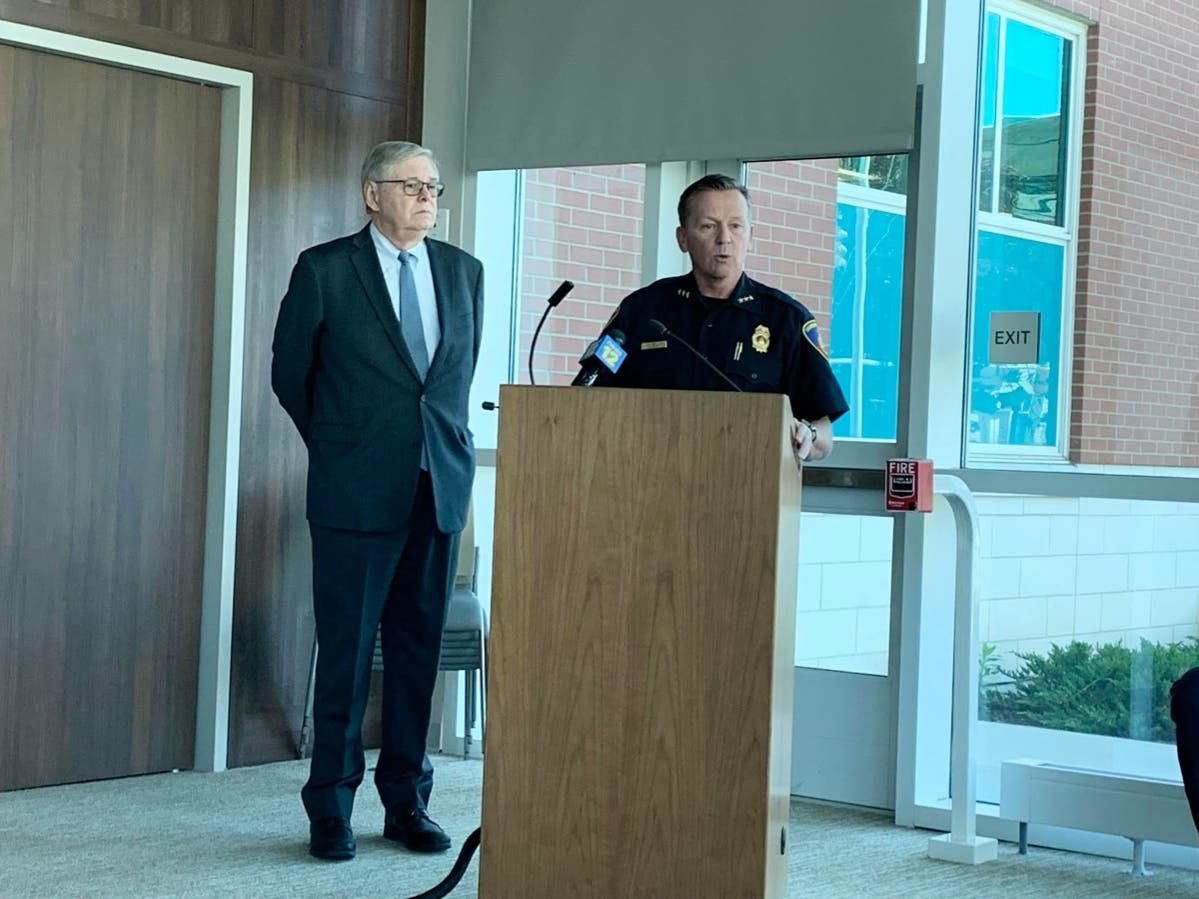
STAMFORD, CT—On Wednesday, Stamford Mayor David Martin announced several public safety mental health initiatives that are being implemented by the Stamford Police Department and the Offices of Public Safety, Health and Welfare.
Martin made the announcement at the Stamford Police Headquarters, with Chief of Police Tim Shaw, and Director of Public Safety, Ted Jankowski.
The initiatives include a Police Mental Health Collaboration and ongoing Crisis Intervention Response Training (CIT), which both began in 2020; and a Mental Health Crisis Adaptive Patrol Response Program and the embedding of a Social Worker with the SPD, which began this year.
Find out what's happening in Stamfordfor free with the latest updates from Patch.
Martin said the ball started to roll on these initiatives when he became aware of the amount of hospital transports the police department was doing related to mental health evaluations. According to Jankowski, the SPD responds to over 1,000 mental health incidents per year.
Police Mental Health Collaboration
Believed to be the first of its kind in the state of Connecticut, this collaboration is unique in that it partners the SPD with several service providers and advocates for the improvement of mental health response and services.
Find out what's happening in Stamfordfor free with the latest updates from Patch.
"The goal is for the police and community members who work in public health to get together periodically and talk about the individuals in the community and the challenges that they are facing," Martin said. "We clearly have been hearing that the system as it exists throughout the state and most of the rest of the country was really inadequate. Individuals are just being treated as a one-off incident and not really receiving a follow up and the care that they need. This collaboration will help pull all that together."
Jankowksi recalled a time in late 2019 when he sat down with families who had encountered some mental health crises with a loved one. The experience was impactful.
"When you sit down and you speak to somebody who's experiencing that, it's very disheartening. They're frustrated that their loved one is not receiving the care that they should be receiving, and they're also frustrated because they cannot force them to have the interactions that they need, and to force them to go get the care they need," Jankwoski said. It was at that time the idea of the Mental Health Collaboration was born.
Representatives from various departments in the city, such as Stamford Health, F.S. Dubois Center, NAACP, Social Services, Department of Health and Stamford Emergency Medical Services (SEMS) are all a part of the collaboration.
Crisis Intervention Response Training (CIT)
The SPD has been training officers on how to respond and de-escalate the various mental health crises they encounter on a daily basis. To date since 2020, the department has trained 127 officers, and hopes to increase that number going forward. Training is not mandated, and takes about 40 hours.
"Officers who have been trained have learned how to deal with individuals having mental health episodes, how to deal with them safely, and how to give them the care that they need," Jankowksi said. "It's a time where the individual is having the worst moment of their life, and also friends and family members are having a difficult time, too. We found it has been very successful."
Mental Health Crisis Adaptive Patrol Response Program
This initiative, which officially began this year, has been developed by the SPD and other City of Stamford Public Safety Offices, SEMS and Stamford’s 911 Communications Center.
In the past, the department would respond to a mental health crisis with two officers, a sergeant, and EMS personnel. Now, there has been an overhaul about how the city's dispatch center handles 911 calls.
"The dispatchers ask more questions. Is there any history of violence? If there's any signs of violence in a previous call or currently, officers are going to go first to make sure the scene is safe," said SPD Chief, Tim Shaw. "The difference is, if there's not, the officers are going to stage [nearby]. While they stage, they're close by to protect EMS in case things don't go exactly how we may have thought they would."
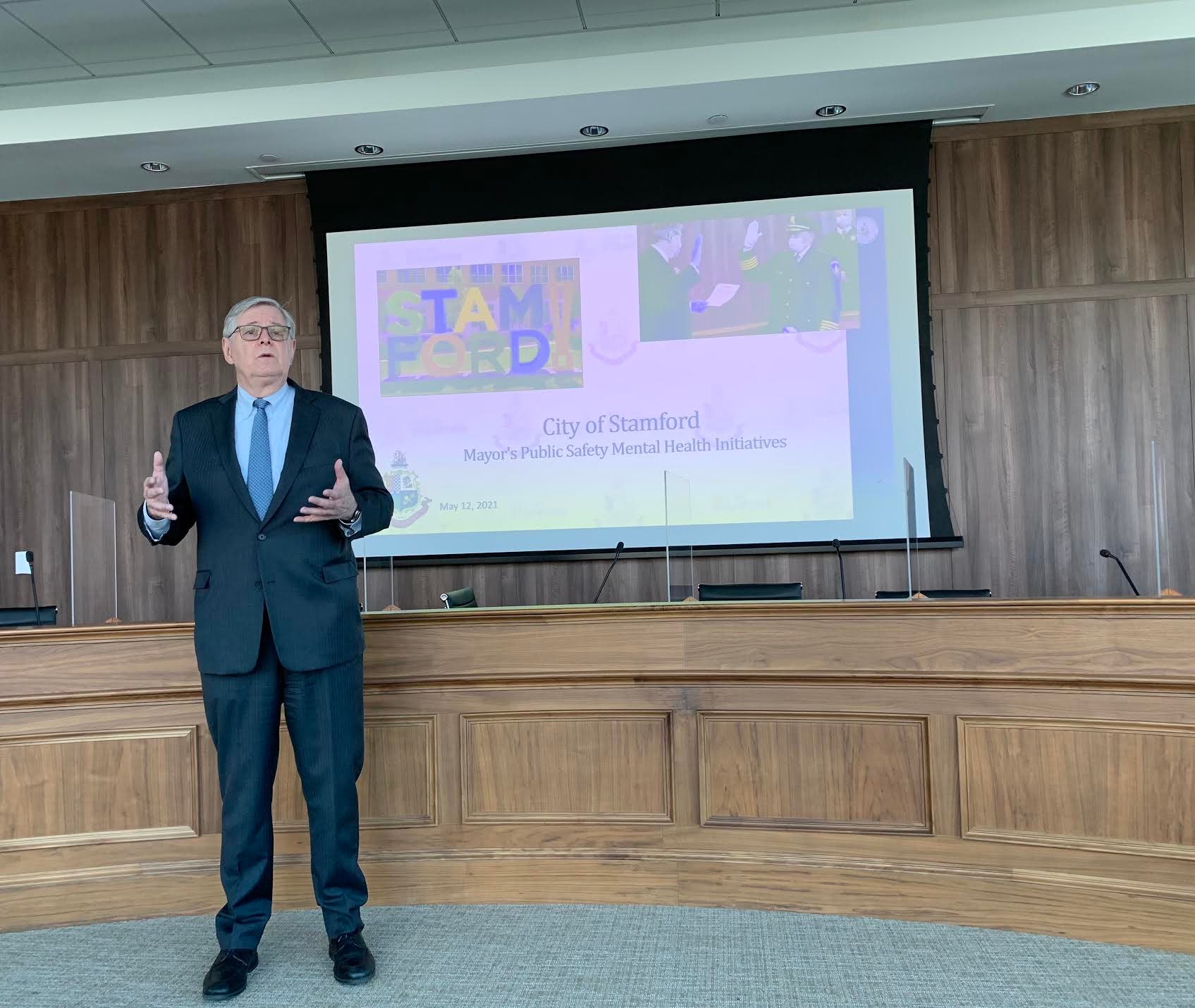
Martin said police presence is still necessary, but depending on the call, they don't need to always be the first ones through the door.
"You've heard across the country that we should defund the police and just respond with social workers," Martin said. "I can guarantee you that if you had to respond to any of these calls, you know that that's not just a practical way to respond. There are many cases when the police have to be there to protect individuals from themselves and others.
Implementing this program in January of 2021 has resulted in a reduction of more than 30% of police involvement in mental health calls, Shaw said.
Social Worker Embedded within the Stamford Police
The City of Stamford has contracted with Recovery Network of Programs (RNP) to embed a social worker within the Stamford Police Department. This is the first public/private partnership in the state dealing with mental health response.
RNP is a private, nonprofit, social services agency which has served Fairfield County for almost 50 years. RNP CEO, Jennifer Kolakowski, said Wednesday that RNP offers 25 programs, specializing in mental health treatment, substance abuse disorder treatment, as well as housing.
Carolina Rodriguez, the social worker who has been with the SPD since May 1, will respond along with the officers to assist on scene when it's safe and feasible.
Rodriguez will conduct mental health assessments, coordination of care, referrals and assertive linkage for those individuals encountered who are experiencing a mental health crisis. She will also work with Stamford Hospital and other local community resources to assist with treatment and will conduct aftercare follow-up to ensure that the client has been stabilized and connected to care to reduce repetitive calls.
Although this initiative began this month, Shaw said he has already received "rave reviews."
"For us and for the family [involved], it's more resources. [Carolina is] a constant face they're going to see, not a different officer every day. To the officer, it's a different tool on their belt, especially during crisis calls," Shaw said. "I see this as the future in Connecticut in policing."
Martin added that if the program continues to work as he expects, the city could double the program in a few months.
Overall, he expressed pride that Stamford and its police department are stepping up to the plate when it comes to dealing with mental health.
"I'm very pleased we're stepping forward to take on an even broader and more important role to protect this community through these mental health initiatives," he said. "I'm very proud of what this police force is doing, and what the City of Stamford is doing."
Get more local news delivered straight to your inbox. Sign up for free Patch newsletters and alerts.