Health & Fitness
Stratford Mosquitoes Test Positive for West Nile Virus
Stratford health officials urge residents to take precautions and prevent exposure and bites: BREAKING


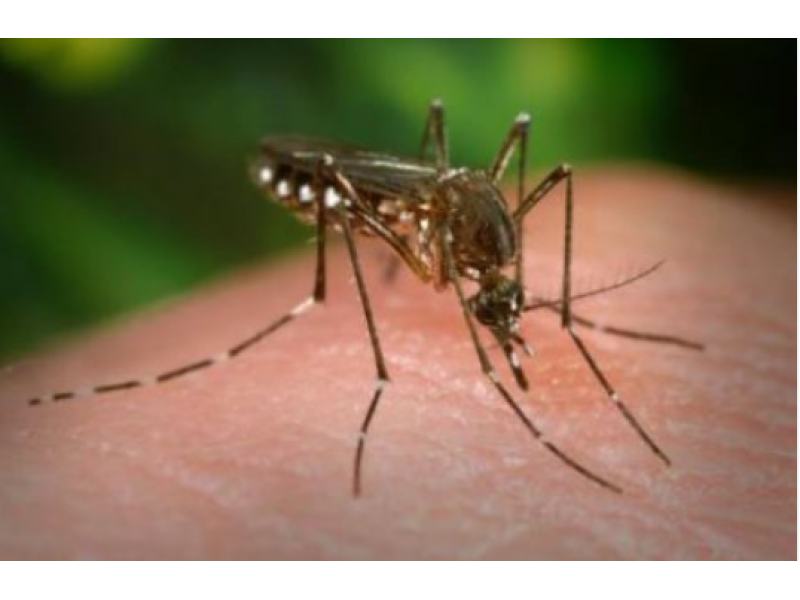
STRATFORD, CT — Mosquitoes that were recently trapped at Beacon Point in Stratford have tested positive for the West Nile Virus, according to health officials.
The Stratford Health Department announced on Tuesday that the Connecticut Agricultural Experiment Station reported Culex pipiens mosquitoes trapped at Beacon Point on Aug. 4 tested positive for West Nile Virus.
“This has been a particularly bad season with a larger than normal crop of mosquitos. With positive WNV-carrying mosquitos, residents should double-down on taking precautions,” Andrea Boissevain, Director of Health in Stratford, said in a press release. “Take quick and easy steps to prevent exposure and bites like wearing long sleeves, especially at dawn and dusk and use insect repellent.”
Find out what's happening in Stratfordfor free with the latest updates from Patch.
Boissevain added that the good news is that there is no local transmission of Zika here in Connecticut.
Christina Batoh, Stratford’s Environmental Conservation Administrator noted that the town started treating for mosquitos earlier in July using a biological larvicide.
Find out what's happening in Stratfordfor free with the latest updates from Patch.
“All 5,281 catch basins were treated,” she said. “The treatment attacks at larval stage so they never grow into adult mosquitos and lasts several weeks.”
Dr. Batoh noted that the town will likely treat again in mid-August.
Read more from the press release below:
Every year the Health and Conservation Departments join forces to get the word out through press releases and social media to provide residents a list of precautions everyone can take, highlighting that people’s best defense is to get rid of standing water in flower pots, bird baths, trash cans and their lids, anything that collects water, effectively removing the perfect breeding ground for mosquitoes.
Dr. Batoh added that “the best way to reduce your risk of being exposed is to keep mosquitoes out of your home: secure your window and door screens.”
Added precautions to avoid mosquito bites and to decrease mosquito activity around your home include:
- Tip over items in your recycle bin that can collect water.
- Clean and chlorinate swimming pools that are not being used, including pool covers.
- Clear clogged gutters.
- Drill holes in bottom of recycling containers.
- For commercial properties with flat roofs, check for standing water to reduce mosquito-breeding sites.
- Minimize time spent outdoors around dusk and dawn when mosquitoes are most active.
- Be sure door and windows screens are tight fighting and in good repair.
- Wear shoes, socks, long pants, and a long-sleeved shirt when outdoors for long periods of time, or when mosquitoes are most active. Clothing should be light colored and made tightly woven materials that keep mosquitoes away from the skin.
- Use mosquito netting when sleeping outdoors or in an unscreened structure and to protect small babies when outdoors.
- Consider using DEET-containing mosquito repellent, as directed, when outdoors.
Most people who are infected with West Nile Virus and become ill will have a mild illness that may include fever, headache, body aches, nausea, and vomiting or skin rash. Rarely, people develop a severe form of the illness that can include neck stiffness, disorientation, loss of consciousness, tremors, muscle weakness and paralysis. Older adults are more likely to have severe health consequences if they become infected with West Nile Virus.
The Connecticut Agricultural Experiment Station also has information for the public on mosquito surveillance control and mosquito-borne diseases. This information can be accessed on their website http://www.caes.state.ct.us
For more information on West Nile Virus and mosquito control, please visit the Stratford Health Department’s website at www.townofstratford.com/health.
Patch file photo
Also see:
Get more local news delivered straight to your inbox. Sign up for free Patch newsletters and alerts.