Health & Fitness
Big Hydrangea Dig Frees Hardy Orange
Moving one big plant to show off another one wore me out, but this hardest dig was worth it.
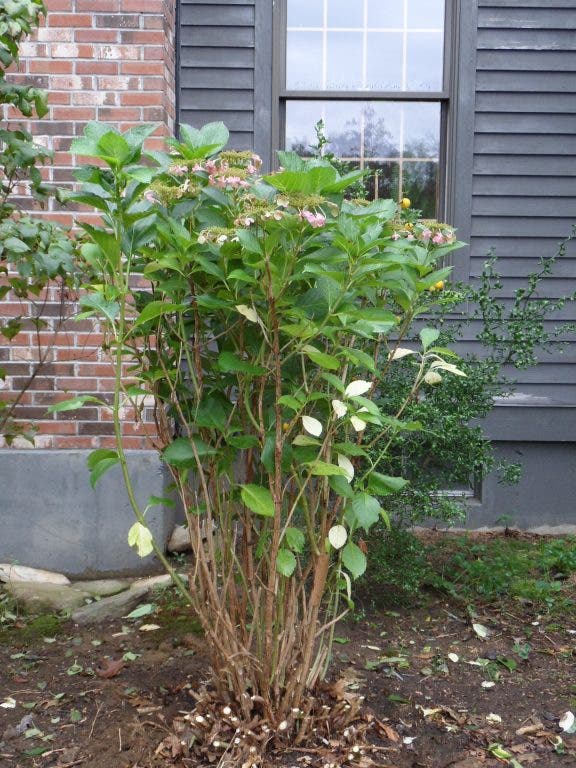


Almost a decade after I planted it, I needed to move a lacecap hydrangea because it had grown so large it covered up one of my favorite plants: the strikingly beautiful hardy orange. What I wanted was to view this tree/shrub as I walked the path between the porch and the sedum garden. This move was a routine procedure, just one among many in my moveable garden.
Seemed easy enough, but it turned out to be the hardest dig I'd ever done.
It started on a recent sunny Sunday afternoon in October and didn't end until three days later. During that time, I used a regular shovel, along with a jagged-edge one. I got out the pick axe, then a digging knife to slip under the huge root ball that had sent growth deep into the ground. Eventually, I had to bring out a pruning saw to sever these tentacles.
Meanwhile, I cut the hydrangea way back from its 4-foot girth, leaving it about half that big around. Finally, on the third day, when I sawed the last root, I gave the plant a pull that ripped it free so suddenly that I fell into a sitting position, where I stayed for a minute to celebrate a hard-won victory.
Find out what's happening in The Haddams-Killingworthfor free with the latest updates from Patch.
Similar to many efforts in gardening and life, this one seemed more worth doing after it was over than it did while I was doing it – and wondering why.
Now, that the lacecap finally has left the spot, the hardy orange, aka Poncirus trifoliata 'Flying Dragon', can finally be seen, freed. Why did it take me so long?
Find out what's happening in The Haddams-Killingworthfor free with the latest updates from Patch.
Like the hydrangea, the orange was planted almost 10 years ago. The orange’s razor-sharp thorns explain why many years ago people planted this orange in front of windows; few burglars would climb through such a barrier.
Showy all year, the orange produces fragrant blossoms in the spring, followed by green fruit that matures and turns . . . orange in the fall. The sour fruit usually is not eaten, but some people make jam from it.
For my part, I'm happy just to look at the oranges. Now that I finally can see them.
Find more writings from this author, gardener at LeeMaysGardeningLife.com