Deer, in large numbers, are here to stay unless south-central Connecticut is
suddenly cohabitated by a throng of hungry … but that would bring another set of issues. Enough sniveling over all the greenery planted that deer now see as dinner (read a sampling of my own sniveling, That's a deer, granddaughter deer and Do deer tweet? at my blog, Joene's Garden). It's time to
focus on what deer haven't eaten … yet.
Plants that combine fuzzy, silver and fragrant characteristics seem to be off the list of deer faves. Stachys byzantina, a.k.a. Lamb's Ear, in the common flowering form and the non-flowering variety 'Helene von Stein' are both ignored. Many gardeners decry common Stachys' wild looking flower stalks – they tend to fall this way and that after heavy rains. I don't. Bees love the flowers, I welcome the subtle purple flower color and I simply cut back unruly stalks after giving them a chance to pop back up after a rain. Remove all stalks when flowers fade to enjoy the fuzzy silver foliage long into autumn.
Deer avoid other plants with similar downy coverings – common mullein (Verbascum thapsus), downy Salvias (sages), Santolina, lavender
(Lavandula angustifolia 'Hidcote' grows best for me), rose campion (Lychnis
coronaria) and artemesias.
Find out what's happening in The Haddams-Killingworthfor free with the latest updates from Patch.
Check out Elegant Silvers by Jo Ann Gardner & Karen Bussolini as a go to resource for silver foliage plants. I cannot attest that all those listed as deer-resistant will be so in your garden, but the list in Elegant Silvers is a good place to start.
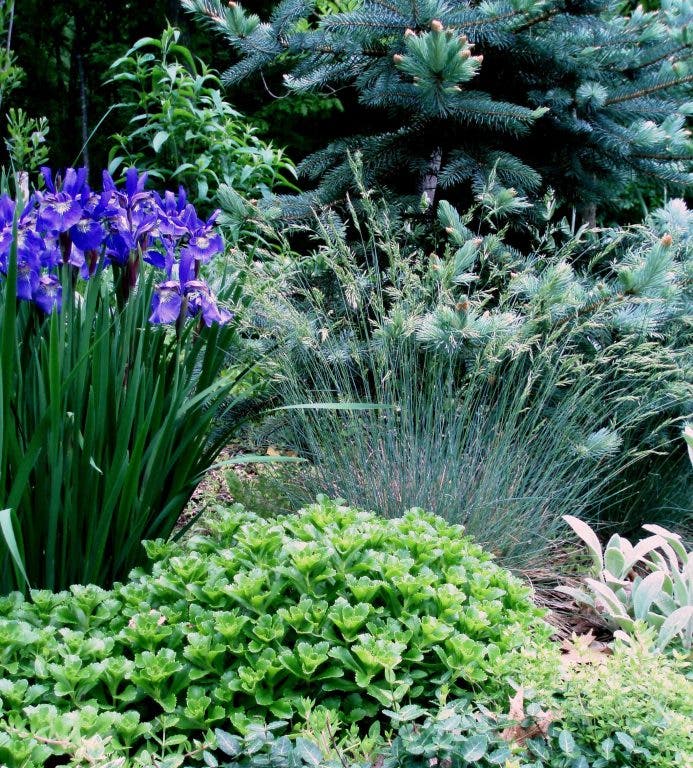
Common foxglove (Digitalis purpurea) green- and red-foliage ground-cover sedum, ornamental grasses, Colorado blue spruce (Picea pungens 'Glauca') as well as other spruces, any variety of thyme, and Siberian or bearded iris seem to be off the deer dinner menu (though I've heard of deer eating iris in other gardens).
Find out what's happening in The Haddams-Killingworthfor free with the latest updates from Patch.
Local deer don't seem interested in allium, most narcissi (except they
have browsed my early blooming Tete-a tete miniatures), globe thistle (Echinops
ritro), native ferns, boxwood (Buxus sempervirens), and Pieris japonica.
Deer leave my rhododendron and laurel shrubs alone during late spring,
summer and early autumn, but I fence rhododendron from late autumn through
winter to keep deer from 'pruning' them into green-topped umbrellas. With this
year's heavy deer browsing small laurel shrubs will also be fenced to prevent
deer re-shaping.
Much of Connecticut's woodlands are home to an ever growing deer population.
Each deer eats about 5 to 10 pounds of plant material a day so they will
naturally be tempted by our gardens. Each gardener must decide whether to garden with deer or fence them out. Repellants may work temporarily but solid fencing is the only effective deterrent ... unless deer find thier way inside.
It's certainly frustrating to find your gardening efforts reduced to deer dinner, but thoughtful garden planning can lead to lovely gardens that co-exist with deer until, that is, their fickle tastes change.