Health & Fitness
It's Pollarding Time in Connecticut
Here's what happens when you plant too close to the house.
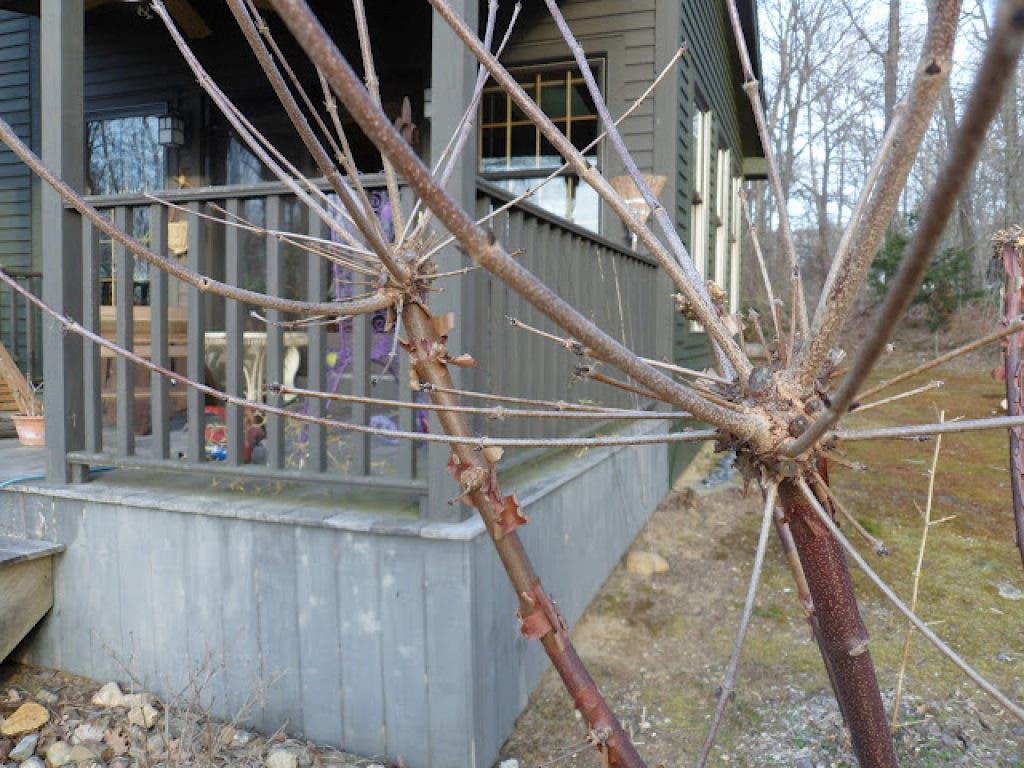


In gardening, as in life, one mistake often leads to another. So it was with the paperbark maple, also known as Acer griseum.
Several years ago, I bought a small version of one of these maples and planted it near the porch. Too near.
Find out what's happening in The Haddams-Killingworthfor free with the latest updates from Patch.
Mistake Number 1.
As it grew, it got closer and closer until its canopy was touching the porch roof line. No worries, I thought, I'll just prune the tree severely, leaving only the west-facing branches. That way, the sun's pull will create a dramatic effect.
Find out what's happening in The Haddams-Killingworthfor free with the latest updates from Patch.
That became Mistake Number 2.
The sun pulled the branches westward, alright, but instead of looking dramatic, this maple's trunk grew fatter, while the top remained sparse and characterless. Instead of getting curve and flow, I had produced a dork with a ponytail.
This was not the first time I'd learned that we fearless pruners may be more prone to making one cut too many than are gardeners who fear the knife.
Undaunted, I decided more radical surgery was needed; I could not undo what I'd done, so this time I went all in: I began pollarding the tree, heading several branches to the same height. Each year, I let these branches put on vigorous new growth in spring and summer, then I cut all that growth back in late winter-early spring.
As the growth-pruning cycle continues, the pruned branch ends become more and more gnarly, looking more and more like clubs pointing toward the sky.
Pollarding reminds me of streets of San Francisco and Europe, where pollarded trees line streets. Makes sense, as this type of pruning keeps trees small, conserving space. I love the look.
After I had done my early-spring pruning this year, I took Lyn for a walkabout, showing her the knobbiness that has developed during the last few years on the maple, one of her favorite trees.
She stared at the tree, its cinnamon-colored peeling bark back-lit by afternoon sun. I waited proudly. She pronounced it "in-te-resting," in that certain tone that says it's not interesting in a good way.
I got the message; In Lyn's opinion, I'd made Mistake Number 3.
This pruning man blogs at LeeMaysGardeningLife.com