Health & Fitness
Compost Threat Makes a Plant Bloom
No matter what you do, sometimes a plant won't bloom – until you toss it onto the compost. Or, threaten to.
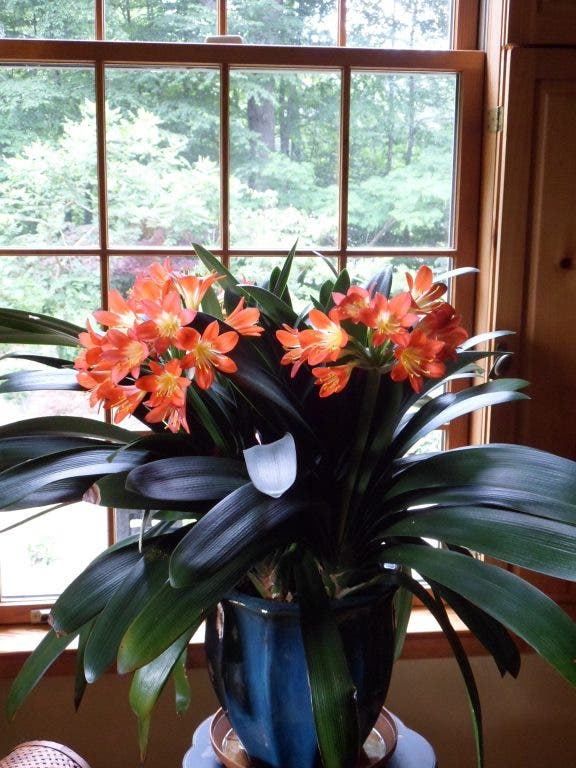
No matter how many times it happens, I'm always amazed that tossing a plant into the compost seems to make it bloom.
One of my surprise survivors came back to life a few years ago when I was growing vitex here in East Haddam. After producing those sweet-smelling purple flowers a couple of summers, it didn't come back the following spring. I waited until summer and seeing no signs of new growth from the plant, I tossed it onto the compost.
Well, a few weeks later, in July, the composted vitex began sprouting like mad. I rescued it and put it back in the ground, where it lived another couple of years before dying off again. I dug it out of the ground again, but this time I tossed it not onto the compost but into the woods. For all I know it's established a colony there, but I haven't seen it again.
Find out what's happening in The Haddams-Killingworthfor free with the latest updates from Patch.
The vitex and others bloomed in reaction to being uprooted and composted. But, this past spring, I had my first experience of seeing a plant bloom in response to a threat, not the act itself.
Clivia is the plant.
Find out what's happening in The Haddams-Killingworthfor free with the latest updates from Patch.
I bought this orange-blooming, strapped-leaf, warm-climate plant five years ago, grew it as a houseplant and got it to bloom two years in a row. Sparsely, one or two stalks, but bloom nevertheless. Then, for the next couple of years, it just sat there, leaves beautiful, blooms non-existent.
Clivia Flowering Out of Fear?
Those times it had bloomed were in winter, when lush blooms are so appreciated. So, giving it one more last chance, I did everything the experts said: Last fall, I let the plant chill outside without fertilizer for a couple of months, keeping it on the dry side before bringing it indoors and resuming feeding and watering.
Still no blooms this past winter. By spring, I'd waited long enough. In April of this year, I examined it closely for signs of blooms that wedge between the strapped leaves, then push up atop the stalks. Seeing nothing, I hauled clivia outdoors to await its fate; there were two possibilities: I'd pitch it onto the compost, or I'd repot it and give it another last chance. I hadn't decided which, but I knew if the roots looked bad, repotting wouldn't be an option.
In any case, I had to get the root-bound thing out of the pot's tight squeeze. As I struggled, I was amazed to see a touch of orange that I swear had not been there the day before. Delighted, I let the clivia stay in the pot. It produced more blooms than ever before; they slowly squeezed their way up through the strapped leaves, and they lasted through the summer.
Extraordinary timing? Or response to fear of getting composted? The latter is not so far-fetched when you consider assorted experiments, as far back as the 1800s, finding that plants react to actions around them. One I recall reading about involved Russian scientists connecting plants to sensors after someone had violently hacked them. The sensors registered plants' distress when the attacker approached.
So, do these studies mean plants have feelings? That they respond to human feelings and thoughts?
Many gardeners behave as if they do. Some talk to their plants. Others play music for them. I touch and stroke leaves and branches as if they respond to my touch. Maybe they do. Just as they may shape up in the face of threats.
As autumn starts clivia's run-up to blooming, I'll know in a few months whether it'll bloom on its own – or whether I'll have to give it a talking to.
Lee May, journalist and author, planted an acre of gardens – and writes at leemaysgardeninglife.com