Health & Fitness
Water for Birds – But No Demon Rice
I feed birds by planting certain trees and shrubs for them. To wash down the food, I make "watering holes," placing them throughout the garden.
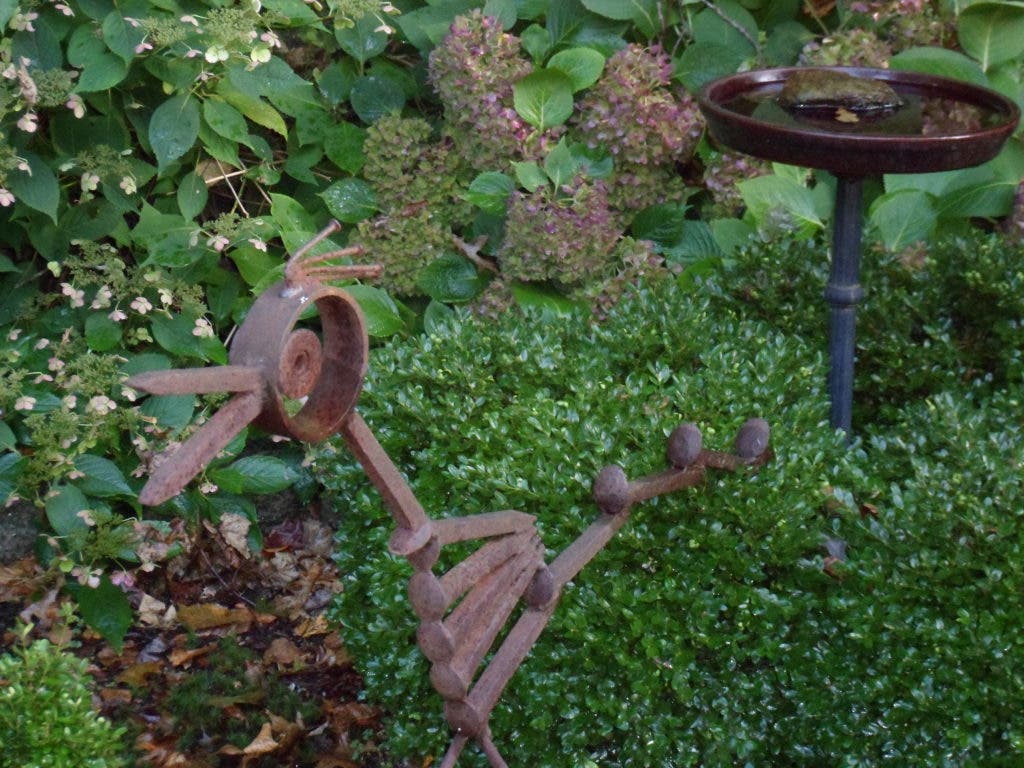

Endlessly entertaining, birds do so much for me that I feel compelled to do something for them. While I don't feed them store-bought food, I do plant for them, putting in shrubs and trees, such as winterberry, spicebush, dogwood, beautyberry, sumac and barberry.
And, I make sure they have ample water to wash down their food.
Funny, they're called birdbaths, but they obviously do multiple duty, these water containers; birds do bathe in them, some, like the brown-headed cowbird, so vigorously that they splash most of the water out of what I call watering holes. Others, including the neon-bright goldfinch, sip carefully, swiveling their heads to avoid surprise attacks from prowling predators.
Find out what's happening in The Haddams-Killingworthfor free with the latest updates from Patch.
When I first started gardening in Connecticut a decade ago, most birds visiting my place were seasonal, stopping in during spring and summer, then starting to head south during the fall.
But, in recent years, I've seen more and more permanent residents, their boundaries apparently pushed farther north by warmer temperatures brought about by climate changes around the world.
Find out what's happening in The Haddams-Killingworthfor free with the latest updates from Patch.
It is strange to see hummingbirds in autumn, even stranger to see bluebirds in winter. But, along with the climate, times have changed. The Connecticut Department of Energy and Environmental Protection notes that bluebirds "are becoming more common year-round in certain areas of Connecticut." My area certainly is one of those. And, not just for bluebirds.
With so many more birds staying all year, winter's leafless trees and shrubs make it easier to watch a variety of colorful winged creatures. Often in pairs, they go about their eating and drinking in normal fashion, decorating the garden.
Then, there are Bobby and Whitney. Normal is not a word that fits these two cardinals, the only two named birds around my garden.
They may have been normal at one time, but that would be before they discovered a load of rice on the ground, left from the rice wine I make, using my mother's recipe (http://www.leemaysgardeninglife.com/2011/05/still-trying-to-make-my-moth...).
Bobby ate a few pecks of the wine-soaked rice, then wobbled off before flying to a nearby branch. From there he watched Whitney, who couldn't get enough of that powerful stuff. I did not see Bobby touch the rice again, but he'd accompany Whitney, sometimes standing nearby, sometimes flying to the branch, watching and waiting, looking concerned. During the several days the rice lasted, deer and other birds doubtless ate some of the rice, but Whitney was the most frequent visitor. I have to give her credit; she could hold her rice. I never saw her fall down.
Whitney rarely drinks from the watering holes, but Bobby does. I bought one of them and made the others, using assorted stands, upon which I placed drain saucers filled with water. Also, a little cast-iron pot has proved to be a hit when it fills up with rain.
Oh, by the way, I no longer throw my spent rice on the ground. Just as I don't want to make birds dependent on food handouts, I don't want to feed their dependency on demon rice either.
Lee May, author, writer, gardener, blogs at leemaysgardeninglife.com