Politics & Government
Environmental Council Says State's Environment Unchanged
On the eve of Earth Day, the state's Council on Environmental Quality releases its annual report.


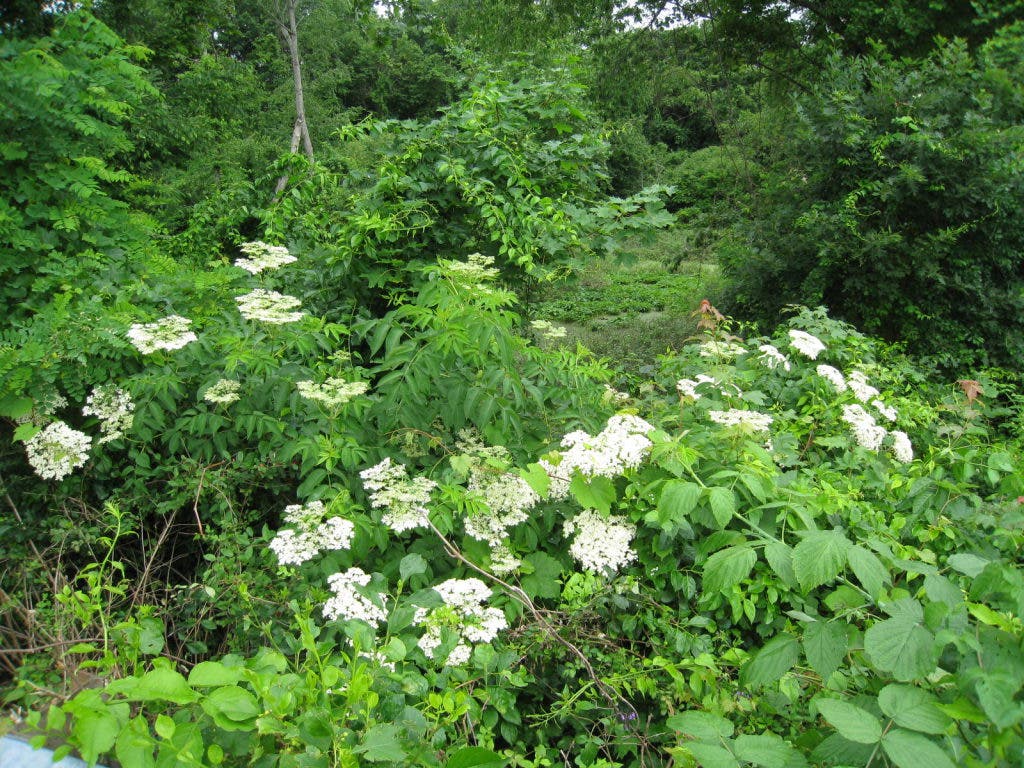
Connecticut’s environment changed very little in 2010 and that will remain the scenario for years to come unless the state takes steps to achieve its goals for clean air, sewage-free rivers, and land conservation.
That’s the conclusion the state’s Council on Environmental Quality came to in its annual report on Connecticut’s environmental condition. The council submitted the report to Governor Dannel P. Malloy on Thursday, the eve of the 41st annual celebration of Earth Day.
“For drinking water and wildlife, the lack of change is a good thing; in some other areas the constancy is not encouraging,” the council said in the report’s cover letter to Malloy. The report gives several examples of where environmental progress has slowed:
Find out what's happening in The Haddams-Killingworthfor free with the latest updates from Patch.
Connecticut residents and businesses have made sizable investments in successful water pollution control projects over the past 40 years, but many miles of rivers and coast still receive raw or poorly treated sewage and other pollutants.
The waters of Long Island Sound that have low oxygen levels during the summer showed improvement in 2010, but this was preceded by five years of decline.
Find out what's happening in The Haddams-Killingworthfor free with the latest updates from Patch.
Coastal beaches were closed slightly more often in 2010 due to bacterial contaminations, and the cure – control of sewage overflows and polluted runoff – is not in the immediate future.
Residents breathed unhealthful air on 29 days in 2010, the most since 2005, even as pollution levels improved on most other days to their best levels in decades.
Council Chair Barbara C. Wagner used the air quality data to illustrate the environmental challenges residents face, even as they enjoy the benefits of past successes.
“Connecticut residents generate less air pollution nearly every year, but the state constantly is battling the weather patterns and warmer temperatures that create unhealthful concentrations of pollution,” she said. “Furthermore, data show that residents continue to buy air conditioners and refrigerators that are not Energy Star efficient; this contributes to greater demand for electricity from seldom-used, highly-polluting power plants on the hottest summer days when air quality already is at its worst. So in 2010, we ended up with less air pollution on average, but with more days when the air violated health standards – a paradox that can be explained partly by warming temperatures and partly by our continuing use of inefficient air conditioners and refrigerators.”
The core of the report is a standardized set of 33 environmental indicators with which the Council tracks progress in air, water, land and wildlife. A few of those indicators measure human activities that are expected to affect the air, land and water of the future.
“Most of those indicators are not encouraging,” Wagner said. “Recycling appears to have stagnated, compliance with environmental regulations took a negative turn in 2010, bus ridership declined and people’s use of electricity at home went up for the first time in several years.”
Wagner concluded by saying that “the state’s future does not have to be bound by recent trends. The data from our report suggest ways to make the indicators jump toward the target, to get us to our goals in our lifetimes.”
She described four such goals, described in a section of the report called “Routes to Progress:” Continuous public and private investment in the control of water pollution; a plan for conserving farmland, parks, forests, and greenways, which involves determining how much land has already been preserved; incentives for growth and development in the right places, which should help create demand for commercial development of brownfields and more widespread use of more efficient refrigerators and air conditioners.
The annual report, Environmental Quality in Connecticut, is a paperless web publication. The Council is required by law to submit the annual comprehensive summary of the state’s progress in protecting and improving Connecticut’s air, water, land and wildlife. It can be viewed in its entirety on the Council’s here.
Established in 1971, the Council is a nine-member board independent of the Department of Environmental Protection except for purely administrative functions. The chair and four other members are appointed by the governor, two members by the president pro tempore of the Senate and two by the speaker of the House. The council has published dozens of reports on state environmental problems and solutions, and resolved thousands of citizen complaints.
Get more local news delivered straight to your inbox. Sign up for free Patch newsletters and alerts.