Arts & Entertainment
Global Problem, Local Solution
Archbishop Elias Chacour speaks at the First Congregational Church of Old Lyme on the Israeli-Palestinian Conflict and what local communities can do to make a difference.
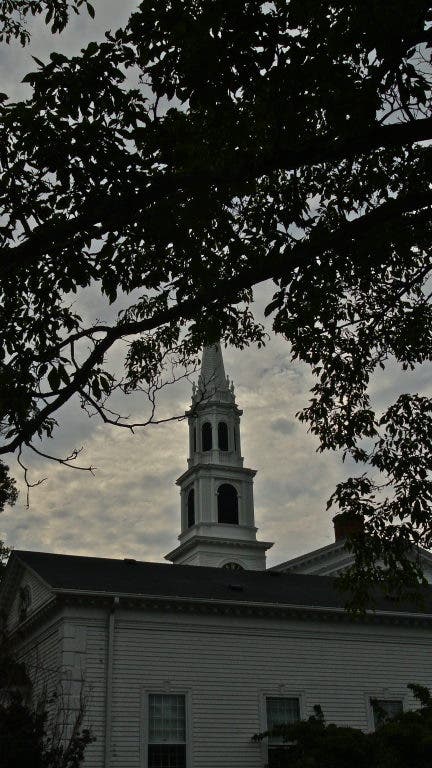


This past Sunday, the First Congregational Church of Old Lyme hosted an Interfaith Worship Service intended to help liberate the local community. The multifaceted service targeted the negative misconceptions and stereotypes often associated with Islam, Judaism, and Christianity.
Encouraging persons from all faiths to join the congregation, this day of worship offered a peaceful ambiance befitting for a much-anticipated public address by an internationally recognized peace advocate, Archbishop Elias Chacour.
The keynote sermon was prefaced with Hebrew and Christian scriptures, as well as the sacred texts of Islam, each recited by a member of the respective faiths.
Find out what's happening in The Haddams-Killingworthfor free with the latest updates from Patch.
Following the inspirational spiritual contributions, the Archbishop stepped forward to the podium.
Elias Chacour, Archbishop of the Melkite Catholic Church of Israel, a noted peace activist in the ongoing Israeli-Palestinian conflict, addressed the diverse audience on a topic at the heart of his praise-worthy and decorated life’s work.
Find out what's happening in The Haddams-Killingworthfor free with the latest updates from Patch.
Nominated for the Nobel Peace Prize three times for his efforts in bringing peace and solidarity to Israelis and Palestinians, Archbishop Chacour has received a number of awards, honoree degrees, and other recognitions. He has spent decades working to establish what the two nations have yet to achieve, peace.
The Israeli-Palestinian conflict dates back to 1948 when the State of Israel was created, leaving Palestinians without the modern-day political equivalent of a home. Born in Palestine, the Archbishop’s background is as complicated as the conflict itself, categorizing himself as an Arab Palestinian Christian who is also an Israeli citizen.
In 1947, Chacour, still just a child, experienced the widespread misfortune of eviction by the Israeli authorities, which would help establish the nature of his convictions. Father Chacour was appointed as priest of the Church of St. George in Ibillin in 1965 where he would stay until 2006. He would then rise in the church hierarchy to become Archbishop of all of Galilee.
Villages in this region are where “Christians and Muslims have lived together peacefully for many generations,” explained Chacour.
Stemming from his intricate past, the Archbishop’s strong embrace of peace and the subject of his efforts revolve around a world of turmoil that has the whole world involved. Given the gravity of the conflict and the lack of will to find peace diplomatically, the Archbishop realized that his efforts would have to expand beyond his mundane priestly responsibilities.
His vision exemplified what countless peacemakers through the centuries have demonstrated to be the most effective way to combat tensions founded in ignorance, namely education. By providing a space for all members of a very religiously and culturally diverse community to learn to live and work together in peace, Chacour hoped he could lay a cornerstone for the future of the region. The schools of the Mar Elias Educational Institutions (MEEI) brought this dream to life, which have now existed for over 30 years in Ibillin.
With all of this behind him, Archbishop Chacour gazed through a quiet audience and began to tell the faithful members what they could do to make a difference in a conflict that goes well beyond Israel and Palestine.
Describing the tensions of his land as “identical claims by two nations on the same territory,” the Archbishop politely asked Americans, at least those listening, to refrain from intervening or contributing to the cause specific to Israel and Palestine.
Instead, Chacour urged each listener to “make a change around you”.
"We (Israelis and Palestinians) both need to learn how we can belong to the land. Not race. Not religion. It is our relation to the land (that is important),” proclaimed Chacour. He then added, “We Jews and Palestinians do not need to learn how to live together. We need to look back in history and remember how we use to live together”.
Erroneous beliefs and false presumptions about people from different cultural, religious and social backgrounds are prominent among all nations.
The purpose of the interfaith service at the First Congregational Church of Old Lyme is to take a local step that contributes to a giant leap for humanity in helping change the fundamental conscience of individuals from all faiths.
Chacour, in his final words urged the audience to do as the Palestinians and the Israelis must do, which is to simply remember the past, reminding all in attendance that “we were all born babies”.