Neighbor News
Lost Forgotten Village Historic House Tour
Historic House Tour of Haddam Neck, October 3, 2015
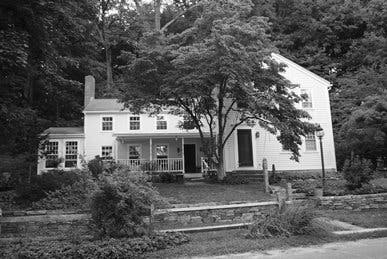


The Lost Forgotten Village, Haddam Neck Historic House Tour
On Saturday, October 3, 2015 the Haddam Historical Society will host “The Lost Forgotten Village- A Historic House and Site Tour of Haddam Neck” from 10 am to 4 pm. The tour will feature six historic homes dating from a 1790 Colonial style farmhouse to an 1875 Second Empire style sea captains home. Other sites include the 1822 Schoolhouse, 1874 church, historic cemetery, 1911 Haddam Neck Grange Hall and Rock Landing, the location of the Neck’s major wharf and shipbuilding area.
Haddam Neck is a unique and isolated community separated from the “mother” town of Haddam by the Connecticut River with no bridge or direct access connecting them. The Neck is a peninsula bordered on the west by the Connecticut River and east by the Salmon River and Pine Brook. It was settled around 1712 by the second and third generations of Haddam’s founding families including Arnolds, Brainerds and Clarks and descendants still reside here today. The river played an important part in the development of the Neck with shipbuilding and trading important sources of income. A granite quarry opened in 1762 and was a major industry for the 18th and 19th centuries. A feldspar quarry, where museum quality tourmalines were found, was active in the early 20th century. In addition, the waterpower of Pine Brook supplied a number of mills including a saw mill, paper mill, sword and scythe factory, oakum mill and cotton duck mill. Many early residents were also farmers and shad fisherman. Other industries included basket making, cider mills and medicine manufacturing.
Find out what's happening in The Haddams-Killingworthfor free with the latest updates from Patch.
In the late 19th and early 20th century many Swedish and German families settled in Haddam Neck to farm. By the mid-20th century most residents were commuting to Middletown or Hartford to work and only a few farms remained. The Neck saw a spike in growth in 1968 when Connecticut Yankee Power Plant began operation on the site of Bradway Airstrip near the southern tip of the peninsula. The plant remained a large tax payer and employer until it closed in the late 1990s.
Haddam Neckers have always been fiercely proud and protective of their special community. When the 1950 Census was taken, Neckers were up-in-arms when Haddam Neck was “forgotten” to be included in the census. An investigation showed that they were not “forgotten” or “lost” but just last on the list to be enumerated even though the Middlesex County numbers had been completed. The Neck has considered seceding from Haddam a number of times including in 1860 when they petitioned the State Legislature to secede and be called Granite, Connecticut. They tried again 100 years later and once talked about joining with Middle Haddam and Cobalt to form their own town. However 300 years later the Neck still remains part of Haddam. It is a special community that has its challenges and isolation but most residents would not live anywhere else and cherish the tightknit relationships and camaraderie the neighborhood offers.
Find out what's happening in The Haddams-Killingworthfor free with the latest updates from Patch.
Homes on the tour include:
The Freeman Arnold, Sr. House is a 1790 farmhouse built in the traditional Colonial period style surrounded by picturesque open fields and lovely gardens. The original owner Freeman Arnold was a farmer and fisherman who owned a number of fishing places on Haddam Island. The Arnold Family remained in the house for several generations and farmed the surrounding land. The current family acquired the property from the Arnold Family in the mid-20th century and today often host intimate “house concerts” from classical to jazz.
The Samuel H. Arnold House is a well preserved Greek Revival style farmhouse built around 1840. Now known as Cold Goats Farm, the property is the Neck’s one remaining active farm and features an outstanding English style 1854 barn. Arnold, like his father Freeman, was a farmer and at age 80 made the news by showing his skill as a butcher by skinning a 371 pound pig. In the late 19th century Swedish immigrant John A. Olsen purchased the house and it remained in the family for over 40 years. The current owners have carefully maintained the historic integrity of the house while making appropriate improvements and operating an active farm.
The David B. Hollister House was built in the early 1800s near Rock Landing, the Neck’s primary wharf and shipbuilding yard. Not much is known about Hollister except that he married Dorothy Brainerd a member of the local Brainerd dynasty in 1787. Hollister died in 1821 and the property passed to the Arnold Family and later in 1842 to Elias Selden whose family occupied the house until the turn of the century. Swedish immigrants who worked in the local feldspar quarry lived here in the first half of the 20th century. Although additions have been made including adding closets where NONE existed the house maintains its modest charm and historic appeal. A highlight of the property is the post-and-beam barn erected by area craftsman Brendan Matthews of The Barn Raisers.
The William B. Northam House was erected circa 1865 and replaced an earlier Colonial period gambrel roofed farmhouse owned by the Brainerd Family. Northam was a stone-cutter and farmer and the family lived in the house until 1947. This well maintained vernacular dwelling features a kitchen recently renovated by well-known housewright Skip Broom of Hadlyme. The property has been maintained to create a natural habitat for local wildlife and it is not unusual to see two dozen turkeys or deer grazing.
The Julius R. Burnham House, a Second-Empire style dwelling was built 1875 replacing an earlier house erected by his father. Burnham who is listed as a carpenter and medicine manufacturer lived here with his family until 1902. The next owner was Captain Gustave Sandin, a Swedish sea captain who brought his family here from New York City. The Sandin Family enlarged the house adding the open porches and a large kitchen addition at the rear and named the property Crow’s Nest. The property has the honored distinction as having the first indoor bathroom in the Neck. The current owners are just the third family to occupy the property.
The Ansel Brainerd Jr. House is one of the community’s most distinguished homes and has a commanding view of the Connecticut River. Built by Brainerd around 1825 the Colonial style house features Federal period detailing including elaborate doorway with transom. Brainerd farmed the surrounding property and was involved in the local quarry business. The Brooks family, including historian and author Lillian Kruger Brooks, owned the house for much of the 20th century. The current owners have renovated the property to accommodate a growing young family.
The tour will run from 10 am to 3 pm and tickets cost $25 in advance and $30 the day of the tour. The tour headquarters and check in is at the Haddam Neck Grange Hall 26 Quarry Hill Road, Haddam Neck, 06424 where participants will pick up their programs and directions. A homemade lunch will be available at the Haddam Neck School House by the local Ladies Aid Society.
Proceeds from the tour will go to the maintenance and upkeep of the Thankful Arnold House Museum and help support our educational programs and exhibits. For more information visit www.haddamhistory.org. For reservations or questions email director@haddamhistory.org or call 860-345-2400.
%#|sh