
“Mayday, Mayday, Mayday … firefighter down, first floor rear off hose line, cannot find way out…”
That’s a radio transmission no fire officer ever wants to hear, but this was the scenario practiced by four teams of Haddam firefighters Monday evening.
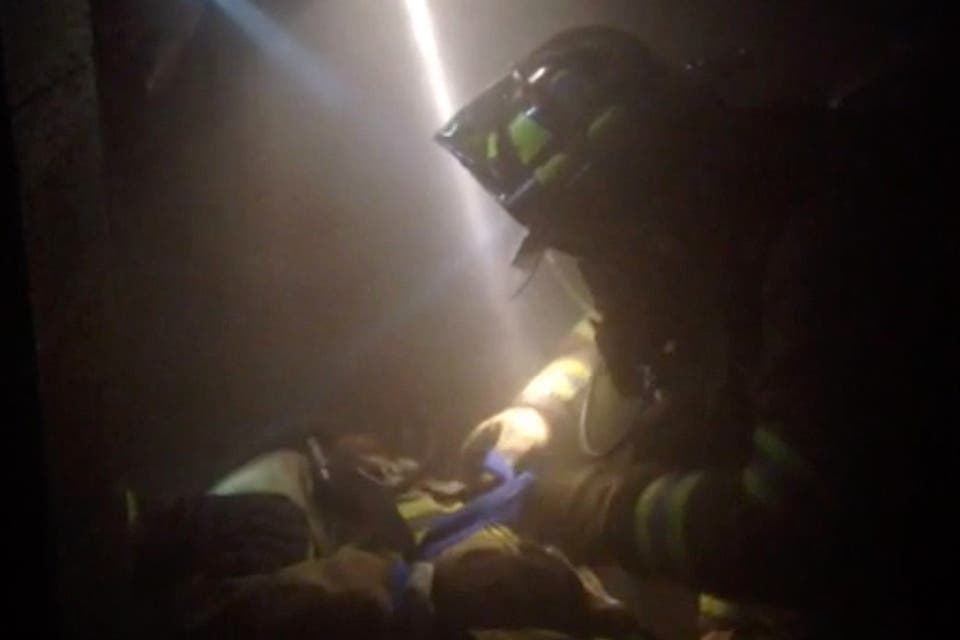
Using a high-capacity theatrical smoke machine, visibility in the truck bays at Haddam Volunteer Fire Company’s station one was reduced to a couple of feet. Firefighters formed Rapid Intervention Teams (RIT) whose sole purpose is to go into the worst conditions, locate and rescue brother and sister firefighters in distress.
Find out what's happening in The Haddams-Killingworthfor free with the latest updates from Patch.
RIT crews entered through the door the original firefighters did, following the hose line to get to their last known location. While moving through the very low visibility conditions, voice contact was the only way they knew their team was still together. In the distance, a faint Personal Alert Safety System (PASS) alarm could be heard. From the end of the hose line, with no lost firefighter in sight, the sound of the PASS alarm led the RIT crew like a fog horn to a boat unable to see the harbor.
As the RIT crew reached the down firefighter, team members went to work on their particular assignment. One member radioed out their location and what they had found, while another assessed the air remaining in the firefighter’s air pack, The others converted his airpack into a rescue harness and prepared to drag him out. On the way back to the hose line and out of the building, the RIT crew worked together to maximize their speed, but in a real rescue, conditions would be worsening by the minute.
RIT crews face some of the harshest assignments in the Fire Service. On December 3, 1999, two firefighters became lost in a warehouse in Worcester, Mass. Four firefighters went in to attempt to rescue them, but all 6 perished. The Worcester 6, as they are forever known, are an example of firefighters making every possible effort to never leave one of their own behind.
Find out what's happening in The Haddams-Killingworthfor free with the latest updates from Patch.
“While the likelihood of needing to make a RIT rescue is very low, when you need it, you have no time to waste,” said Bob Norton, Haddam firefighter and Fire Service instructor. “If something is going to go wrong, it usually will in the first five to ten minutes, generally before any mutual aid departments are on scene. We train hoping the skills will never be needed, but confident that we could get one of our own out if we had to.”
In a final evolution of the evening, a RIT crew was sent in to locate and remove a firefighter who had lost his breathing apparatus and was being overcome by carbon monoxide (CO) and other gasses, making him incapacitated and uncooperative. The RIT crew had to manage a victim who was in and out of consciousness; very similar to the affects CO has on someone in real life. Carbon monoxide makes a person lose rational thought, and they often go towards danger rather than exit to safety. The RIT crew battled through simulated smoke and fire conditions to carefully remove this sometimes-combative firefighter.
Firefighters train to rescue civilians from all types of emergencies – but they also need to be ready to rescue one of their own.