Health & Fitness
Venting About “The Silent Killer”
It's the time of year for heat appliances – many of which have sat dormant for a year without being maintained – and fires in fireplaces. But without proper precautions, there's a risk for carbon monoxide, known as "The Silent Killer."

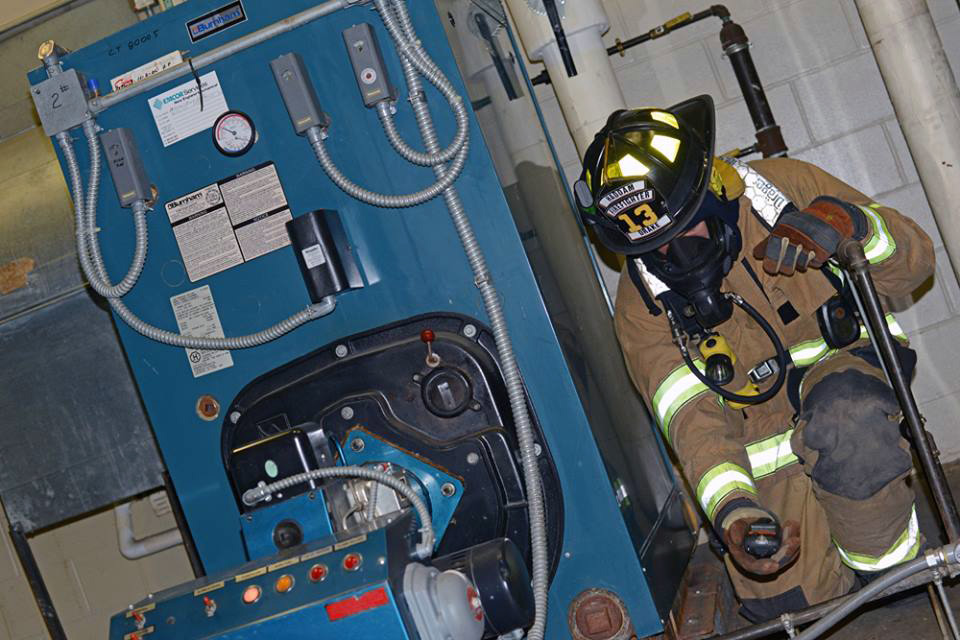

When a dispatcher reports a carbon monoxide (CO) incident, firefighters listen for two very important words: “No symptoms.” That lets them know that a CO detector is getting a false reading, is low on batteries or the caller recognized the situation before it was too late.
As fall transitions to winter, Haddam residents are switching on heat appliances – many of which have sat dormant for a year without being maintained. It’s also when people make fires in fireplaces. Either way, there’s an increased risk of carbon monoxide poisoning.
Carbon monoxide is an invisible gas that you can’t see, smell or taste. It’s a byproduct of burning organic fuels. Virtually every home has at least some risk of CO poisoning, whether it’s heated by burning gas, oil, kerosene or wood. CO can result from a furnace, generator, water heater, space heater, oven, car, tractor, lawn mower, even a charcoal grill.
“CO poisoning is most often caused by malfunctioning appliances or equipment, worn or faulty parts, or improper venting,” said Haddam Fire Chief Sam Baber. “That’s why it’s so important to stay on top of maintenance.”
Early symptoms often mimic the flu – headache, nausea, unclear thinking, shortness of breath, weakness and loss of muscle control. Severe symptoms include convulsions, unconsciousness and possible death. According to the Centers for Disease Control and Prevention, with about 400 CO-related fatalities a year, carbon monoxide is the leading cause of accidental poisoning deaths in the United States.
Carbon monoxide’s destructive potential arises – in part – because it prevents oxygen from being delivered to brain cells and other vital organs, central nervous system, cardiovascular system and pulmonary system. When carbon monoxide is inhaled, it enters the bloodstream, binds to hemoglobin and crowds out the oxygen molecules, thereby depriving the cells of the oxygen needed to maintain their vitality.
“Basically carbon monoxide wants to suffocate you on a cellular level," said Paramedic and Haddam Fire Capt. Dan Sullivan. “Exposure can be deadly in minutes.”
From 2006 to 2010, U.S. fire departments responded to an annual average of 72,000 carbon monoxide incidents, excluding calls where nothing was found or fire was present. These calls were more common during winter months.
“What makes it tough in the winter are cold snaps and the snow, because now the furnaces are working harder,” Baber said.
Storms like Irene, Sandy and Nemo also cause widespread power outages, and that increases the need to heat and provide energy to individual residences. Many homeowners turned to auxiliary appliances, namely the emergency generator.
If you must use secondary heaters or generators, here are a couple things to remember. Make sure the exhaust of the heater is vented well outside. Propane heaters that simply blow heat and exhaust gas through a large blower are not venting the carbon monoxide outside – they’re simply blowing it around. And no matter how efficiently a generator may run, it produces carbon monoxide. Never run one inside a garage, basement or anywhere exhaust gasses can seep into living areas of a house.
In November 2011, members of the HVFCo. received a call for a CO detector sounding. Upon arrival, the family was found waiting outside in their car, all exhibiting flu-like symptoms. They pointed firefighters to a generator running outside and a wood stove inside, both operating in what appeared to be a normal method. Firefighters metered the entire house, finding some CO levels that were of concern but nothing that would be considered dangerous or lethal.
The family was advised to spend the night at a neighbor’s house and have a professional look at their wood stove. Later the next day, however, the children were seen at a local medical facility and treated for levels of carbon monoxide in their system. The family called in a contractor to check out the wood stove, which seemed to be operating correctly. But after returning home the children continued to exhibit signs of discomfort and were rushed to Middlesex Hospital’s Emergency Room where even higher levels of carbon monoxide were found.
About half of American CO deaths are children. Young children are especially vulnerable to the effects of carbon monoxide because of their smaller bodies. They process it differently than adults, may be more severely affected by it and may show signs of poisoning sooner.
The family in Haddam decided to move the generator far from the house, and called the Fire Company again to meter the house before going inside. This time, firefighters determined that the home had no trace of carbon monoxide. Evidently the generator, while running outside the house, was close enough to the basement entrance that cool replacement air being drawn in by the wood stove, also in the basement, was entering the house and traveling upstairs to the bedrooms.
This incident illustrates that even when we think we’re taking all necessary precautions, carbon monoxide can find a way in. Please make sure that all external sources of carbon monoxide, especially generators, are located as far from the house as possible to alleviate any possible methods of transmitting the gas.
Stay warm, but please stay safe. At the very minimum, invest in a carbon monoxide detector. They’re relatively inexpensive and just as important as working smoke detectors. Many are powered by 110-volt household current and have a battery backup, and just like smoke detectors, remember to swap out the batteries in your CO detectors when you set your clocks back on Sunday, November 3.
Do You Have What It Takes? Find more information on the activities of the Haddam Volunteer Fire Co. and ways you can get involved at our website www.HaddamFire.com, or connect with us on Facebook.