Arts & Entertainment
Tolland Garden Paths Club Holds Presentation on Shade Gardening
Woodland Beauties Add Color and Texture to Your Shady Backyard
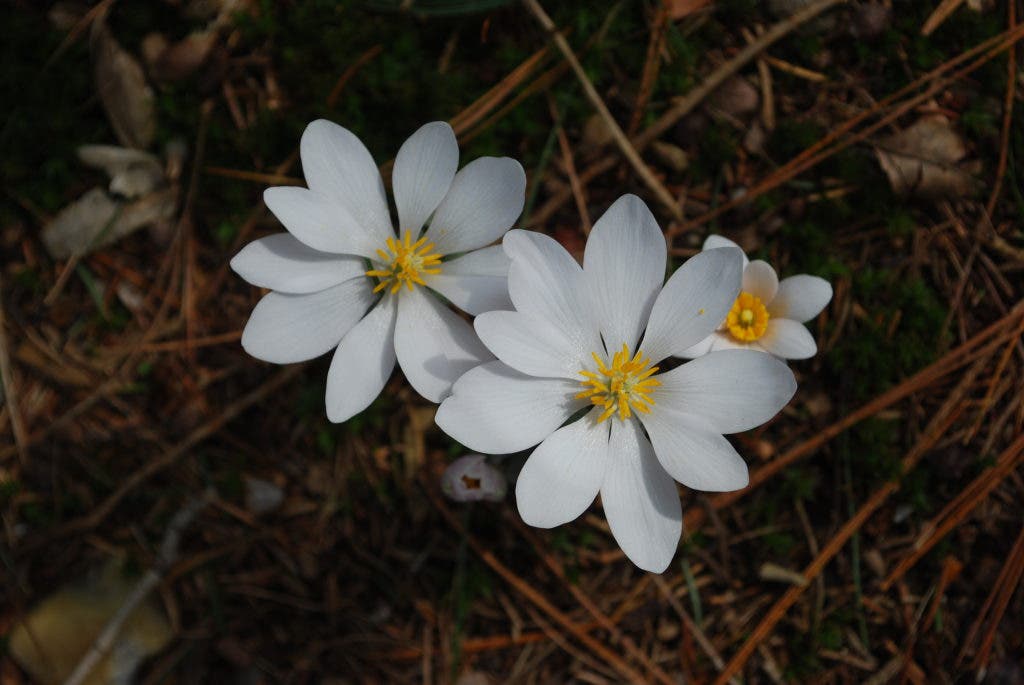


Sometimes botanists like to display their humorous sides. Why else would they take a perfectly respectable scientific name for a plant like trillium erectum and slap on the moniker Stinking Benjamin? On the same subject, why would they commonly refer to anemonella thalictroides as Lloyd's Big Bloomers?
On Saturday, Feb. 12, the Tolland Garden Paths club kicked off their 2011 season at the Tolland Agricultural Center with a presentation on shade gardening. The presentation was led by Andy Brand, Nursery and Sales Manager at Broken Arrow Nursery in Hamden.
A Storrs native who spent summers working on his grandparents' huge vegetable garden and whose father was a professor of agricultural economics at the University of Connecticut, Brand said a love of plants and agriculture was always a part of his makeup. He went on to earn his BS and MS in horticulture and plant tissue culture from UConn. Brand was also a past president of the American Rhododendron Society and past president of the Connecticut Nursery and Landscape Association.
Find out what's happening in Tollandfor free with the latest updates from Patch.
Because there are so many types of plants in the world, scientific names are necessary to classify them. However, common names based on a plant's characteristics often emerge that make them easier to identify for the novice. Thus, as you may have already deduced, the Stinking Benjamin doesn't exactly emit the sweetest of scents, and Lloyd's Big Bloomers have some large, long-blooming flowers.
As growers of rare and unusual plants, Brand presented a spectacular slideshow of shade-loving perrenials that are propagated on site at Broken Arrow Nursery.
Find out what's happening in Tollandfor free with the latest updates from Patch.
"Double forms are the flowering plants that people really lust over," said Brand, bringing up photographs of Cameos and Shoaf's Double. "They have the most exquisite flowers," he said.
"We have one of the largest collections of mountain laurel in the world," added Brand, displaying an array of woodland beauties while moving deftly from their various Latin scientific names to their common ones.
Brand said the arrival of helleborus (or mountain laurel) is often one of the first signs that spring has arrived. "We have an incredible number of new selections," he said, adding that while mountain laurel is generally believed to be deer resistant (a plant quality many Tolland residents expressed interest in), sometimes they get eaten up all the same.
Throughout the presentation Brand offered up useful information on the best cultivation practices and best soil types for helping various plants to thrive.
"If you want to plant on woods edge, be diligent about watering them initially to get them to establish their roots," he said.
Brand also colored his presentation with some lesser known tidbits about plant life, for example, noting that the jack-in-the-pulpit is a bit of a gender bender in that one year it might be a female plant and the next year, a male.
Tolland resident Deen O'Connell, a member of Tolland Garden Paths and scribe for the organization, said that despite the huge snowbanks still covering the ground, February is really the beginning of the gardening season.
"This is the time of year when we start opening and pouring over all the catalogs," she said. O'Connell said the group has about 45 or 50 members who share a common love of gardening.
"Joyce Hausmann, who has taken charge of scheduling trips and tours has done a wonderful job in getting people more involved by sharing her passion for gardening," she said.
Formed in 2001 and qualifying as a non-profit in 2003, Tolland Garden Paths is a member of the Federated Garden Clubs of Connecticut. The club is dedicated to public service, education and sharing fun times with each other. For more information about the club, they can be visited online at http://tollandgardenpaths.webs.com/